
Cambridge Researchers Pointed a Camera at the Trojan Room Coffee Pot So They'd Stop Walking to an Empty One
XCoffee ran on a spare network-testing machine and refreshed about three times a minute, until two colleagues later put the pot on the World Wide Web.
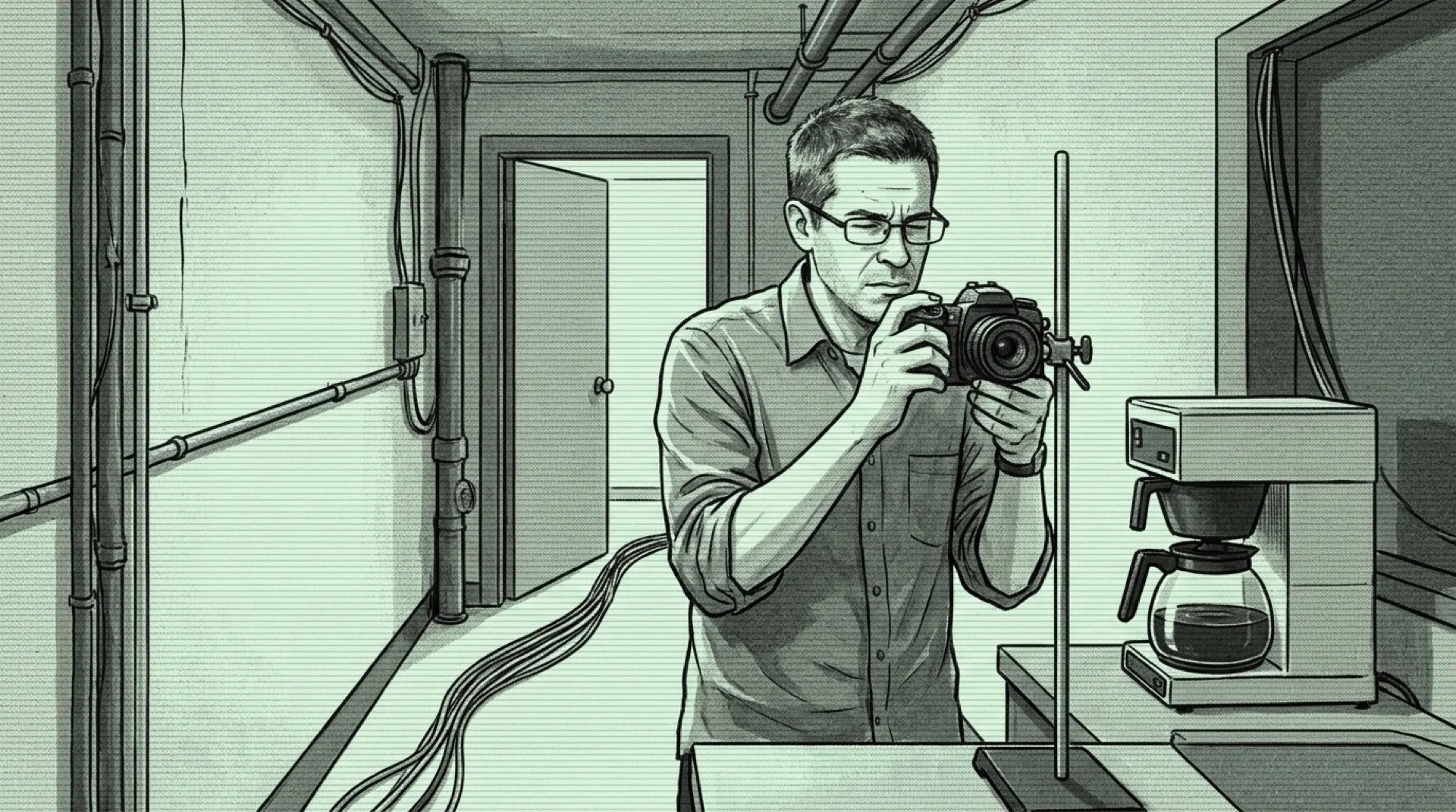
About fifteen researchers in Cambridge’s Computer Laboratory shared exactly one coffee filter machine in 1991. It lived in the corridor outside the Trojan Room, and the group, in the words of Quentin Stafford-Fraser, “got through a lot of coffee.” A fresh pot rarely lasted.
The pain landed on the people who sat elsewhere in the building. They climbed several flights of stairs for a refill and found the all-night hackers of the Trojan Room had already drained it. That disruption, he writes, “obviously caused us some distress, and so XCoffee was born.”
The parts were already lying around. One of the simple computers the group used to test its networks had a video frame-grabber attached and sat unused. The team fixed a camera to a retort stand, pointed it at the coffee machine and ran the wires under the floor to the frame-grabber in the Trojan Room.
Paul Jardetzky wrote a server program for that machine, which captured images of the pot every few seconds at various resolutions. Stafford-Fraser wrote the client, which anyone could run. It connected to the server and parked an icon-sized picture of the pot in the corner of the screen.
The picture updated about three times a minute, and the greyscale image held about as much color as the drink. Stafford-Fraser’s own verdict: “that was fine because the pot filled rather slowly, and it was only greyscale, which was also fine, because so was the coffee.” The whole system took a day or so to build. He adds that it “made a better topic of conversation at dinner parties than ATM protocols.”
The first published record came when Bob Metcalfe wrote about XCoffee in Comm Week on January 27, 1992, after visiting the lab. Talk turned to other low-frame-rate video monitors, and two names were mooted: XSandwichVan and XPrinterOutputTray. Then the elderly frame grabber gave up the ghost, and the two builders moved on to other things.
Daniel Gordon and Martyn Johnson revived it. They gave the system a new frame grabber and made the images available on the World Wide Web. Since then, by Stafford-Fraser’s count, “hundreds of thousands of people have looked at the coffee pot.” XSandwichVan and XPrinterOutputTray never turn up in his account again.
The Trojan Room pot is the template for a lot of cheap monitoring that came after it: aim a camera at the slow-changing physical thing nobody wants to walk to, and let a spare machine do the watching. Expect that pattern to keep returning wherever the physical object matters more than the dashboard. The XSandwichVan and XPrinterOutputTray ideas died with the frame grabber, but the logic behind them holds wherever someone is tired of a wasted walk.
The mechanism will keep winning for a boring reason. Watching costs next to nothing once an idle machine and a lens exist, and the audience for “is the thing ready yet?” is enormous. It also needs no ATM protocols, which Stafford-Fraser clearly considered a plus at dinner parties.
The lab ran a stream before anyone said stream, and at three frames a minute it was strictly a drip feed. The image was grey and the pot was ordinary, and it still became the most famous coffee pot in the world, by the author’s own estimate.
His review of the coffee itself, after all that fame: “I don’t think the coffee’s any better, though.”