
The Colony packed a roaming 3D world onto one Mac floppy; ScummVM is testing it
The October public-test invitation covers Macintosh and DOS releases, with original data required to join.
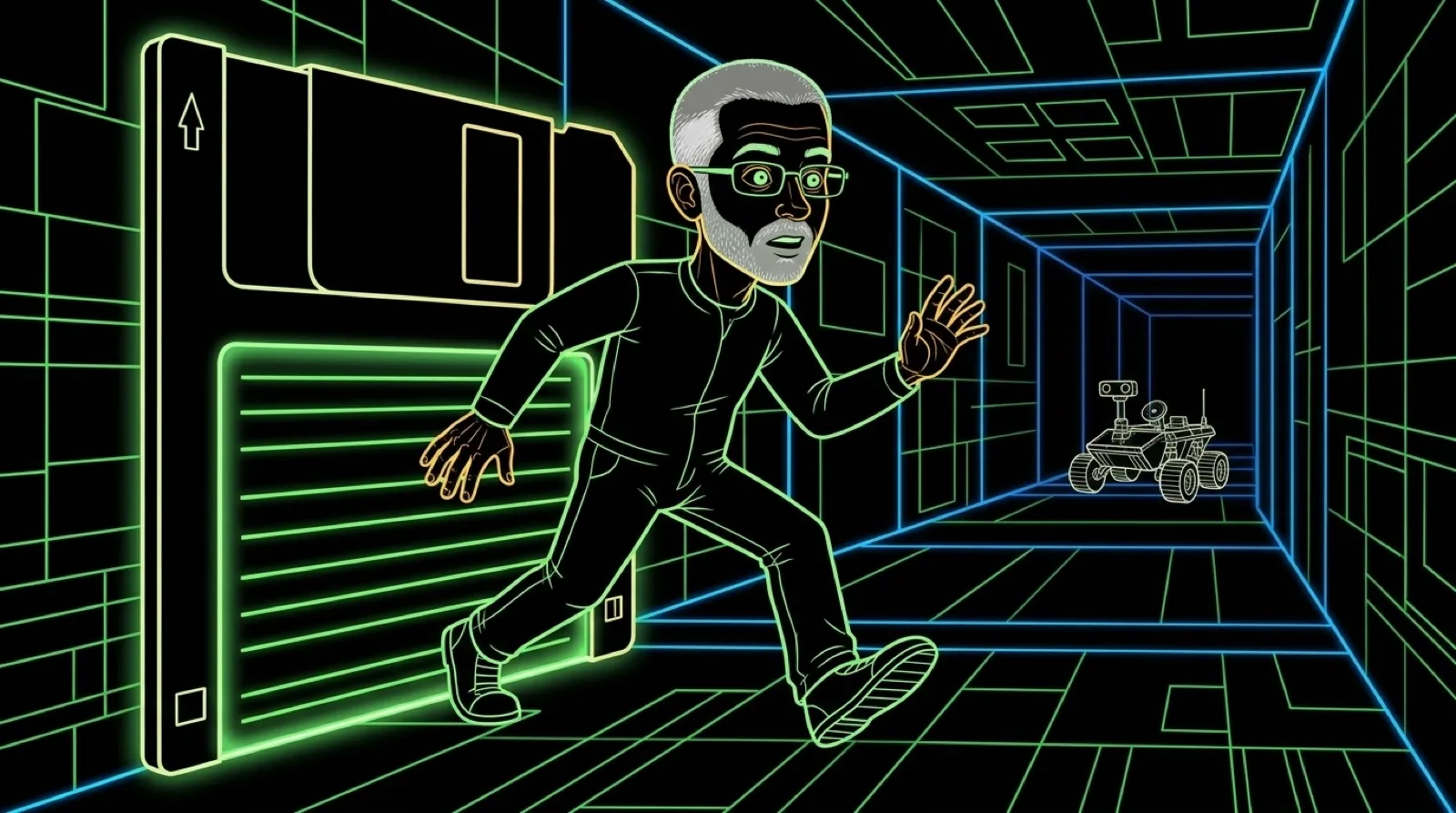
A space marshal crash-lands, a colony has gone wrong, and the children need rescuing. The original Macintosh version of The Colony put that assignment on one floppy disk. Some modern launchers need more room just to explain that a game is loading (please stand by).
ScummVM announced public testing on October 15, 2026, for Macintosh and DOS releases of the 1988 game. Public testing is the important qualifier. The invitation asks players to help find problems, rather than promising that every corner already behaves perfectly.
The Colony’s environment let the player move freely through continuously rendered 3D space. According to the team’s account, movement extended beyond walking: vehicles and object manipulation helped make it a place to explore. A screenshot cannot convey that distinction as readily as a player deciding where to turn next.
The crash leaves your vessel damaged. Exploring the settlement means reading notes, records, journals, and books to establish what happened, while puzzles and hostile creatures complicate the errand. The story therefore has a practical reason for the player to enter another room, rather than treating a 3D corridor as the entire entertainment budget.
The one-floppy detail belongs specifically to the original Macintosh version. It should stay there. Applying it to every release would be a small sentence doing a lot of unsupported traveling. The test covers DOS too, but the announcement does not turn the two editions into identical packages.
David Alan Smith created the game and Mindscape published it. ScummVM points to the technology’s later connection with Smith’s Virtus WalkThrough environment. The underlying achievement had uses beyond getting a stranded marshal through an alarming workday; navigating a world could be useful even without aliens objecting to the inspection.
For a player returning now, ScummVM supplies a new route to running the original game data. Its engine support does not supply the files by magic. The announcement points owners toward old floppies and offers a ZOOM Platform route to a free copy. The maker’s invitation is the place to follow that acquisition path, rather than searching for an unverified disk image.
A useful test report needs the specific problem and something that helps another person reach it. ScummVM requests reports through its issue tracker and says screenshots and saves help. An adventurous player therefore has a concrete way to contribute beyond discovering that the corridor still looks wonderfully strange.
The restraint is appealing. Restoring access to an old world can preserve what made movement through it surprising instead of replacing the visuals with a contemporary interpretation. Whether a particular interaction survives correctly is exactly the sort of detail public testing can expose.
There is still a damaged ship waiting inside the game. Beyond that fictional repair job, the real invitation is to explore an implementation that has just opened to testers, observe what it does, and leave enough evidence when something goes wrong. A floppy-sized world still has corners worth checking.