
SoftwareStelaApple SiliconmacOSUEFINvidia
Stela, an open-source boot program, runs Apple Silicon macOS on x86-64 PCs by posing as an M2 Mac mini and translating ARM64 to x86-64
It ships under the GPL, carries no Apple code, and needs a wired network connection, because Wi-Fi and sound are still missing. Its own README says it may not boot at all.
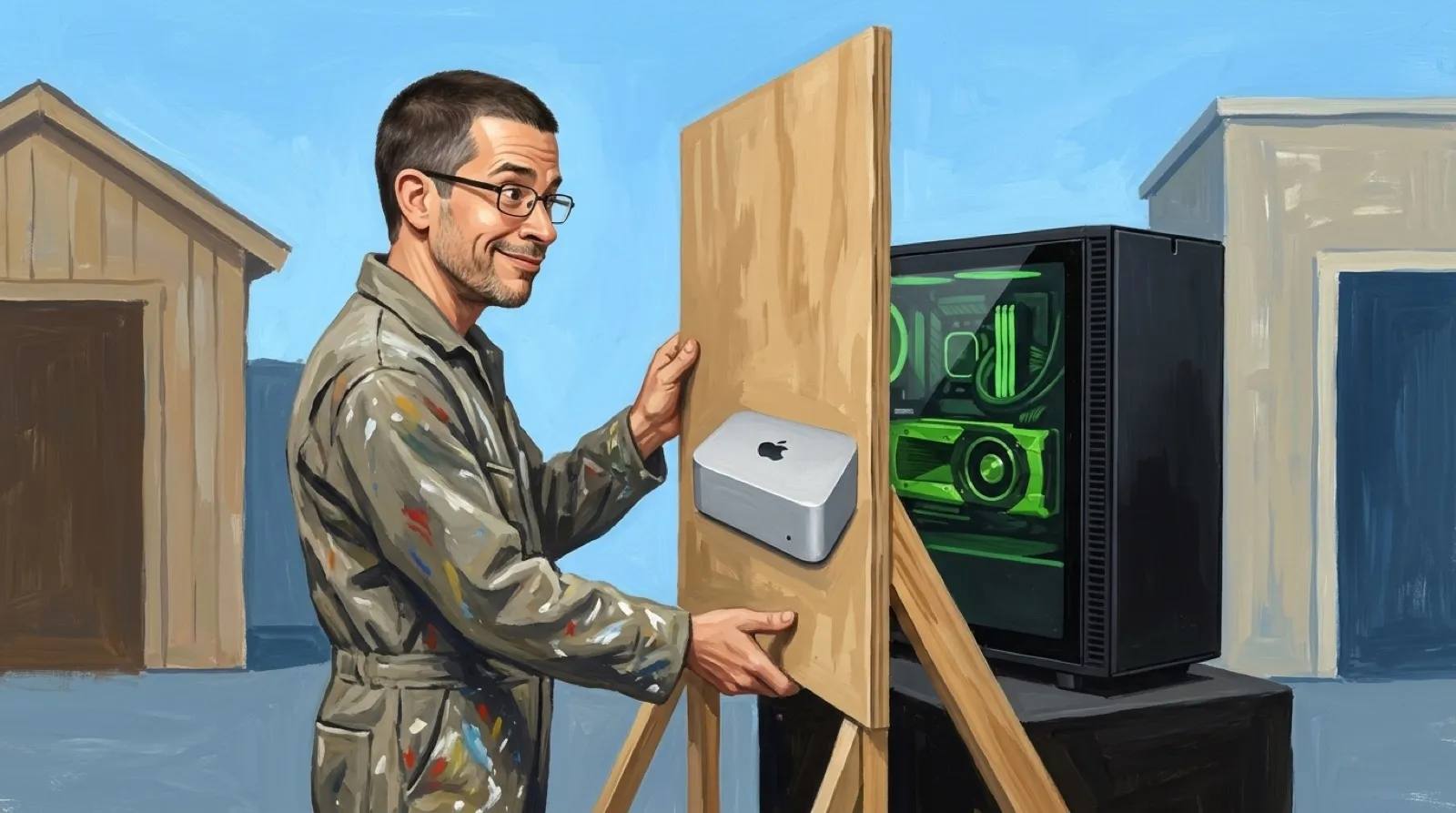
Stela’s README opens with a line that sounds like a dare: “A general purpose Apple Silicon layer for x86-64 PCs.” It is a UEFI boot program. You put it on a USB stick, boot a regular PC from it, and the machine tells macOS it is an M2 Mac mini. Then it does the hard part, which is making an operating system compiled for ARM chips run on a processor that doesn’t speak ARM.
That job falls to a translator. Per the README, an ahead-of-time and just-in-time compiler turns arm64e code into x86-64 code, covering more than 3,000 AArch64 instruction encodings. Ahead-of-time means some code is converted before it runs. Just-in-time means the rest is converted while you wait, which is the polite way of saying “slowly at first.”
The graphics side is the more unusual trick. A Mac’s GPU speaks Metal, Apple’s graphics language, and an Nvidia card does not. So Stela’s Metal driver, in the README’s words, “compiles AIR, Metal’s shader IR, directly to NIR, Mesa’s IR.” Mesa is the open-source graphics stack that already knows how to talk to Nvidia hardware. Stela catches Apple’s shader code on the way out and hands it to Mesa. The README lists the Metal3 and Apple7 GPU families, and the cards it supports: GeForce GTX 16 and RTX 20, 30, 40 or 50 series.
Setup is a wizard. Download stela from the releases page, run sudo ./stela setup on Linux or macOS (or double-click stela.exe on Windows), then pick the USB stick, the installer, the macOS version and the Mac model. It erases the stick. Then you boot from it. Building it yourself needs Rust, Python and LLVM, and the README warns the first build “fetches and compiles Linux, Mesa and LLVM sources and takes a long time.”
The hardware list is specific. An Intel or AMD CPU at x86-64-v2 or newer (AVX2 and AVX-512 get used when present), 8 GB of memory, 64-bit UEFI with Secure Boot off, and an NVMe drive, or SATA in AHCI mode, with 60 GB or more. Networking means wired: the README lists Intel, Realtek, Broadcom, Aquantia and Qualcomm Atheros/Killer Ethernet chipsets, plus USB adapters from Realtek and ASIX.
Now the fine print, which is most of the fun. Wi-Fi: “None currently supported.” Audio: “None currently supported.” Bluetooth works for USB and Intel PCIe controllers only. And the maker is blunt about the whole thing: “Stela is still in development. It is slow and still may not boot on supported hardware.” That’s the most honest product warning you will read this week.
The legal posture is careful. The code is GPL-2.0-or-later, and the README says “Stela contains no Apple software.” Following Apple’s license terms is on you. The README names no individual contributors and points to a Discord server for help. The repository is the only source here, so everything above is the project describing itself; nobody outside it has tested these claims in print yet.
Speed is the open detail. The README calls Stela “slow” and gives no benchmark, no frame rate and no boot time.
Bring a cable. Leave the headphones.