
The barcode began with Morse code in sand and a plan to read circles
A familiar checkout symbol began with an unusual sketch. The original apparatus had to cope with packages arriving askew.
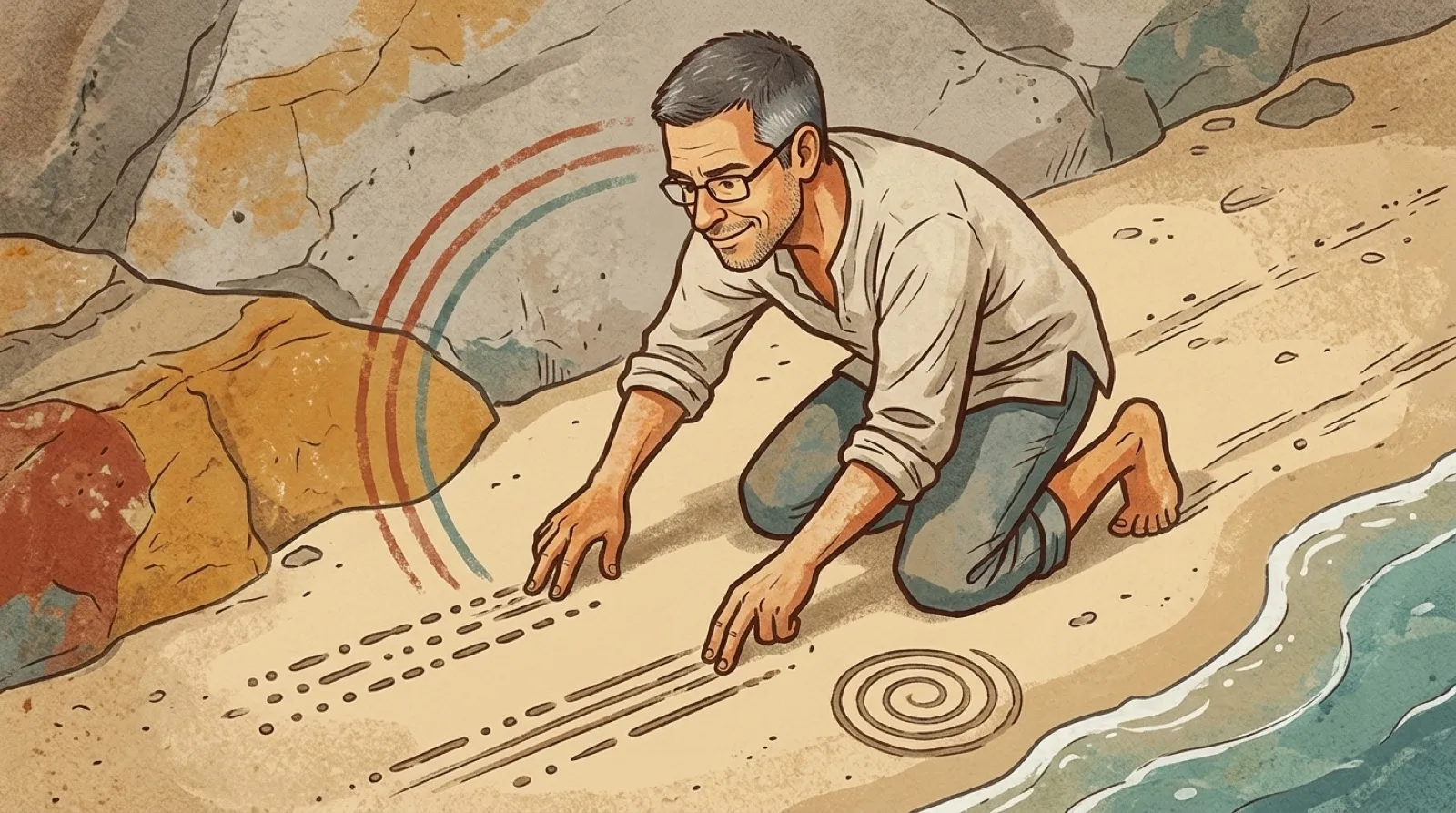
The barcode’s origin story involves a finger in the sand. Its patent also involves a problem anyone who has turned a package around at a scanner can appreciate: the thing being read may arrive facing the wrong way. The circles were there for a reason, even if the beach did most of the publicity work.
Drexel recounts Woodland’s inspiration as a Morse-code sketch. Extending the dots and dashes downward made narrow and wide lines. A signal originally understood over time had become a pattern spread across a surface, ready for a different kind of reader to encounter it.
Woodland and Bernard Silver’s Classifying Apparatus and Method patent supplies the technical companion to that anecdote. It was filed on October 20, 1949 and granted on October 7, 1952. Those dates belong to this particular patent; they should not be mistaken for a claim that a complete retail checkout system was ready the moment the paperwork arrived.
The drawings and description cover more than one shape. Straight lines can occupy fixed positions, with their presence or absence supplying information. The patent then describes a circular version, explaining that orientation becomes unnecessary. Its own words put the goal plainly: “orientation of the pattern be made unnecessary.”
A circle changes the handling requirement. If the package need not be lined up in one prescribed direction, reading it asks less of the person or mechanism moving it. That is an advantage with consequences outside the printed mark. A code has to survive meeting the physical object, the motion past the reader and the way somebody actually puts it down.
The patent also describes photosensitive apparatus feeding classification to other machinery. The pattern acts as an identifier the system can read, rather than asking the machine to recognize the object from its appearance. A box can have loud graphics and a quiet machine-readable identity, provided the reader can reliably find and interpret the latter.
That makes the barcode a good antidote to a tidy inventor story. The sketch is memorable. The rest requires choosing how to encode information and designing a reading process that tolerates the world around it. A grocery package rarely volunteers to behave like the carefully aligned diagram in a technical explanation.
For someone putting codes on assets today, the relevant question begins with how the item moves. A label meant for a person holding a scanner has different handling assumptions from a package passing fixed equipment. Thinking through that meeting point can prevent a perfectly readable mark from becoming a surprisingly awkward workflow.
Drexel’s account and the patent preserve different evidence: one describes inspiration, the other lays out a proposed apparatus and its patterns. Together they explain why the history includes both stripes and circles. The next step, making a dependable system around the mark, is work a diagram cannot perform for its inventor.
The beach had excellent line spacing.