
Two former Apple contractors kept sneaking in until Graphing Calculator shipped
Ron Avitzur’s firsthand account follows a canceled project through expired badges, unpaid work and a very reluctant purchasing process.
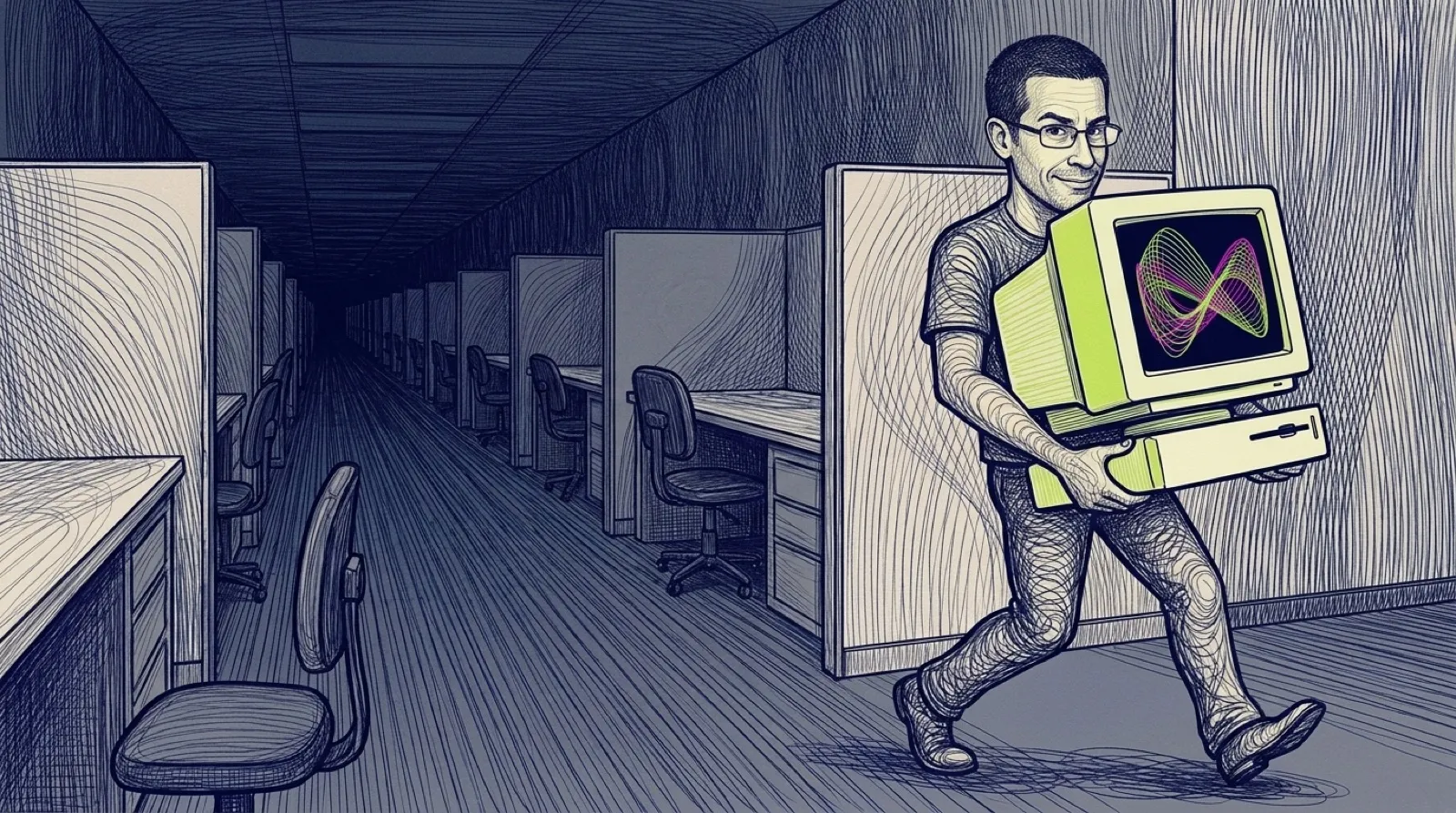
Apple canceled the project. Ron Avitzur’s badge still opened the door. For a while, the door was the more useful project-management system.
In Avitzur’s firsthand account, his contract ended after a 1993 cancellation, but he kept coming to work to finish Graphing Calculator. Greg Robbins joined him after his own contract ended. Each said he reported to the other, leaving their nonexistent organization remarkably light on meetings.
The story gets less comfortable when Facilities notices the occupied offices and has their badges canceled. Colleagues help them keep entering anyway. This is Avitzur’s recollection of the episode, not an independent reconstruction of every participant’s decisions. Avitzur describes the repeated badge trouble alongside the help he received from engineers who wanted the software finished.
The project eventually gains sponsors inside Apple’s PowerPC effort. Getting useful software into a shipping product proves easier than convincing the purchasing process to grant badges to people the company isn’t paying. The eventual form uses the phrase “No dollar contract.” Accounts payable could finally account for nothing.
There’s a tempting fairy tale version in which an eccentric developer only needs to ignore a cancellation and greatness follows. The account itself supplies reasons to resist that version. Avitzur had savings and personal circumstances that allowed unpaid work. Engineers donated expertise. People with authority eventually took responsibility for bringing the software into the release. A working badge could start the story; it couldn’t complete those jobs.
The software also had to survive contact with users. Avitzur describes formal usability testing prompting substantial changes to feedback in the application. That is a particularly satisfying detail after all the corporate absurdity. A mathematical demo can delight the people who built it and still confuse the student it is supposed to help. In his telling, watching those first-time users changed how he and Robbins explained the software inside the application.
That makes the useful payload more interesting than a generic cheer for rule-breaking. A team reviving a discarded project needs to establish who can approve it, what evidence makes it worth supporting and who owns the final result. Without that, an exciting demo can consume favors indefinitely. The calendar keeps moving even when the org chart pretends the project doesn’t exist.
Avitzur’s story puts an actual artifact at the end of that maze: Graphing Calculator, bundled on the new Macs. The personal risk was real, and copying the unauthorized-entry part would be a spectacularly bad way to pitch a project today. A sanctioned chance to demonstrate the work could preserve the useful part without requiring somebody to wait outside for an employee.
A canceled idea can deserve another look. The conditions that make its second life possible deserve their own look, too, especially when the punch line depends on people working for free. The account leaves a deliciously awkward purchasing question: how does a company document help it wants, from people it has already decided it doesn’t employ?
The calculator finally had an employer.