
A camera owner squeezed missing Fujifilm printer support into 4,048 unused bytes
Reverse engineering rescued a printing feature already partly hidden inside a camera.
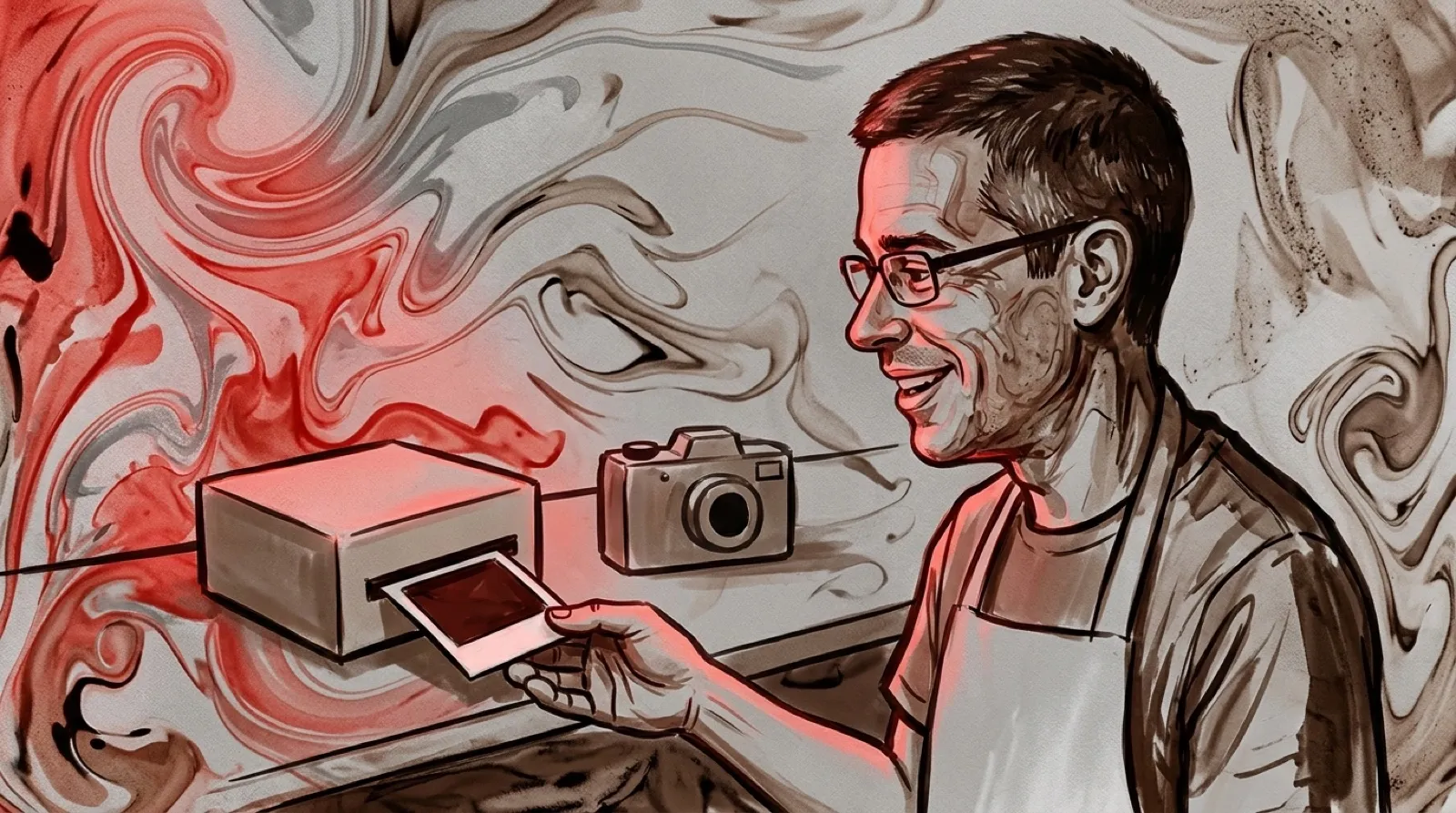
The camera already had most of a printing app. The missing Bluetooth connection, an outdated printer check and a corrupt image path stood between Ronan Gaillard and a photo coming out of his instax Link 3. He found enough space to fix the route inside 4,048 unused bytes. Apparently the feature was hiding in the margins.
Gaillard’s November 6 account traces the X-T30 II firmware against another camera’s printing functions. Much of the higher-level work was already present. His patch supplies missing transport glue and recognizes the newer printer, rather than bringing an entirely separate printing application to the camera.
The Fujifilm X-T30 II and instax Link 3 make an appealing pair precisely because the normal workaround inserts a phone. Here the camera can send the picture directly. That removes a device from a task which ought to feel as simple as choosing a picture and asking for paper.
His debug path was less simple. A capability flag sent the camera into a color-processing mistake, producing a pale pink, striped result. Masking that flag fixed the output, and trial 46 yielded a real print. The paper finally agreed with the progress bar, a compatibility milestone printers do not always grant at the same time.
The RAM-only loading route changes the recovery story, but it doesn’t make the experiment risk-free. The modified image starts from the card instead of replacing the camera’s stored firmware. Check the exact model, firmware and card procedure before treating a successful boot on Gaillard’s camera as instructions for another one.
One especially useful part of the account is the gap between simulated success and physical behavior. An emulator helped find bugs without consuming film, yet it missed an early-boot alignment problem. That is a familiar sort of disagreement: the test environment can be good enough to accelerate progress while still omitting the condition that stops the real device cold.
The result demonstrates what careful reverse engineering can uncover, with the debug status and known limits kept attached. Shipping hardware can contain a nearly complete feature that the normal interface never makes usable.
The most memorable result is the one that came out on paper. The code size is the impressive constraint; the unresolved landscape case is the reminder that one lovely print still leaves work to do.
The successful run used a photo selected from the camera playback menu. That puts the result on the camera itself, rather than relying on a phone app to supply the picture to the printer.
Trial 46 had something to show for it.