
An Echo Dot’s Hidden USB Pads Became a Route Out of Alexa
The microphones can stay. A compatible board and a capable home server decide whether the conversion earns a place back on the shelf.
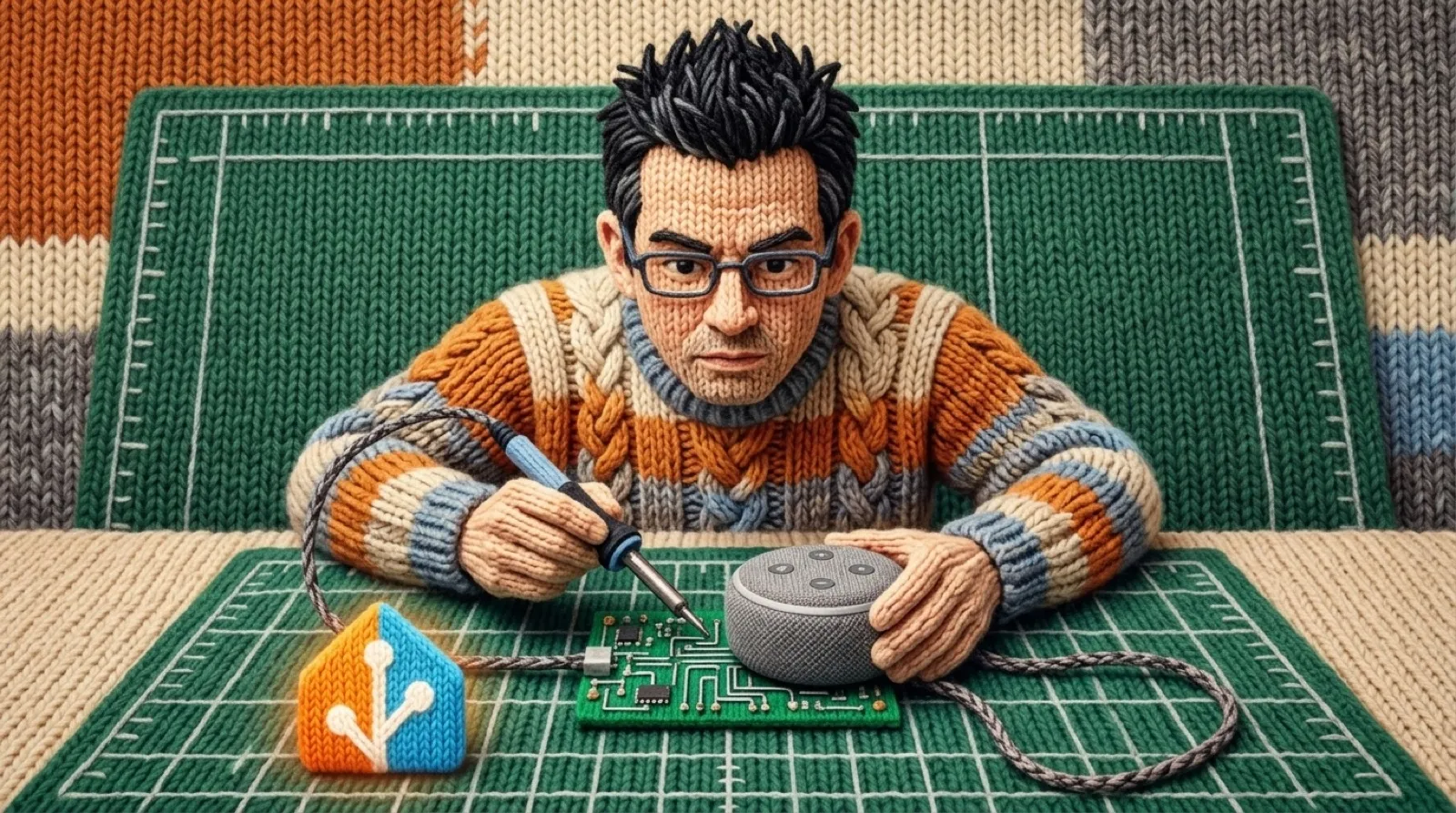
The Echo Dot 3rd generation has no convenient USB socket for this job. Andy soldered a cable to the board’s test pads and ran the guided setup from Fedora. Home Assistant then discovered the speaker as an ESPHome device. Getting Amazon out of the conversation involved a conversation with a soldering iron first.
His write-up specifies the 2018 D9N29T model. The later 2019–2020 refresh and the version with a clock are excluded from this method. A familiar puck is remarkably good at hiding an unfamiliar board; the name on the box doesn’t settle which instructions apply.
The echo-dot-assist project keeps Amazon’s microphone processing and wake-word engine while replacing the Alexa client with hassmic. That means the useful part of the speaker’s hearing can survive the change of employer. Far-field listening and hearing commands over its own music are among the capabilities the project says it retains.
The project describes hassmic as a small daemon that Home Assistant recognizes through ESPHome. A firewall is supposed to keep the Amazon cloud out. That’s an important distinction when judging the conversion: replacing the voice client and preventing outbound contact are separate promises, even when the finished device looks exactly as it did on the shelf.
Andy’s server was a Celeron mini PC, with Home Assistant in a virtual machine limited to one CPU core and 3 GB of RAM. Speech recognition ran slowly, so he switched to Speech-to-Phrase for quicker common home commands. The soldering had worked; the sentence still needed somewhere to go.
Home Assistant’s local-voice documentation explains that tradeoff. Speech-to-Phrase recognizes a limited command set, with fast transcription on modest hardware. More open-ended requests, including shopping lists, named timers and broadcasts, aren’t available out of the box. A smaller vocabulary can be plenty for turning on a light; it becomes a constraint when the request wanders beyond home control.
The repository warns that the software and notes were AI-written with Claude and remain unaudited. Installation opens the bootloader and writes the system partition, so a mistake can brick the device. Its warning also covers firewall or update mistakes that could leave it online or exposed on the home network. There is no support promise hiding behind the cheerful reuse pitch.
Andy reports a working conversion, rather than a guarantee for every Echo. The practical appeal is still substantial: the same small speaker can keep listening while a different system answers. Buying another assistant to avoid buying another assistant has a certain ring to it. The conversion still depends on having both compatible hardware and enough server capacity for the commands the owner wants to use.
Alexa has left the puck.