
Atari 7800 added 32 times the RAM and kept the 2600’s sound hardware
Atari’s programming guides reveal a split upgrade: MARIA draws the newer games while familiar circuitry keeps making their built-in audio.
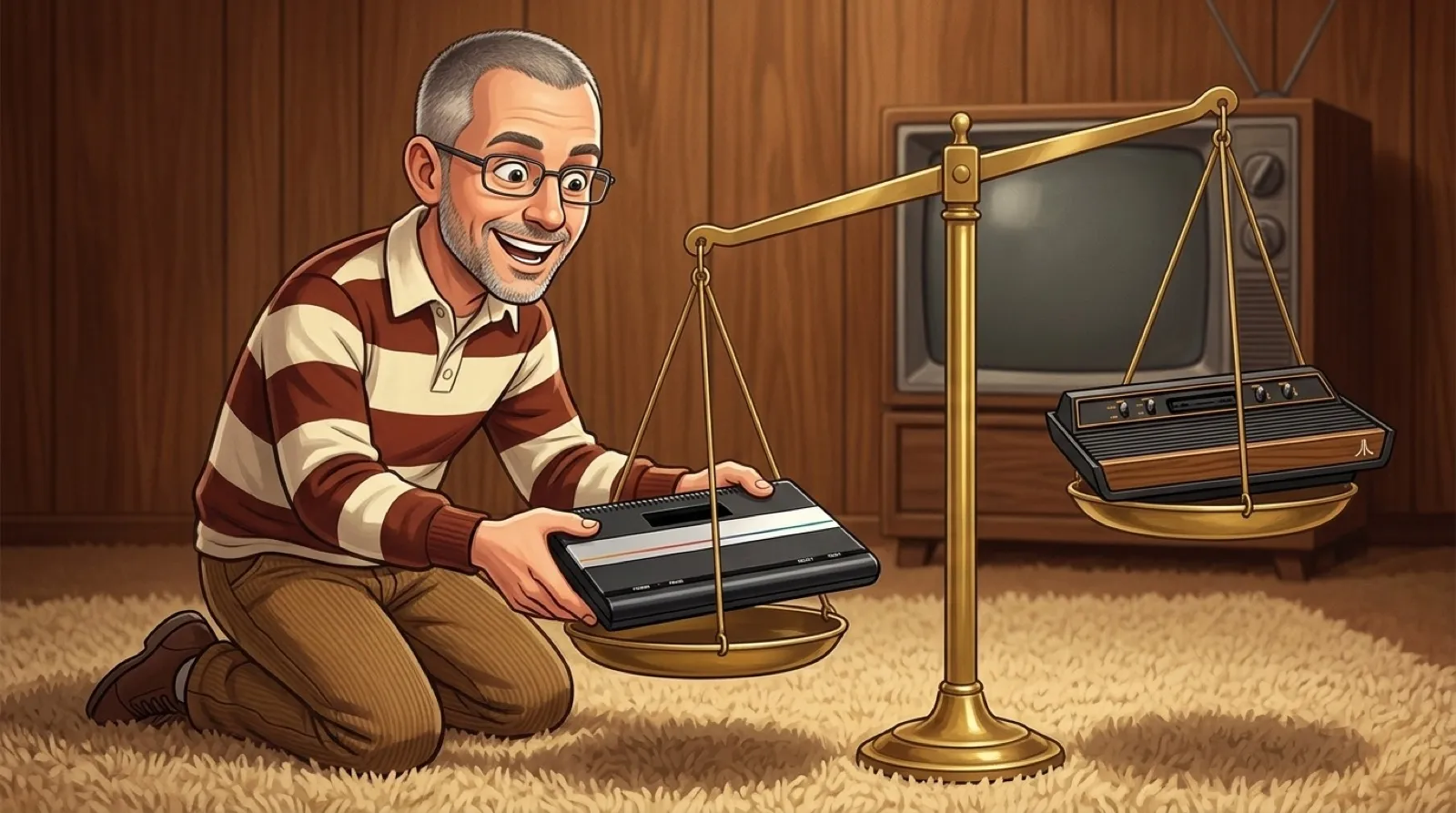
The Atari 7800 could put its new graphics hardware to work while its sound still came from a chip familiar to Atari 2600 owners. More room for the game, same room for the racket. The upgrade moved at different speeds depending on which part of the television you were paying attention to.
Atari’s 7800 Software Guide describes a machine built around the earlier hardware plus MARIA. Its component list gives the new graphics chip video duties and leaves sounds with TIA. A generation number on the case doesn’t require every circuit inside to move forward together (marketing survives the trip).
The RAM comparison is wonderfully lopsided. Four KiB means 4,096 bytes. Atari’s Stella Programmer’s Guide gives the 2600’s PIA 128 bytes. Divide 4,096 by 128 and the result is 32. These are built-in working-memory capacities, without counting whatever a particular cartridge might add.
| The useful row | Atari 2600 | Atari 7800 |
|---|---|---|
| Built-in working RAM for its native environment | 128 bytes | 4 KiB |
| Native picture generation | TIA | MARIA |
| Built-in sound source | TIA, two channels | TIA, two channels |
| Extra sound through cartridge | Depends on cartridge design | Audio input line provided at cartridge slot |
The 2600 guide makes the programmer’s predicament clear. Software has to stay ahead of the television beam as it feeds the picture hardware. That ties game logic to the immediate needs of putting an image on the screen. More memory by itself cannot explain away that relationship.
The 7800 guide describes graphics assembled from display lists. MARIA fetches the information and constructs scan lines, with the processor suspended during those memory accesses. The software and graphics hardware still share limited time, but they organize the work differently. A claim that games were “32 times better” would discard the most interesting part of the upgrade.
Sound keeps the earlier constraints close. The Stella guide specifies two independent audio circuits, and the 7800 retains TIA’s sound-related registers. Atari also provided “an audio line” on the expanded cartridge connector so a cartridge could mix in its own sound. That opens another route without making every game use it.
For a collector choosing between these machines, the desired library earns first place on the shopping list. The 7800’s design offers access to the earlier environment as well as its own games; a buyer should still verify the particular cartridges and console revision rather than treating a period compatibility promise as a test of every surviving combination.
A 2600-focused collection can stay focused on the machine and titles it already values. A 7800 collection makes the split architecture part of the fun. The cartridge audio line leaves a question for each game in the collection: did its designer use the extra path?
MARIA got the pictures. TIA kept the gig.