
Xerox’s laser-printer inventor needed distance from Xerox management
Gary Starkweather changed how a copier received its image, then found the freedom to build a prototype at PARC.
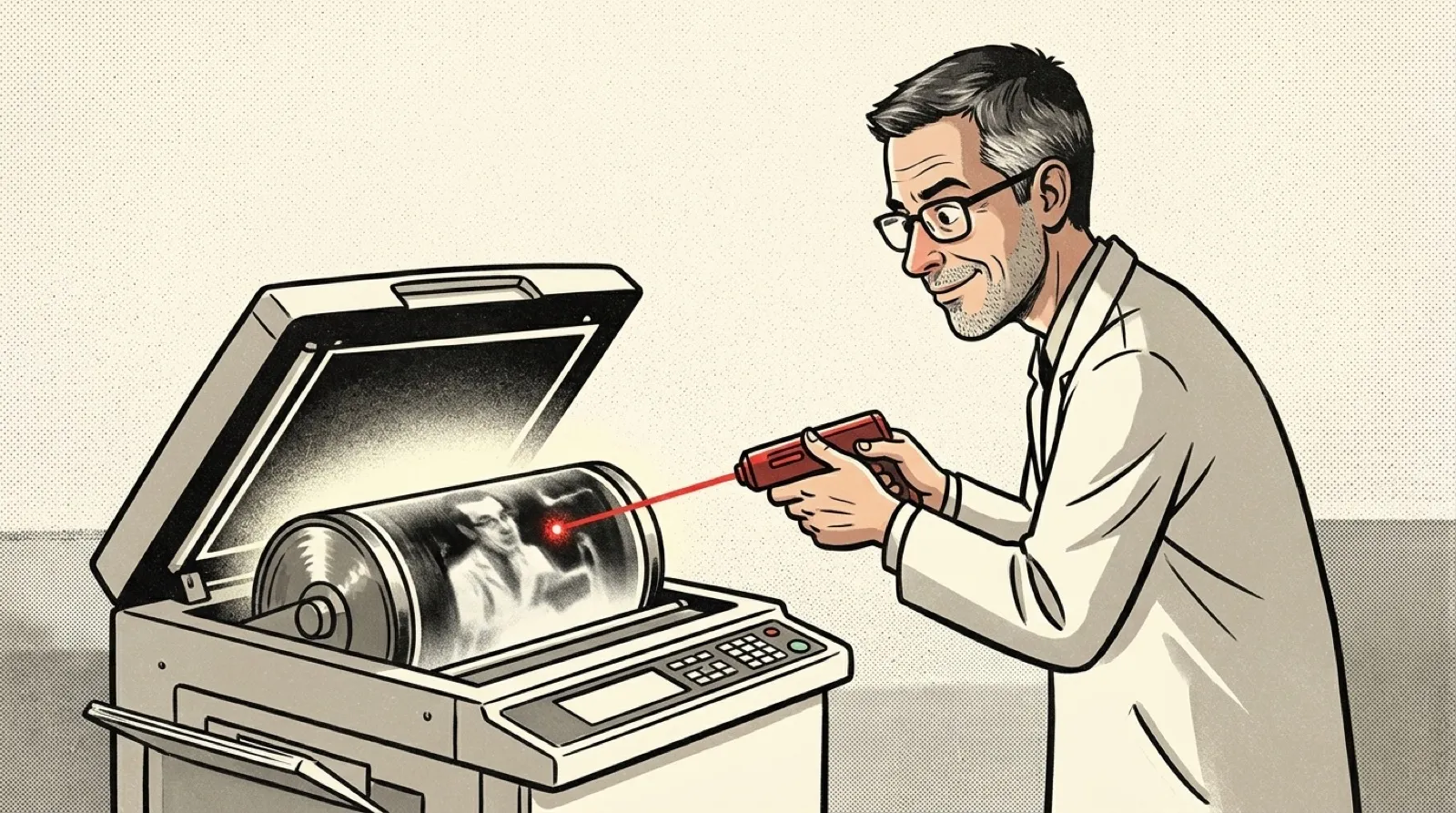
Xerox already knew how to make a copier put an image on paper. Gary Starkweather’s change was to stop requiring a paper original: a computer could write the image onto the light-sensitive drum with a laser. The office copier had been waiting for different instructions. Management, according to the Computer History Museum, was harder to illuminate.
The museum’s account places Starkweather’s realization in 1967. A copier normally exposes its drum to an image of the original page. Replacing that input with a computer-driven laser made the mechanism useful for printing information that began inside a computer instead of on another sheet.
Xerox initially lacked interest, the museum says. Starkweather transferred to its Palo Alto Research Center in 1971, putting distance between the work and corporate oversight. Within a year he had built the first laser printer. That sequence supplies a specific organizational obstacle without needing to invent a dramatic meeting or a quotation no participant left behind.
The prototype modified a standard Xerox office copier. The museum lists 60 pages per minute at 500 dots per inch for that experimental system. Those numbers describe the prototype, rather than every machine later sold under the same general idea. A successful laboratory build still needed years of work before it became a commercial product.
The museum says it took almost five years to produce the huge, expensive Xerox 9700. Its account also notes that IBM beat Xerox to market with the 3800, a machine using continuous fan-folded paper. Inventing a technique, making a practical product and shipping first are separate events, even when an anniversary slideshow would prefer one tidy winner.
The durable technical insight is unusually easy to picture. The drum and paper path already existed; the source of the image changed. A computer-controlled beam could supply patterns that a scanner previously obtained from a physical page. That makes the invention understandable without reducing it to the vague claim that someone simply attached a laser to office equipment.
For a team assessing an experiment, this history suggests a concrete question: which part of the existing process actually needs replacing? Reusing a reliable output mechanism can concentrate effort on the new input path. The work still has to prove the combination functions, and the prototype’s performance offers a much firmer answer than an attractive concept drawing.
The management episode offers another question, with a narrower answer than “leave the company.” The museum describes his move as “away from corporate oversight.” Starkweather stayed within Xerox. The changed setting allowed the same idea to receive attention and room to develop. A proposal that stalled in one reporting line may need a testable demonstration and a different internal owner before anyone can judge its real limits.
The commercial history remained competitive after that breakthrough. The museum records IBM and Canon developing rival products, so Xerox did not get to keep the whole market to itself. The company had an invention capable of earning billions, while turning that invention into an uncontested business proved to be a different printing job.
Corporate oversight was out of toner.