
An IBM 1403 printer plays music by hammering the right nonsense onto paper
Recovered punch-card programs turned a museum business computer into a mechanical instrument. The printer survived its performance.
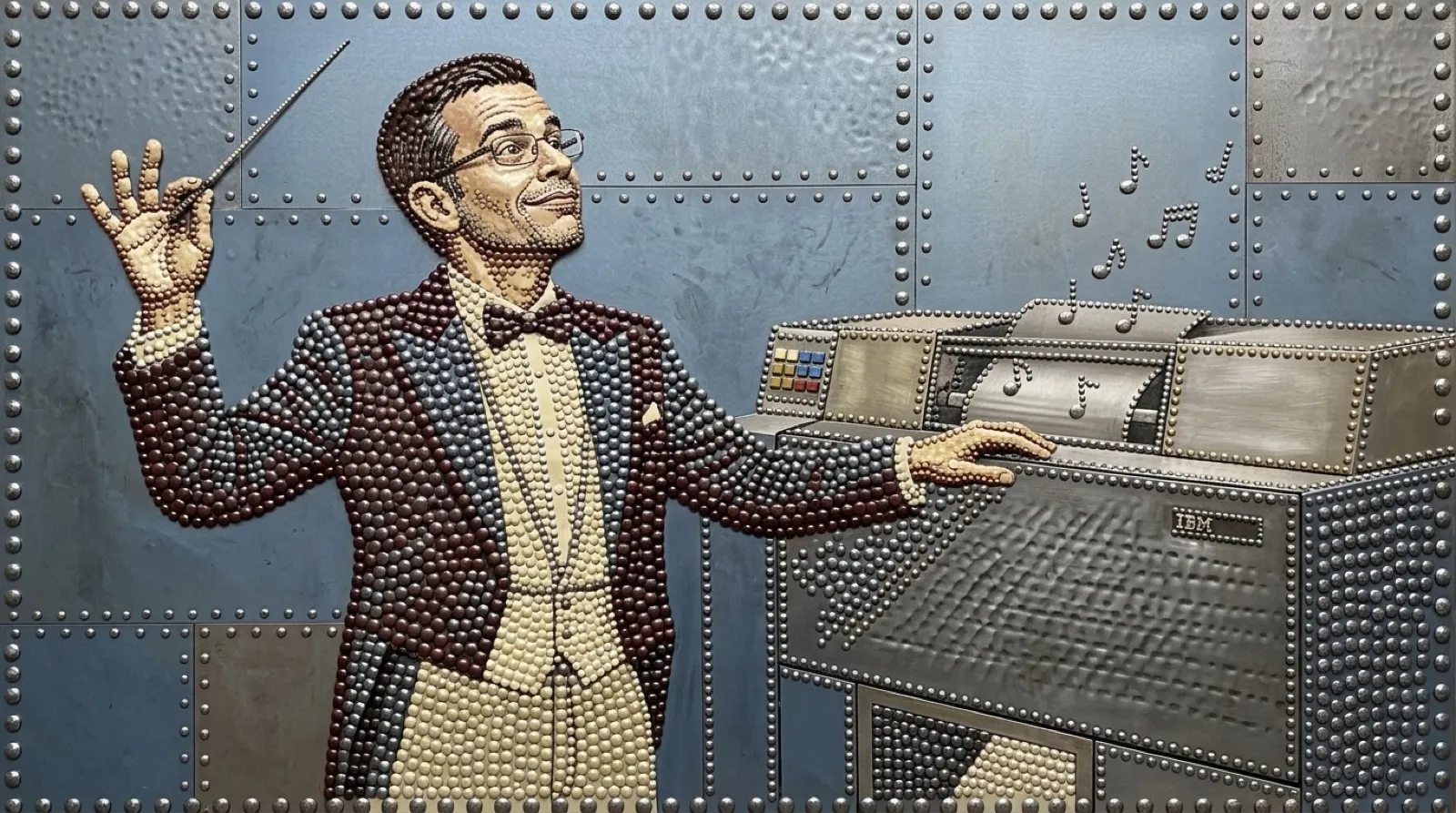
The sheet coming out of this IBM printer looks wrong until you listen to it. Carefully arranged nonsense characters make its hammers strike at musical intervals. The printer is producing the score and the sound in the same operation, which gives “sheet music” a rather more literal job description than usual.
Ken Shirriff investigated recovered punch-card music programs on the Computer History Museum’s IBM 1401 system. His 2019 account describes an IBM 1403 line printer with a moving character chain and 132 print positions. A hammer strikes when the desired character passes the appropriate column. Choosing the characters therefore also chooses when the mechanical impacts occur.
A note at 440 Hz needs impacts separated by 1/440 of a second. The text looks scrambled because left-to-right order on the paper is different from time order along the moving chain. It is a lovely little reversal for anyone accustomed to reading a log and assuming the events happened in the order they appear across a line.
The program turns that relationship into playable notes. Shirriff explains that the recovered cards define lines for particular frequencies, then encode the song’s notes and durations. The source code was missing, so he disassembled the machine code to recover the method. A tune survived in instructions for business hardware, with enough structure left to explain how it had been performed.
Play the video on YouTubeThe museum team’s recordings page collects printer music alongside other 1401 sounds and demonstrations. Hearing the mechanism matters here: it gives the odd printed output a purpose that a photograph cannot convey. Nobody needs to pretend it sounds like a modern synthesizer to appreciate the amount of control extracted from a machine built to print documents.
There was also a preservation concern. A vintage printer chain is a part with a finite life, and a playful program is a poor reason to destroy an irreplaceable component. Shirriff documents the team’s hesitation and the use of a rebuilt chain. The result was reassuring: “the printer survived unscathed”. A concern about possible damage should not turn into a headline claiming a musical disaster that never happened.
That distinction matters when the demonstration includes photos of damaged parts. Shirriff identifies those failures as separate incidents, rather than consequences of the music. An image of a broken component is dramatic enough without lending it a soundtrack it never had. The real achievement is already plenty strange: a working printer can be told what pitch to make by choosing what it prints.
For someone who wants to understand the trick, the timing diagrams in Shirriff’s post are the useful stop after the video. Comparing the character positions with their firing times explains why an apparently chaotic line produces a regular tone. The surviving performance settles that it worked; how long a rebuilt mechanism would tolerate repeated concerts remains outside what one successful demonstration can prove.
The printer finally found its tone.