
Bill Atkinson improved on Xerox windows without knowing their limit
Bruce Horn’s 1996 account describes the invisible bookkeeping behind a desktop feature people now expect to work.
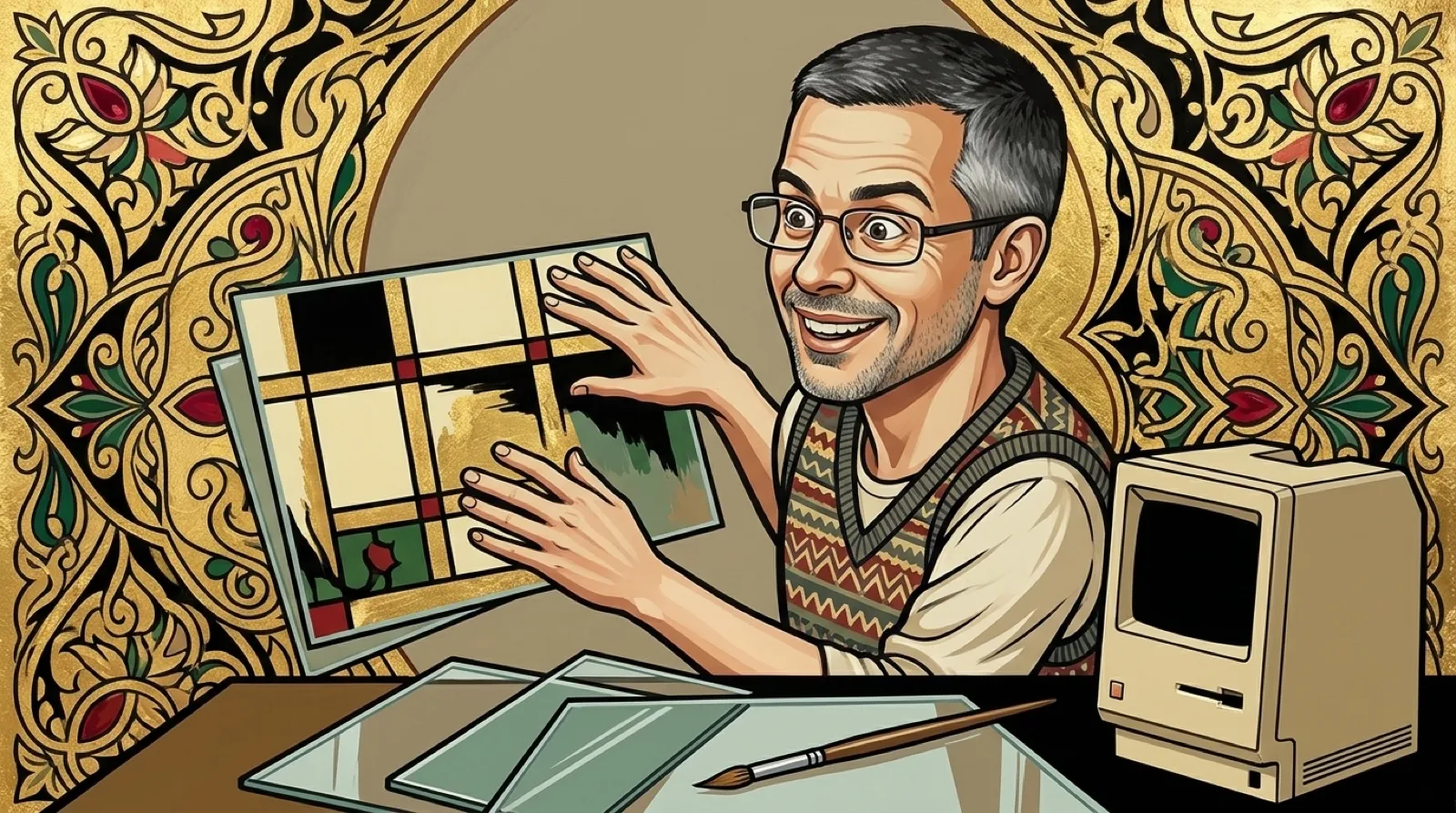
Moving one window away from another should reveal whatever was underneath. That expectation sounds too dull to have an origin story, until the alternative involves clicking a window to persuade it to show its own contents. The desktop once needed a little more encouragement.
Macintosh designer Bruce Horn describes the difference in his essay about Xerox and Apple. Horn worked at Xerox before joining the Macintosh effort. His account challenges the familiar shorthand in which Apple saw a graphical interface and simply brought the whole thing home in a shopping bag.
The window behavior is the example you can picture without a museum guide. Horn says the Smalltalk system lacked self-repairing windows and could not draw into partly obscured ones. A border on the screen tells the viewer where a window appears to end. The drawing system still needs a way to describe which pieces of it are available to paint.
Horn says Atkinson “did not know this” and developed regions for QuickDraw and the Window Manager. That is an unusually productive misunderstanding. Believing a behavior ought to work left Atkinson with a problem to solve, even though the system people cite as the inspiration had not solved it that way.
A region supplies a way to represent an area that can have a more complicated shape than a rectangle. Imagine a paper laid on a desk with another sheet covering its corner: the exposed part remains one object to the person looking at it, but its outline now has an extra bite. The software needs equally useful bookkeeping before it can decide where fresh drawing belongs.
The interesting achievement is under the visible interface. Anyone can draw two overlapping rectangles in a mockup. Keeping applications drawing correctly while those rectangles move requires the machinery behind them to agree about what is covered, what has become exposed and which parts need attention. A screenshot is conveniently silent on all of that.
Horn’s essay is a participant’s retrospective, written in 1996. That makes attribution matter. It supplies a specific developer’s account of the relationship between the systems; it does not license turning a single recollection into a verdict on every invention at either company. The useful detail here survives without making the whole history a contest for one trophy.
The same distinction matters when comparing today’s applications. Two interfaces can resemble each other while behaving differently the moment a real person resizes something, switches tasks or interrupts an operation. A feature comparison built entirely from screenshots leaves the hard part conveniently outside the frame.
Atkinson’s example points toward a better demo question: what happens when the happy path is partly covered by something else? The answer would show the behavior. Horn’s recollection still leaves the counterfactual hanging: what would Atkinson have built if somebody had explained the supposed limitation first?
QuickDraw had to fill in the blanks.