
A newly archived Math Blaster floppy keeps every sector, down to its original magnetic readings
Preserving the magnetic capture keeps future recovery options beside a readable disk image.
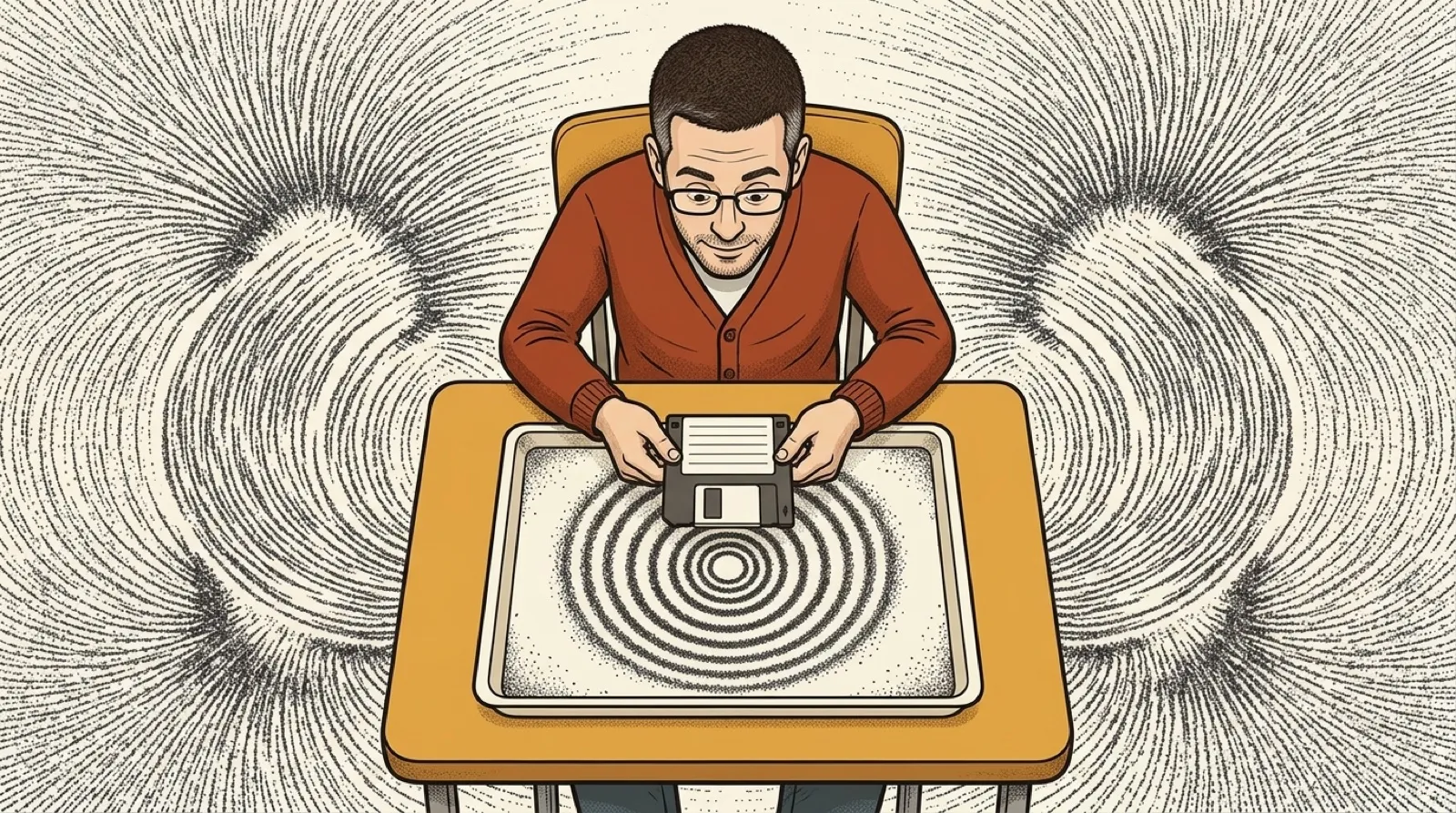
A newly archived Math Blaster floppy brings back the arithmetic, but it also keeps the magnetic evidence underneath the files. The November 10 upload includes a decoded disk image and the raw flux captured from the original. Even the homework has a preservation strategy now.
The Internet Archive item, uploaded by Tony Atkins, identifies the disk as NEW Math Blaster PLUS!, an IBM-compatible DOS release on a 3.5-inch 720KB floppy. Its description reports a Greaseweazle V4.1 capture and successful decoding of 1,440 out of 1,440 sectors.
The listing reports 121 files and keeps the raw capture in SCP format alongside the interpreted image. Those are the uploader’s preservation claims, not a fresh verification of the physical disk. The label and directory contents establish what this particular item contains; they don’t establish a new release date for the game from the dates on individual files.
That is a useful distinction with old disks. A file can be copied, updated or replaced long after the software first appeared. An archive can identify exactly which disk it read without turning a directory timestamp into a convenient origin story. The calendar shouldn’t get a passing grade just because the game teaches numbers.
A decoded image is useful because software can work with the disk structure directly. The raw capture is useful because an interpretation can later be revisited. Keep both when an archive supplies them, rather than decide that the file easiest to open today is the only copy tomorrow’s tools might need.
That doesn’t mean everybody who remembers the school computer lab needs to learn magnetic decoding before looking at the game. It means the person doing that work has kept the difficult part for the next person. Preservation gets more practical when the easy-to-use result and the deeper evidence travel together instead of competing for space in the explanation.
The listing also leaves the software’s ownership with its rights holders. An accessible archive and a public-domain release are different claims. The item supplies its own description and file list; the preservation upload makes no claim to release the underlying software into the public domain.
The least glamorous files in an archive often make the next recovery possible. A readable image gives an old title another chance to appear, while the raw capture keeps an earlier stage of that chance available.
The preserved file list includes separate CGA graphics assets. Those filenames give a future researcher another way to identify the contents without guessing from the disk label alone.
All 1,440 sectors showed their work.