
The 16GB Raspberry Pi 5 now costs $385, up from its $120 launch price
Raspberry Pi attributes the new increase to 16GB DRAM supply and other shortages. The same board costs $265 more than at launch.
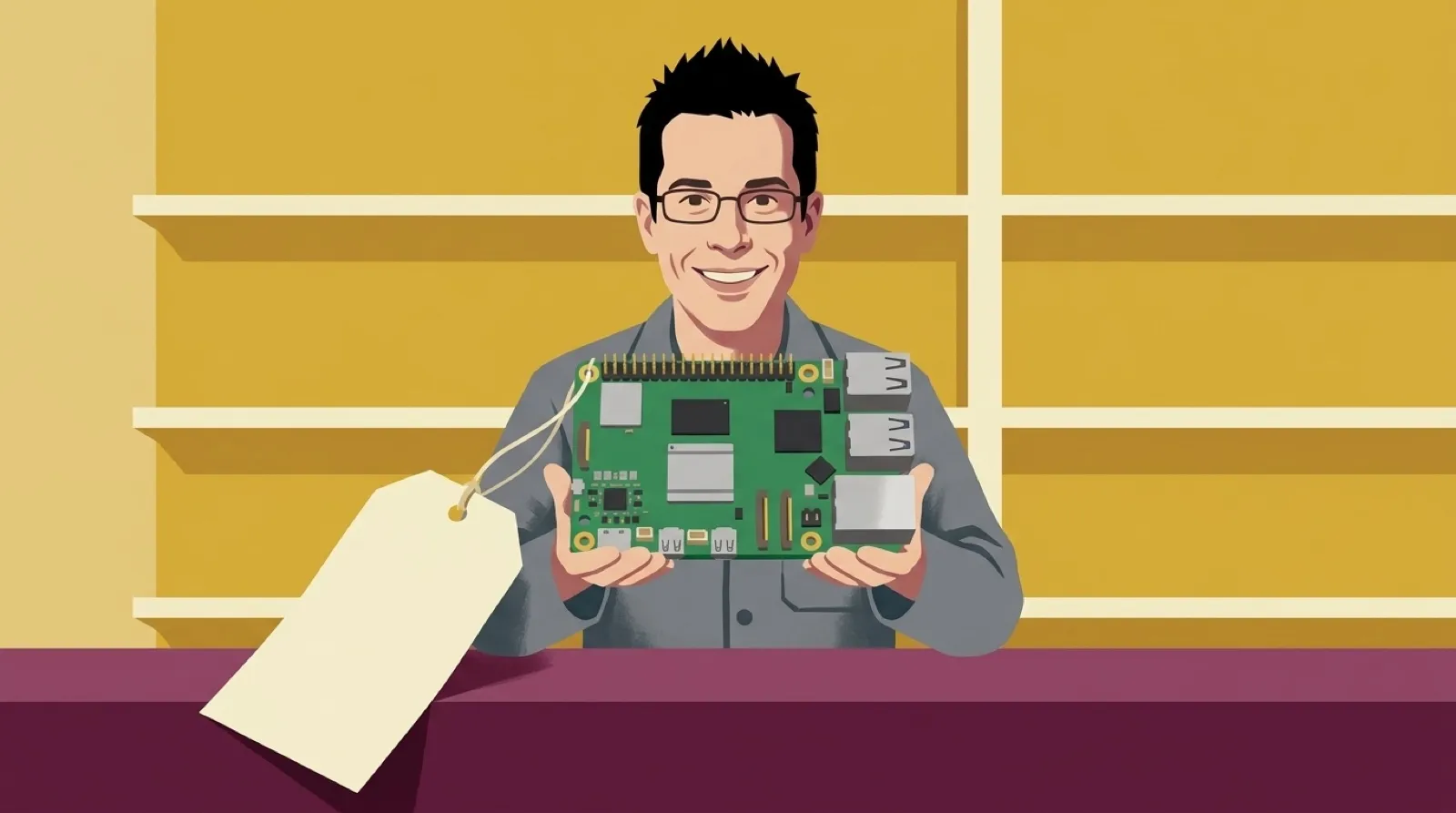
The 16GB Raspberry Pi 5 has reached $385 without becoming a different board.
The company attributes this increase to a lack of alternative 16GB DRAM supply, compounded by other component shortages. The new announcement describes “a lack of alternative supply for 16GB DRAM”. Its January 9, 2025 launch post put the same capacity at $120.
| Product or reference point | RAM | Official price change or price |
|---|---|---|
| Pi 5 at January 2025 launch | 16GB | $120 |
| Pi 5 immediately before this increase | 16GB | $305, calculated as $385 minus $80 |
| Pi 5 from November 2, 2026 | 16GB | $385 |
| Compute Module 5 variants in this announcement | 16GB | Increase of $40; total varies by configuration |
| Pi 500+ in this announcement | 16GB | Price held; no new total stated here |
The arithmetic is $385 ÷ $120 = 3.21 times the launch price, or about a 221% increase. This chart compares the same board across time and the alternatives addressed in the notice; it does not pretend a compute module is a complete desktop replacement.
The notice singles out high-density memory products. Raspberry Pi says it has been qualifying alternative parts to widen its purchasing options, but the missing alternative supply for this capacity limits that route. That matters when comparing the notice with a reseller’s price: this increase comes from Raspberry Pi itself. Shopping around may avoid an additional markup, but it cannot recover a launch price the manufacturer no longer offers.
Raspberry Pi also warns about sellers using the shortage to charge inflated prices or supply products that differ from what buyers expect. Its Approved Reseller directory is the route the company recommends for finding a vetted supplier. An unusually expensive listing needs checking against the official price; an unusually cheap one needs checking just as carefully against what is actually in the box.
The unchanged Pi 500+ price deserves attention for anyone building a desktop, although the announcement doesn’t supply a new total for it. A keyboard computer, a bare Pi and a compute module ask you to supply different surrounding hardware. The useful comparison starts with the job and ends with a complete bill. Reusing an existing Pi may avoid both the new board cost and another collection of accessories.
A small service that already runs comfortably on an older board has no new requirement simply because the price list changed. A dated memory measurement could be worth more to that decision than the RAM tier you bought last time.