
Steve Jobs brought Mick Jagger a Macintosh; Jade found the fun in MacPaint
Andy Hertzfeld’s recollection of a launch-week celebrity visit includes an unexpected change in the demonstration’s audience.
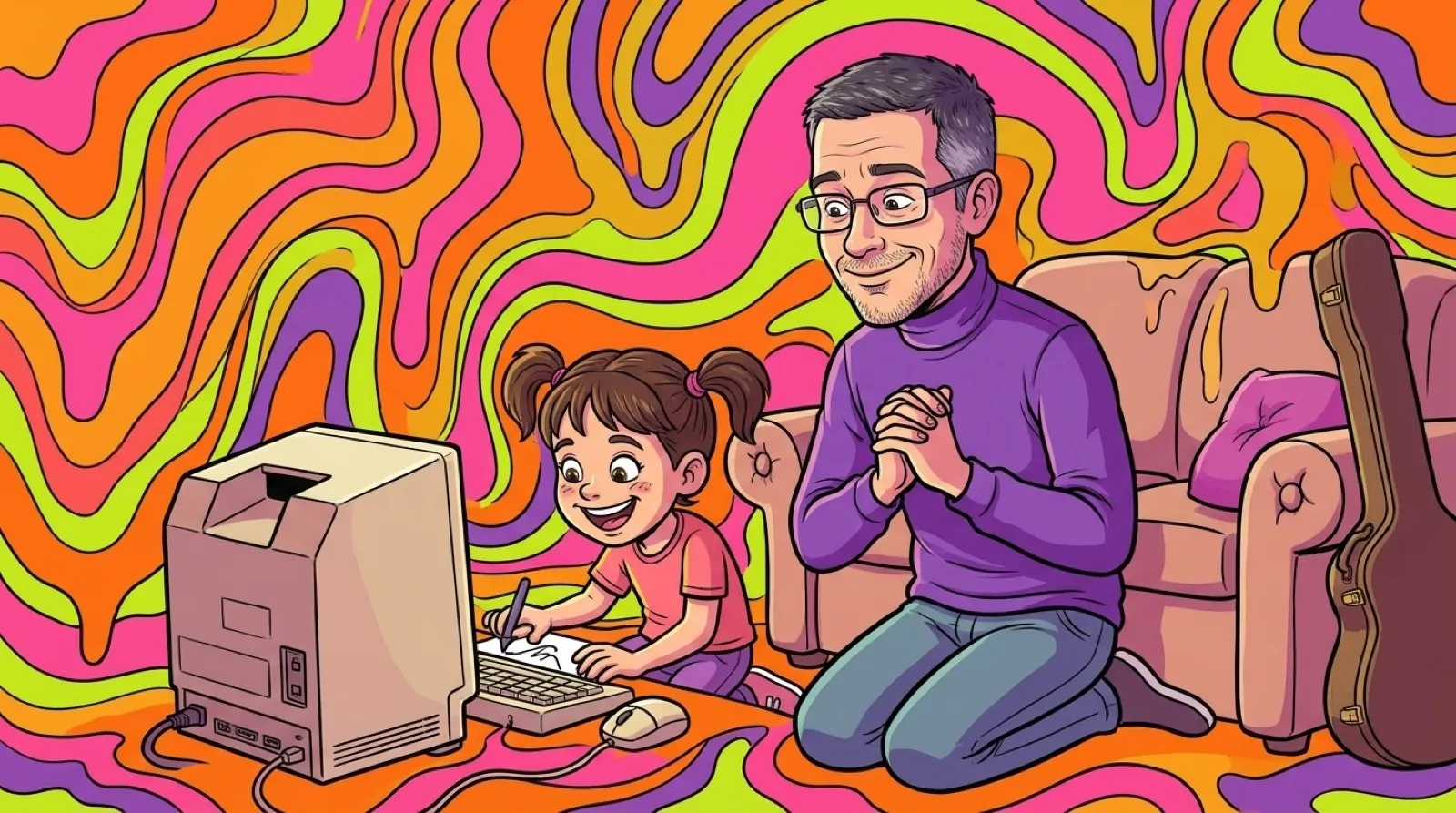
Steve Jobs took a Macintosh to meet a Rolling Stone. The demo found a more enthusiastic audience in the room: Mick Jagger’s daughter Jade. According to Andy Hertzfeld’s recollection, MacPaint kept her interested for roughly another half hour, and the computer stayed behind when the Apple visitors left.
Hertzfeld tells the story on Folklore, with an important wrinkle in its sourcing: he did not go. He was working toward the Macintosh software deadline and heard the details from Bill Atkinson, Jobs and Mike Murray afterward. That makes this a participant’s collected recollection, with the chain of telling included rather than quietly airbrushed out.
The invitation itself interrupted a very busy stretch before the Macintosh introduction. Hertzfeld recalls weighing the trip against the software work and declining. A chance to meet Mick Jagger sounds irresistible until the release calendar starts humming along in the background. The rock star had competition from a factory deadline, which is a particularly computer-industry problem to have.
The visiting group set up the machine and launched MacPaint. In Hertzfeld’s telling, Mick showed little interest and eventually moved into another room. Jade stayed, learned from Atkinson and kept using the program. The anecdote supports that contrast in attention; it cannot tell us everything either person thought about computers afterward.
Hertzfeld writes that Jade was “fascinated by what she could do with MacPaint.” The useful detail is the doing. A person can politely watch a demonstration without wanting its product. Taking the mouse and continuing to make something supplies a different signal, and one the salesperson cannot produce by talking faster.
A drawing application gives that signal room to appear. The demonstration can turn into a personal task as soon as the visitor chooses what to draw. The computer’s capabilities become visible through the person’s own choices, which is much more informative than a rehearsed sequence the presenter could perform with their eyes closed.
The story also shows why a famous target can make everyone else in the room seem secondary. Jobs came to show a celebrity a computer. The person who wanted to keep using it changed the ending of the visit. A marketing plan can name its audience in advance; a live demo still gets to disagree (awkward, but useful).
For someone showing a new tool to a team or a family member, the practical question becomes when to stop presenting. A person asking for the next turn with the product may have more to tell you than the person nodding through the pitch. Leaving space for that switch can change what the demonstration reveals.
Hertzfeld’s account ends with the machine being left for Jade. It leaves the drawings themselves undescribed, and that is a more interesting missing detail than guessing why her father went elsewhere. The intended celebrity endorsement remains outside the frame, while the new user is still at the mouse.
Jade got the paint job.