
Triage only sends you the bug reports that crash again on a clean machine
Triage lets a user's AI assistant file a bug against the exact version they run, then replays it on a throwaway machine and drops anything that doesn't break twice.
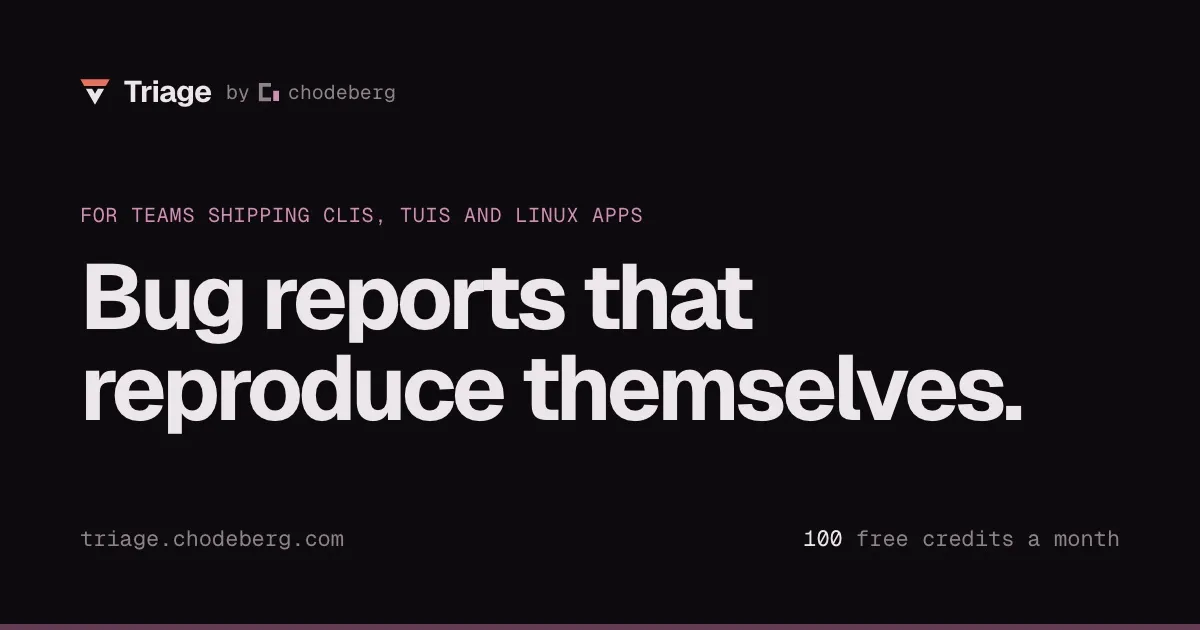
“If it doesn’t break again, it doesn’t reach you.” That’s the whole pitch on the Triage home page, and it means the bug tracker throws reports out on purpose.
A customer hits a bug and tells their AI assistant, which files it through your MCP server. Wiring it up is one line, claude mcp add chodeberg --transport http https://api.triage.chodeberg.com/r, and the demo reports on the page are “filed from Claude Code.” Then, per the page, “Their agent opens the exact version they run and drives it until it breaks.”
That’s the user’s machine. Triage doesn’t trust it. It “replays every report on a clean machine,” built from your repository, where every release gets its own environment and new builds kick off on every tag. “A crash only counts if it happens on your untouched release,” the page says. A report that survives arrives as a live link and a README filed under the version it broke, plus a record of “memory, CPU, processes, the crash itself, and what was on screen.”
The whole thing is one shop. Triage’s terms say it’s “operated by Chodeberg, a sole proprietorship based in the United States,” and everything here comes from Chodeberg’s own pages. There’s no outside write-up or customer story yet to say how often a real report survives the replay.
That number is the one to watch. If most user reports die on the clean machine, the next fight moves to what the reporter’s machine had that yours didn’t: a config file, an environment variable, a terminal that renders things a little differently. Tooling that captures that difference, instead of discarding the report, is the obvious next piece somebody builds.