
Nintendo's red-screen headset looked like a five-game toy to Miyamoto, but sold as a platform
Nintendo’s own retrospective separates a specialist novelty from the expectations attached to a major console launch, and places Miyamoto outside the project’s decision-making authority.
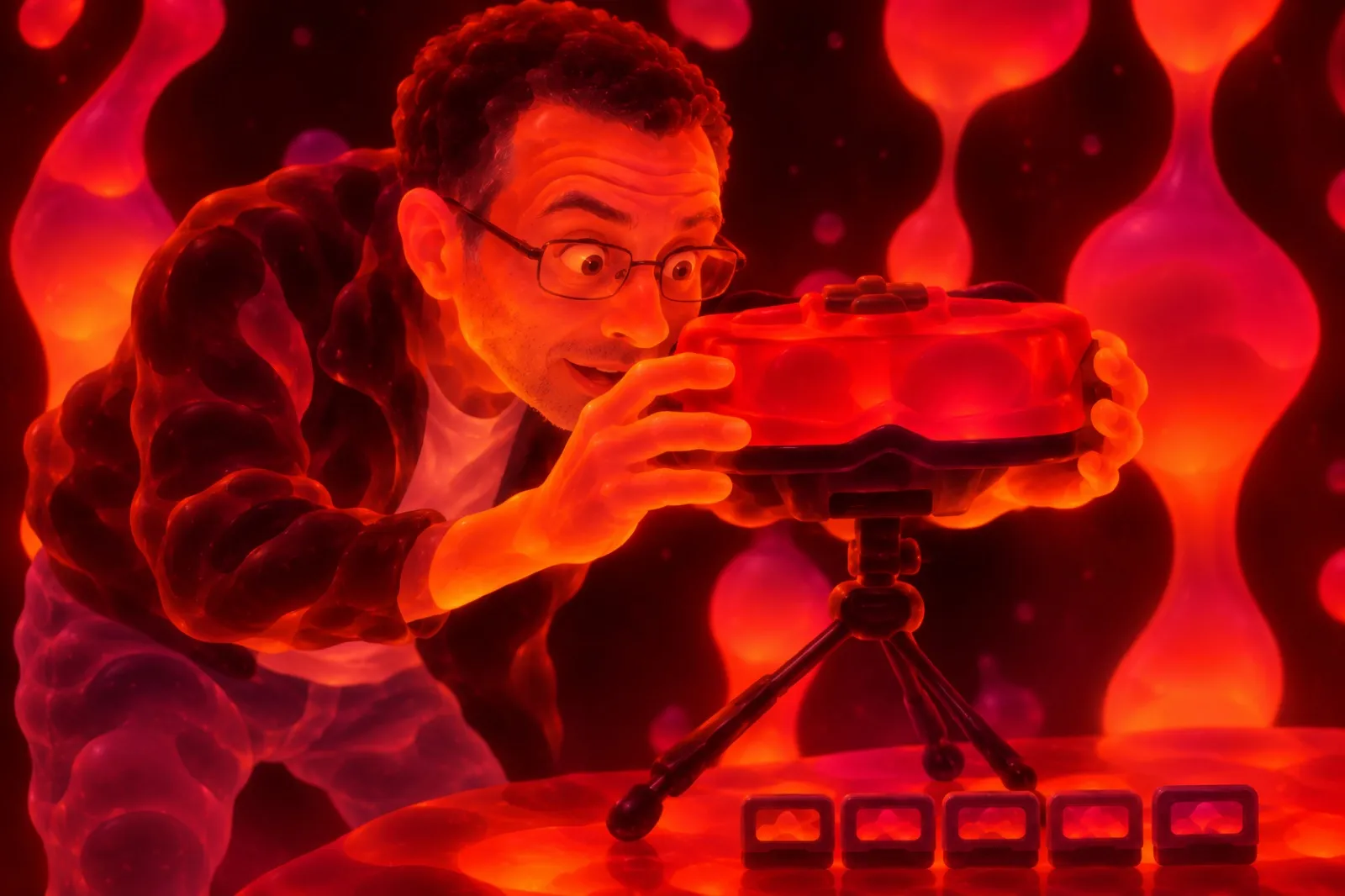
Five very good games could have been enough for Virtual Boy, in Shigeru Miyamoto’s telling. That sounds odd only after you’ve decided every box Nintendo sells must grow an entire game platform around itself.
Miyamoto describes that mismatch in Nintendo’s own retrospective conversation with Satoru Iwata and Shigesato Itoi. This account comes from Nintendo’s published Spanish transcript; the English descriptions here are paraphrases, rather than an invented English quotation.
He says the red-and-black Virtual Boy made sense to him as a curious toy for someone willing to spend a little extra on a different kind of entertainment. The world treated it as a Game Boy successor, and Nintendo’s own sales operation presented it as a new console.
The expectations changed with that presentation. Miyamoto contrasts a toy selling more than 50,000 with a platform for which 100,000 would only be a beginning. Those are his illustrative thresholds in the conversation, not a claim about Virtual Boy’s actual sales or a reconstructed business plan.
He later imagines the toy developing popularity into a larger market. Starting small would have made the initial promise smaller too: a handful of experiences to enjoy, rather than a broad future catalog the customer was supposed to believe would arrive.
His role matters as much as his criticism. Miyamoto says he was occupied with Nintendo 64 during Virtual Boy’s development and wasn’t one of the people in charge. When Iwata raises his inability to determine how it was presented, Miyamoto answers, “No disponía de la autoridad necesaria.” He didn’t have the necessary authority.
Putting him in charge of the launch would make a cleaner tale of a designer overruled on his own product. It would also misrepresent the interview. Nintendo’s conversation discusses Gunpei Yokoi’s central part in Virtual Boy, while Miyamoto describes his own interest in three-dimensional goggles and the complications he saw.
The hardware wasn’t exempt from the discussion. Miyamoto talks about the limited appeal of its visual approach and the awkward appearance of somebody peering into it. Itoi and Iwata discuss how Nintendo’s other products fit into everyday life. A neat device still has to find a place in the room, including a person willing to use it there.
That distinction reaches beyond one old headset. A specialist device can offer a complete small pleasure; presenting the same hardware as a platform asks buyers to make a much larger bet on later software. The unresolved counterfactual is whether different promises would have given Virtual Boy a sustainable place. The interview offers an alternative intention, not a second launch we can measure.
Five games could have been enough.