
A free browser toy finds full names made from exactly the same letters as yours
Louis Abraham separates observed full names from plausible combinations, with the data’s uncomfortable origin kept visible.
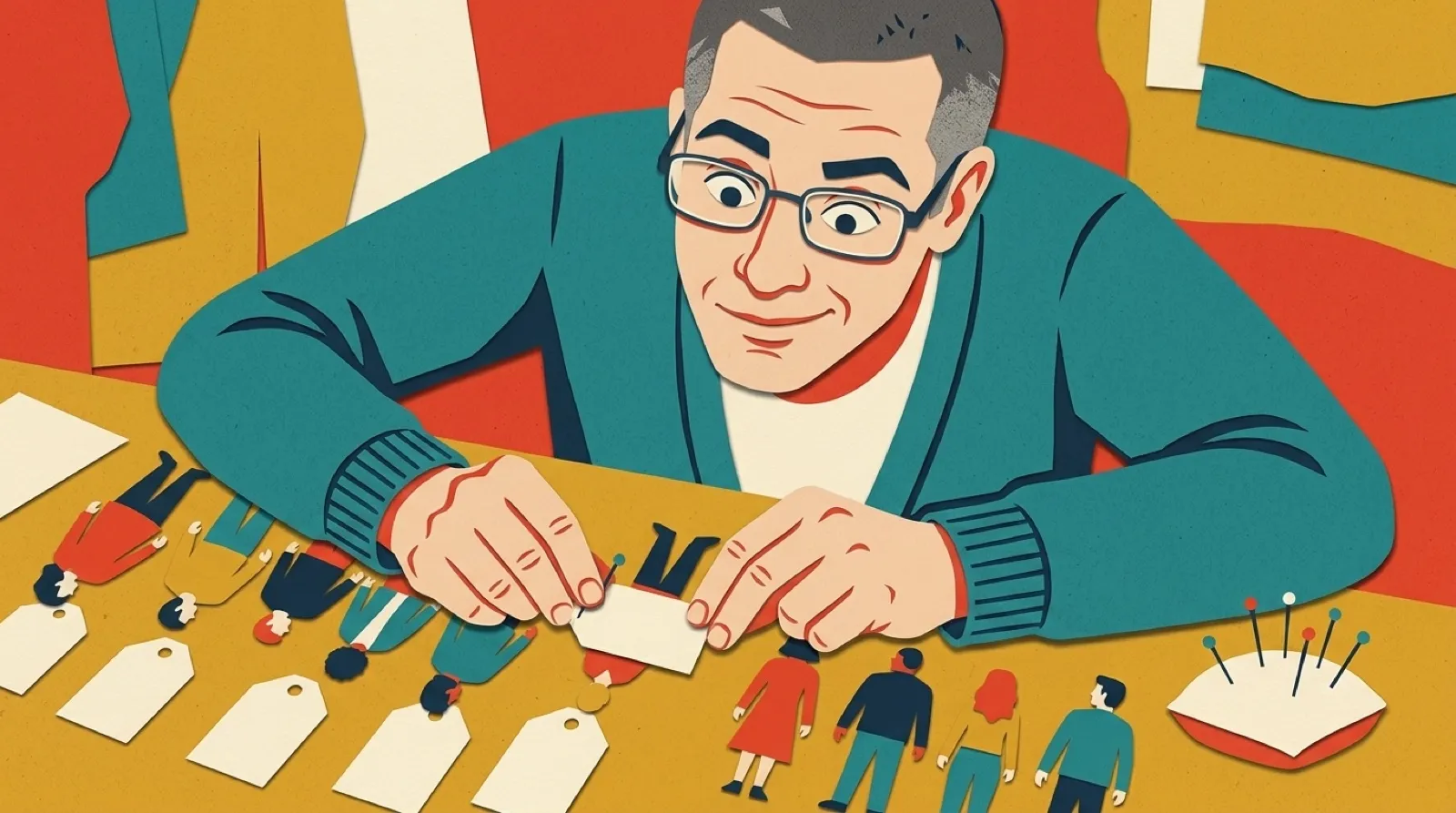
Your name gets a casting call for alternate identities. Anagranames takes the letters already on the badge and finds other first-and-last-name combinations that use exactly that inventory. The alphabet stays on budget; the possibilities do not.
Louis Abraham’s technical explanation describes two different searches. One checks observed full names. The other combines first names and surnames and ranks the results. A convincing result in the second list does not establish that a person with that complete name exists.
That distinction is especially useful in a toy this easy to screenshot. A plausible full name can look like a discovered identity once a caption loses its qualifiers. The app labels its observed results “Real.” Its data source is still a dataset, with all the limitations that word carries.
The uncomfortable detail appears in the project’s own README: the observed names come from name_dataset, derived from the 2021 Facebook leak. This is not a new population census, and an entry should never become a reason to contact or identify a stranger. A party trick can keep its party manners.
The browser-size problem has a charming answer. The project groups roughly 155 million distinct full names into 4,096 files using a checksum that ignores letter order. Every anagram of one input lands in the same bucket, so the page fetches that bucket rather than dragging the whole collection into your tab.
Abraham puts the average bucket at 113 KB. That figure belongs to the observed-name lookup, rather than the complete initial download. The synthetic search uses separate structures and a ranking model. Calling the entire app a 113 KB download would require some creative accounting (the usual kind).
For the synthetic combinations, the search keeps track of the letters remaining after a first name. Those remaining letters constrain the surname search. Imagine handing over the unused Scrabble tiles instead of asking someone to search every surname on Earth. The elimination does most of the useful work.
A reader can try a familiar public example before entering a personal name. Changing punctuation or accents deserves attention because the documented normalization reduces names to letters A through Z. Exact matching happens after those changes, so visual differences in the original spelling may disappear.
The project says the search runs in the browser without sending the entered name. That is a statement from its own documentation, not an independent privacy audit. Local computation and ethically uncomplicated source data are separate questions; one checkbox cannot answer both.
The promising design lesson is a search that downloads the slice its question actually needs. That could make other large static collections practical in ordinary tabs. The unresolved part is less computational: a wonderfully compact lookup still inherits the history of the records it searches.
New name. Same letterhead.