
A Raspberry Pi Pico adapter reaches an Apple Silicon Mac’s hidden USB-C serial console
A custom service adapter exposes a recovery conversation that a silent screen cannot show.
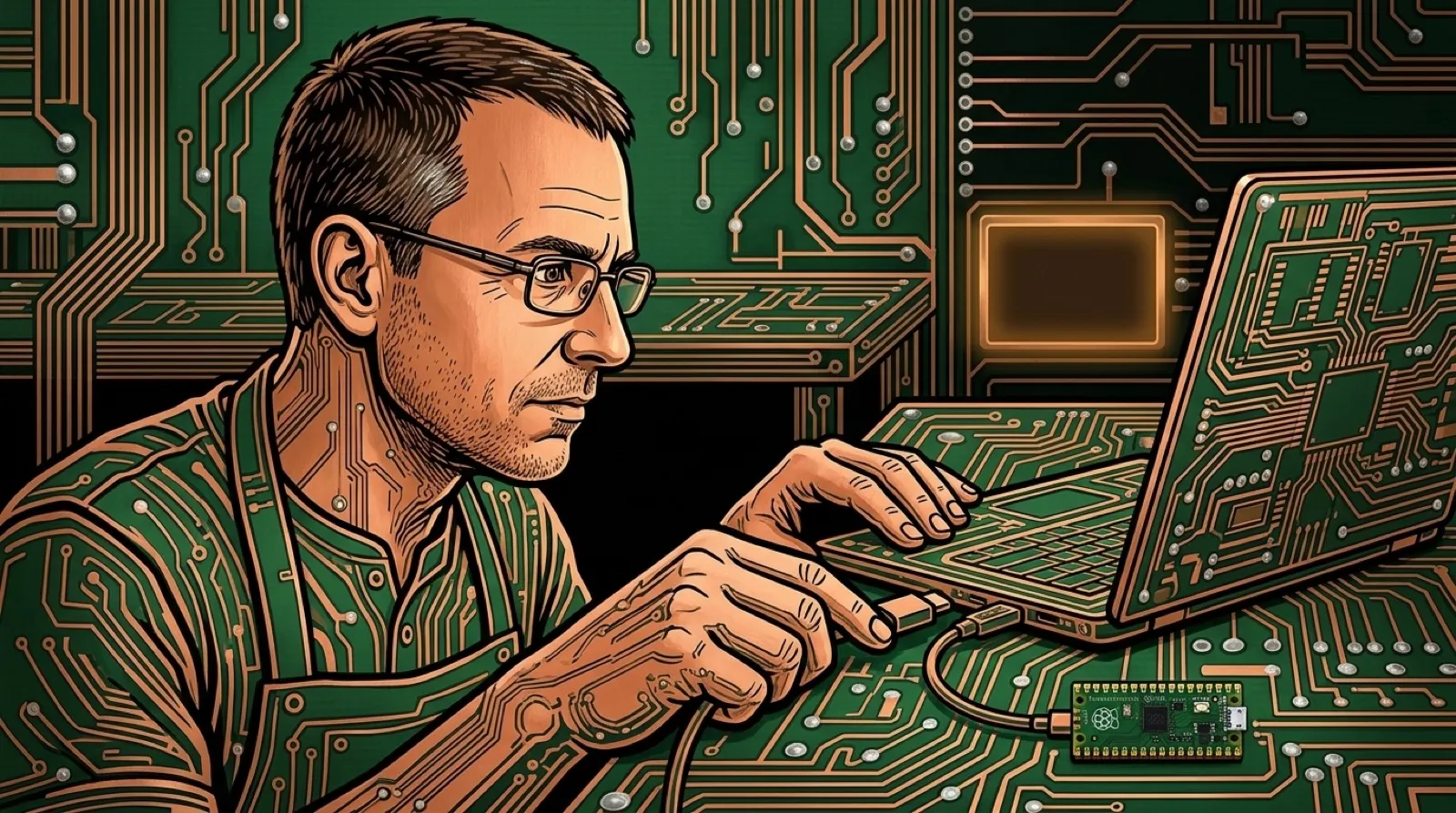
A Mac that can’t put anything on its display can still have plenty to say. Central Scrutinizer reaches the serial lines on the USB-C DFU port, giving low-level developers a route to the conversation before the normal screen and keyboard are available. Apple’s minimalist exterior apparently has a basement entrance.
The maker, maz, describes an open-source adapter for M1 through M4 machines. A Raspberry Pi Pico runs the control firmware on a small custom board. The project presents a standard USB CDC serial connection, so the host side doesn’t need a special driver just to receive that stream.
Its project page also documents reset control through vendor-defined messages to the Mac’s power-delivery controller. Console output and reset requests are distinct capabilities. One helps explain a failure; the other lets a remote operator get past a machine that has stopped responding to its usual controls.
For somebody doing ordinary desktop work, this is a very elaborate route to information they probably don’t need. For somebody bringing up an operating system, the normal troubleshooting tools may depend on exactly the subsystem that isn’t working yet. A crash report isn’t much help if nothing gets far enough to save one.
The maker says the hardware, firmware and printable case are open source. That matters here because a page explaining an unavailable accessory would otherwise send readers directly into an empty shopping cart. Having the design files leaves an actual path forward, although assembling a board remains a different commitment from clicking Buy.
The project distinguishes the build files from a ready-made adapter. An ingenious adapter doesn’t become a stocked consumer product because the pictures look finished. Budget for fabrication, assembly and checking the resulting board, rather than assume the little Pico is the whole shopping list. Small circuit boards have a way of hiding a surprisingly large afternoon.
Check the specific machine and connector arrangement before relying on it for unattended recovery. A documented capability is useful; discovering the wrong port during an outage is less charming.
The best homebrew service tools keep looking slightly excessive until the first failure they can explain. Central Scrutinizer makes a normally hidden interface available, but it still needs someone who knows what to ask once the machine starts talking.
The adapter also exposes a USB2.0 pass-through, according to the project page. That makes the board more than a receive-only log reader: the same connector arrangement has to accommodate the Mac talking and the attached USB device working.
The quiet Mac has another port of call.