
Betamax vs. VHS: Sony’s one-hour starting point became an expensive moving target
Museum records and Sony’s history show why cassette format, deck generation and recording mode belong in the same comparison.
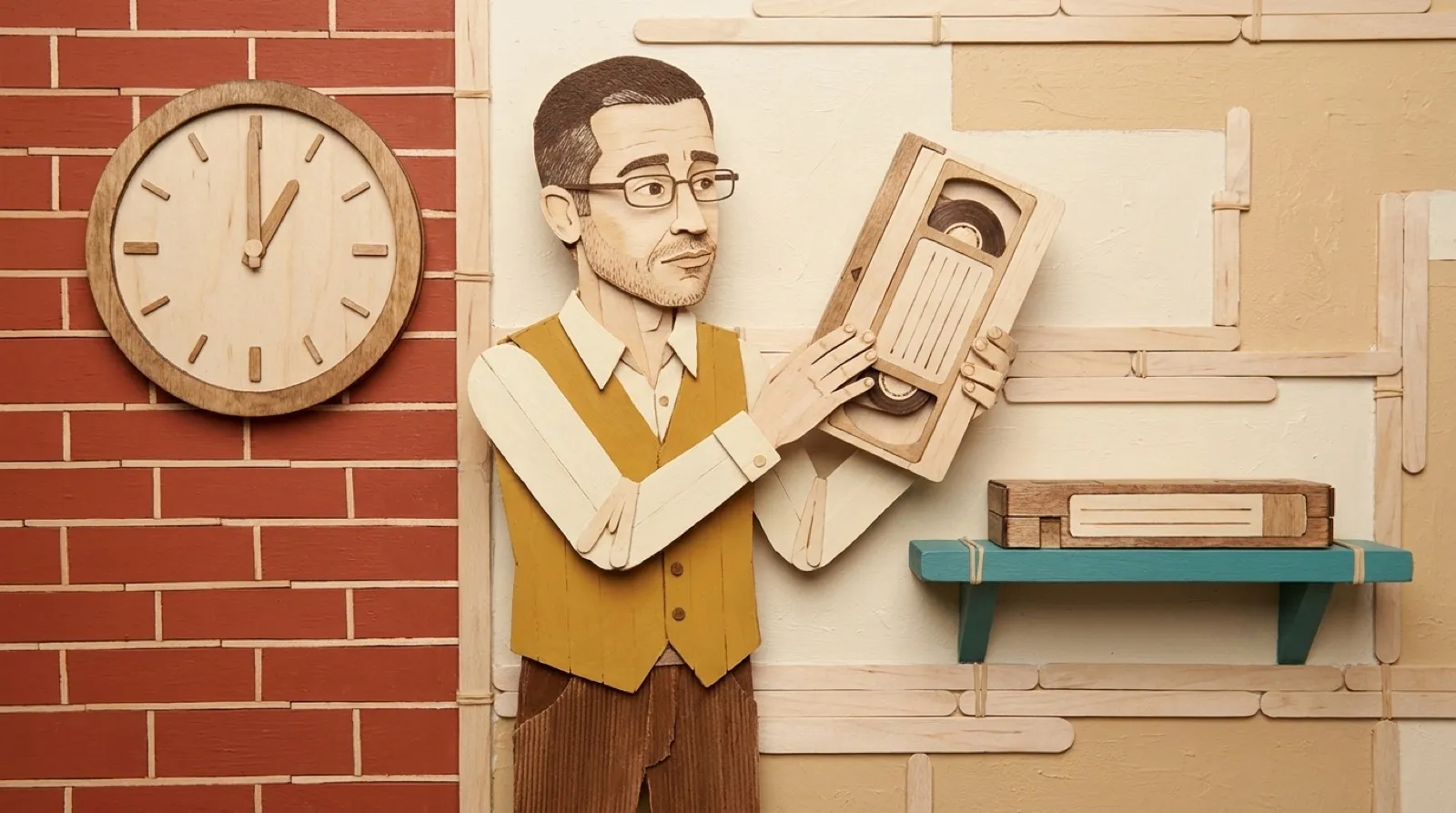
A recorder that runs out before the program ends has a very specific picture-quality problem: the rest of the picture is missing. Early Betamax’s one-hour tapes made that a practical concern, regardless of how fondly anyone remembers the format’s image.
Sony’s corporate history places its Betamax introduction in 1975 and VHS’s arrival in 1976. It describes the competing priorities plainly: compactness and image quality on one side, two-hour cassette capacity on the other. The formats couldn’t play each other’s tapes. Picking a machine also meant picking which recordings would work in it.
The National Science and Media Museum’s account adds an important correction to the shorthand. Early Beta tapes held an hour, but later Beta machines offered longer recording. Its discussion of 1977 Betamax II equipment makes the point: the one-hour figure describes a starting condition. It cannot describe every Betamax deck forever.
That turns the comparison from a slogan into something a buyer could actually use. Which machine? Which tape? Which mode? A cassette is a physical length of recording material, and the mode determines how it gets used. The name on the format answers only part of the capacity question. Even nostalgia has fine print, and the format label leaves out the deck and recording mode that determine whether a particular tape will work.
| What needs comparing | Early Betamax | Early VHS | Later Beta equipment |
|---|---|---|---|
| Recording duration in these histories | One hour on initial tapes | Two hours per cassette | Extended modes offered longer recording |
| Cross-format playback | Cannot play VHS | Cannot play Betamax | Longer Beta recording does not make it VHS |
| Useful purchasing question | Does the actual tape hold the show? | Does this deck support the chosen recording? | Which deck and mode made the recording? |
A family recording something longer than an hour would care about interruption before it cared about winning a format argument. That is a hypothetical household decision, but it exposes why runtime is a consequential specification. Having enough storage to capture the thing you wanted is useful before any debate about which version looks nicer.
The historical outcome also needs more than a stopwatch. Sony’s account discusses VHS manufacturers spreading across major electronics companies and a large software catalog, followed by Sony offering VHS-compatible products in 1988. A one-factor explanation would discard those parts of the same source. The runtime explanation becomes less complete when the manufacturer participation and available recordings described by Sony are removed from the account.
For someone sorting old recordings now, the lesson has an immediate use. A format label alone doesn’t establish the recording mode or whether a particular deck can reproduce the tape properly. Before assigning a playback problem to damaged media, the equipment and recording mode deserve attention. The cassette has kept its recording; it may simply be waiting for a compatible reader.
The useful modern parallel is any capacity claim separated from its conditions. Hours, gigabytes and battery-life numbers get much more helpful once the operating mode rides along with them. The remaining question for a specific old tape is still physical: which machine recorded it, and which surviving machine can read that recording?
The ending needs to fit.