
Calibron checks whether four puzzle pieces have already ruined your chances
Dawn of the Dad's browser version lets you share a half-filled board and watch a constraint solver work backward.
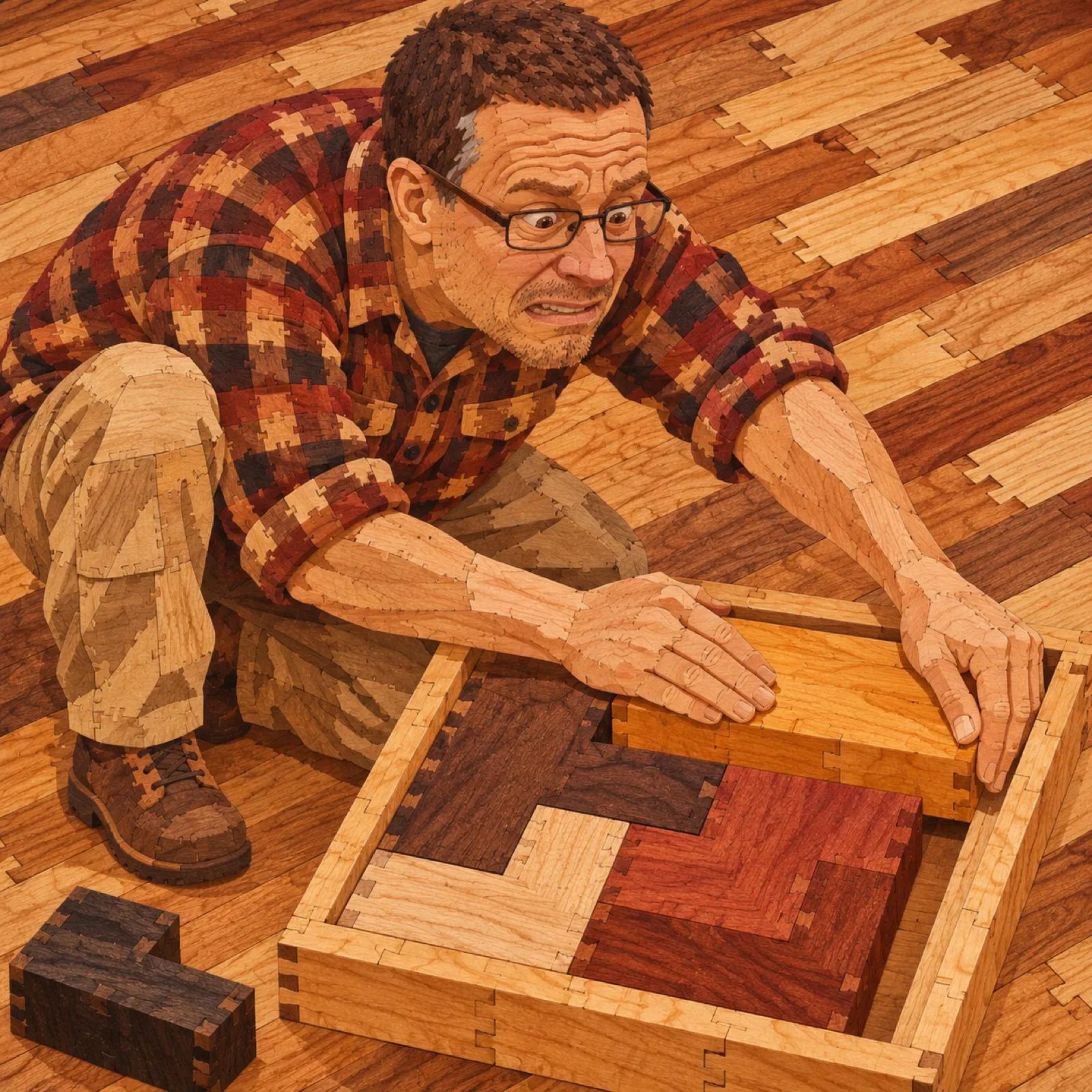
Four rectangles fit. Eight remain. Everything looks reasonable, which is exactly when a packing puzzle can start wasting the rest of your afternoon.
Dawn of the Dad’s Calibron gives that reasonable-looking arrangement a second opinion. Once you’ve placed at least four pieces, Check becomes available. The maker’s instructions say it asks a backend constraint solver whether a complete arrangement still exists. You can find out that you’ve boxed yourself in before spending another hour admiring the box.
The board holds twelve rectangular blocks inside a square measuring 56 by 56. Every bit of space must be filled. The instructions call the goal “zero wasted space,” which is a wonderfully optimistic phrase for something capable of consuming your entire lunch break.
You choose a block from the tray, rotate it if necessary, and place it at the next available top-left corner, marked by a pink dot. That matters because this isn’t a freehand pile of rectangles. The interface gives each next placement a defined corner. You’re choosing which piece belongs there and which way it should face, with considerably less room to blame the mouse.
Clicking a piece already on the board undoes that placement and the ones that followed it. A mistake near the beginning can therefore cost several later moves. The checker gives you a reason to reconsider that early choice while you can still remember why it seemed so brilliant (five minutes ago).
A successful check leaves another decision with you. The full answer can stay hidden while you keep working, or you can reveal it. Knowing a puzzle has a way forward removes one kind of frustration without taking away the pleasure of finding that way yourself. A normal hint often hands over a move. This one can leave the move entirely yours.
The optional animation changes the bargain. It shows intermediate placements and backtracking while the backend searches. That can expose more of the solution than you intended to see. The page warns about exactly that; the fast option changes the search’s pace when animation is enabled, so the spoilers can arrive more efficiently if you choose to watch.
Watching a solver backtrack also gives a familiar frustration a visible explanation. A rectangle can occupy a perfectly legal spot while leaving the other rectangles with nowhere to go. The error only becomes obvious later, when the awkward gap refuses every piece left in the tray. The animation can show those reversals rather than presenting a finished board as if it arrived by magic.
That division could work well in other puzzle interfaces. A checker can answer whether the current position is recoverable, with the full solution behind a separate choice. It gives the player control over how much help arrives. Software has enough buttons that answer a small question by doing something much larger.
Here, even the escape route acknowledges whose work you wanted to keep. After viewing a solution, the interface offers a button labeled:
“Back to my pieces.”