
DeluxePaint’s first artist made paintings before its menus existed
Dan Silva’s Amiga tool put keyboard controls inside the drawing action, an interaction detail preserved alongside its early source code.
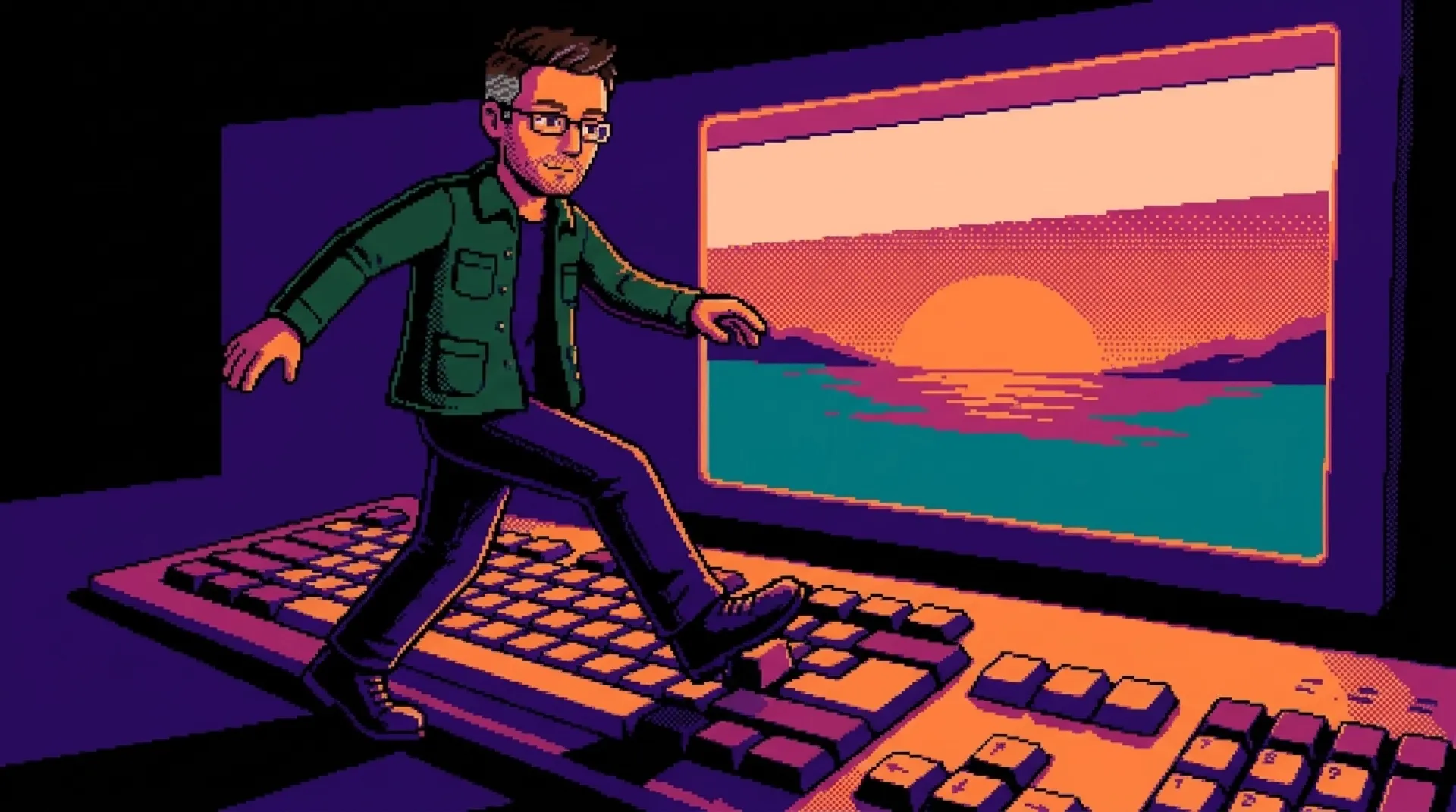
DeluxePaint had paintings before it had menus. Avril Harrison worked with keyboard commands while Dan Silva’s Amiga program was still taking shape, which is one way to keep a menu from interrupting your creative process: don’t have one yet.
The Computer History Museum’s source-code release includes Silva’s recollection of that early work. He described the first version as “all keystrokes.” Harrison used PICK to select colors from the screen. A useful painting program already existed underneath the interface that would make its abilities easier to discover.
The keyboard support remained important after the menus arrived. Silva explains a particularly revealing example: while drawing a circle, the g key could disable the grid. A person could use the grid to position the center precisely, then stretch the circle without remaining constrained by that same grid.
That is a different promise from a shortcut that simply opens a menu faster. The control stays available while an operation is underway. The painter keeps the center already chosen and changes the rule affecting the next part of the motion. A grid can help without insisting on supervising the entire afternoon.
An interface can look simple in a screenshot and still offer a flexible working rhythm. The screenshot won’t tell you whether a command interrupts a stroke, commits it, cancels it or changes it as you continue. Those differences show up in the hand doing the work, where a feature checklist has very little grip.
The museum preserves the 1986 version I source with Electronic Arts’ permission: 89 C files and almost 17,000 lines. The release permits noncommercial use and restricts reposting copies. That distinction matters before anyone mistakes an available download for a permissive open-source license (the legal paint is still wet).
Studying an old creative application can be more useful when it begins with a small interaction question. What happens if the grid changes halfway through the operation? Does the partly drawn object survive? Can a person discover the command without interrupting the task? Those are questions a designer can carry into an entirely different app without claiming to have copied its implementation.
A new tool could offer a gorgeous palette and still make every small adjustment feel like putting the brush down to fill in a form. Silva’s example suggests a more productive test: whether the controls remain available at the moment they are useful. The answer takes a real interaction to establish.
Harrison’s early paintings make the sequence unusually visible. Somebody could create before every menu item had a home. The finished interface had to preserve that freedom while making it easier for the next person to find the commands. Whether a modern tool manages both is something its toolbar alone cannot answer.
Harrison already had the picture.