
A developer built his wife a walkable art museum, then had to reconstruct a sculpture from photos
A Japanese exhibition gave the artist encouragement; her husband's browser gallery gives distant visitors a place to spend time with the work.
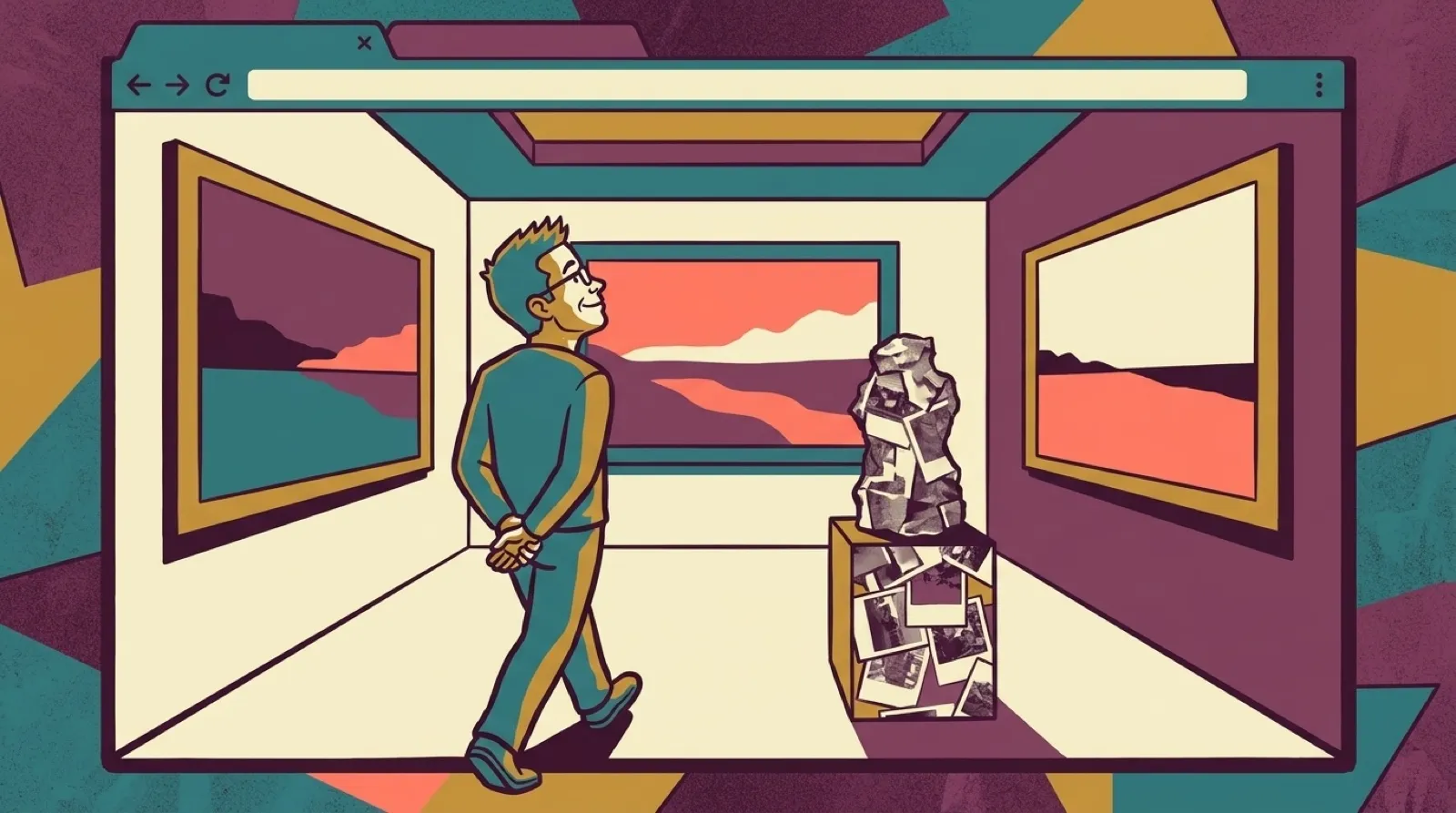
The sculpture existed. The photographs existed. Getting one back out of the other took several days of work.
The developer who posts as dostoynikov had already built his wife a website and a walkable museum for her artwork. Then he opened the sculpture hall with a rough reconstruction of a piece they had only in photographs. He scanned from those pictures and edited the result to resemble the original. His assessment was wonderfully direct: “It is not as good as the original.”
That admission makes the project more useful to anyone considering a similar portfolio. A photograph records the surfaces its camera could see. A sculpture asks visitors to walk around it. Somewhere between those two jobs, the person making the model has to supply what the pictures leave out. The developer doesn’t present that work as an archival record, and he says he plans to have the actual sculpture in hand next time.
The museum began as encouragement. In his October 27 account, the maker says his wife’s work won prizes at an exhibition competition in Japan, while she had doubted that art could bring her success or income. He built the site and museum to help her see a future for the work. His post is the source for that account; this is his description of a personal project, rather than a separately verified exhibition report.
The gallery he links puts visitors in a space they navigate. On a computer, WASD or the arrow keys move them around, and the mouse wheel zooms. The settings change graphics quality, time of day and weather. A portfolio normally asks you to scroll past the next image. This one gives you a reason to stop and look around the room.
That room has a performance bill. The maker recommends computers and tablets, and advises phone visitors to lower graphics quality when the frame rate struggles. A link that opens on a phone still has to earn its time on that phone. Giving visitors a quality setting is an especially practical choice when the intended audience includes people coming to see paintings, with no interest in troubleshooting the exhibition’s rendering settings.
The guest notebook also has an unglamorous detail worth keeping: entries update once a day. The maker explicitly tells visitors their note may take a day to appear. That is a small promise somebody can actually keep. A guestbook doesn’t need to impersonate a live chat to make the artist feel that people came by.
A project like this could make a distant exhibition easier to share with family, prospective buyers or another artist. The interesting next step is how much of the physical work survives that trip into the browser. The developer has already named the object he’ll need for the next attempt: the actual sculpture.