Find My Turns Strangers' iPhones Into Your Stolen Mac's Informants, and Activation Lock Survives the Wipe
In 2010, getting a lost laptop back meant a tracking script on its hard drive and hoping the thief went online. Today a lost Mac whispers over Bluetooth to passing Apple devices, and a thief who erases it still hits your Apple Account at setup.
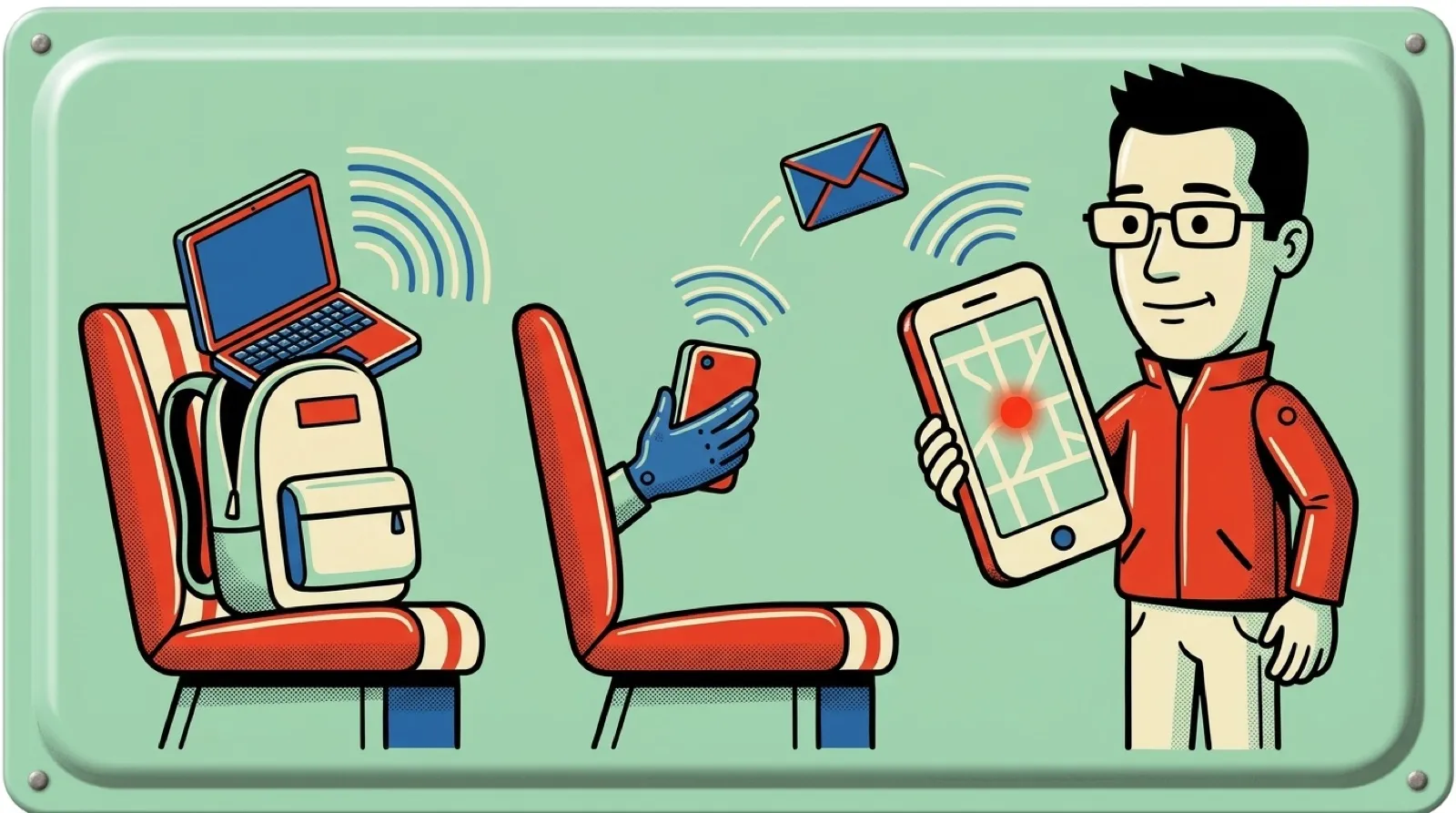
A stolen MacBook sitting in a backpack on a bus, lid shut, no Wi-Fi, can still tell you where it is. Every iPhone on that bus is the messenger.
Apple’s Platform Security guide describes the trick. “Any Apple devices within Bluetooth range that have offline finding enabled can detect a signal from another Apple device,” and then “the finder devices encrypt their current location information and relay it to Apple.” The owner’s device holds the key to read it. “Apple never has the decryption key, so Apple can’t read the location encrypted by the finder,” the guide says. Offline finding turned on by default with macOS 10.15.
When LockerGnome ran “Nothing worse than a lost laptop” in August 2010, the best tools were software you installed before the loss. Prey, a GPLv3 project copyrighted 2010, called itself “a lightweight application for tracking your stolen laptop.” It ran “at a specified interval in your machine,” checked a web address for its orders, and on Linux pulled webcam shots and screenshots through streamer and scrot. It was clever, and it lived on the disk. A thief who reinstalled the system wiped it out along with everything else.
That bash client is archived now, marked “DEPRECATED,” its repo read-only since May 27, 2021.
The 2010 version of this story ended with hope and a webcam photo. Today’s ends with a Mac that phones home through strangers and stays locked through a wipe, at least on Apple’s side.
Laptops without a chip that holds the lock, or without the vendor account turned on, are still in 2010. The question for every fleet is how many of those are still in the backpacks.