
A free disk cleaner checks dependency lockfiles before deleting idle project folders
dev-prune ties disk cleanup to a reconstruction check and keeps the restore path visible.
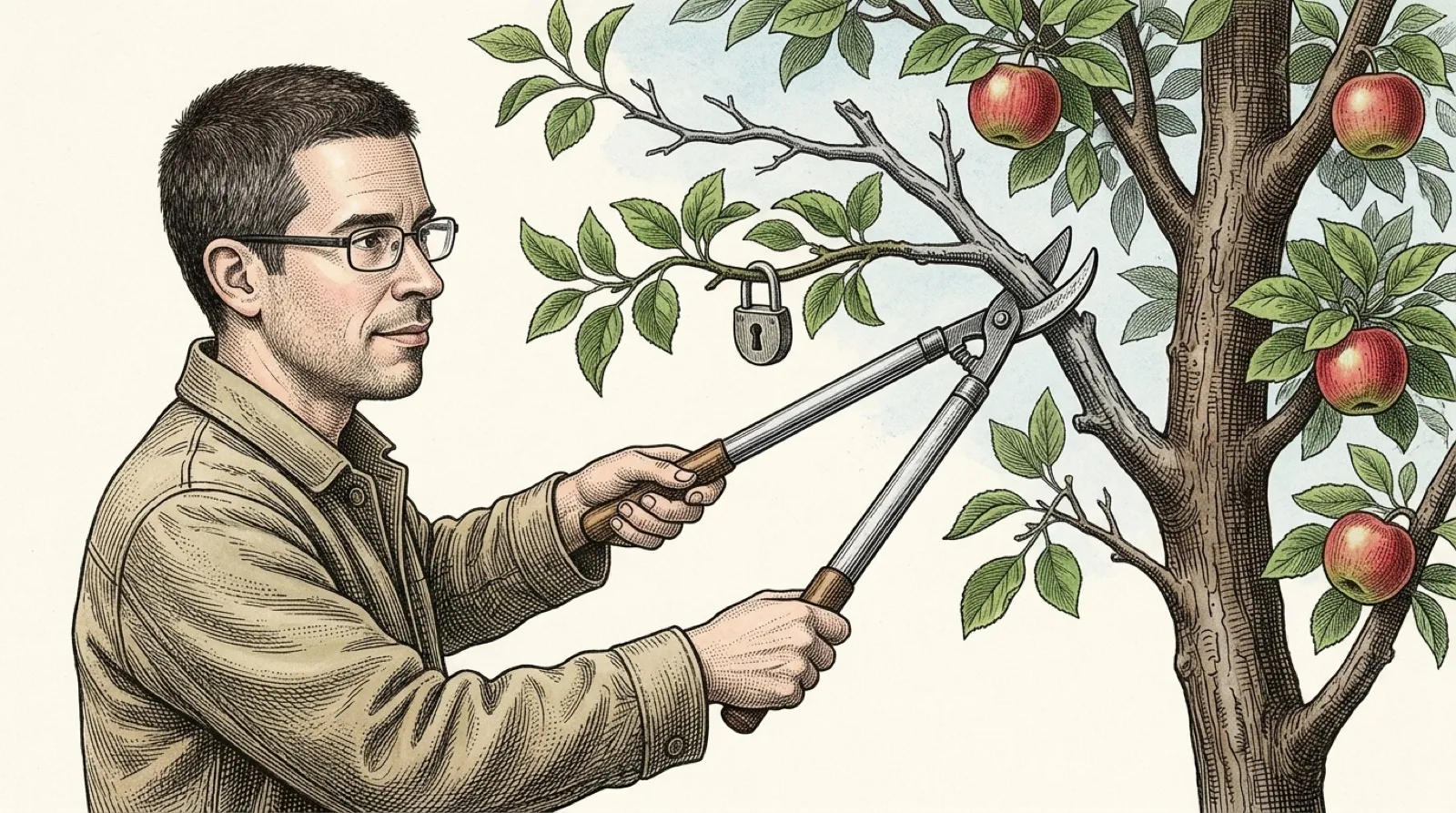
A forgotten build folder can occupy more disk than the project you actually meant to keep. dev-prune approaches that mess by asking what can be reconstructed before removing anything. The cleanup has to show its return ticket, which is a reasonable requirement for a one-way-looking button.
The Rust tool, also called devp, supports Windows, macOS and Linux. It targets directories such as dependency installations and build output across repositories a user registers. Its README lists 36 package managers. That reflects how quickly one simple disk problem becomes a collection of ecosystem-specific restore commands.
The central rule is a verification step tied to the lockfile. The project says it checks reconstruction read-only before deleting the directory, and provides no switch to skip that check. An option to ignore the idle period changes when a directory qualifies for consideration; it does not remove the reconstruction requirement. Those are different permissions.
Restoration is part of the documented workflow. A last-run command uses the recorded pass to reinstall dependencies with the relevant package managers. Rust target directories are different: Cargo rebuilds those during the next build. Reinstalling downloaded packages and recompiling output both recover usable state, but the cost and timing are different.
That cost belongs in the decision. Space reclaimed today may become network traffic or compilation time tomorrow. A repository revisited frequently may be a poor cleanup target even when every byte is reproducible. The useful measure is whether the recovered space is worth the next setup delay for the work you actually do.
A lockfile also has a particular scope. It describes dependency selections; it is not a general backup of uncommitted source, local documents or arbitrary files somebody stored in a dependency directory. The project’s safeguards are worth reading against your own directory habits. Rebuildable has to describe the actual contents being removed, rather than the name printed on their parent folder.
The README includes real demonstration recordings and documents both pruning and restoration. This article reviews those materials without running a deletion or installing the background schedule. A maker’s invariant is a concrete claim to inspect, and it should remain distinct from a verification performed on a reader’s machine.
For anyone considering this kind of tool, inventory comes before automation. Find out which repositories it will inspect, which directories it proposes to touch, and which commands will reconstruct them. Then decide whether scheduling is useful. An empty disk-space graph is satisfying, but a predictable next working session is the part that makes a cleanup worth keeping.
Free space has a future tense.