
HardwareHome Assistantsmart homeESPHome
Home Assistant's $69 Connect Aux-2 bridges Bluetooth sensors, old amps and RS-232 gear into a smart home
A reviewer's two-day test: Bluetooth hygrometers kept a garage fridge reporting, and in-wall speakers finally got an amp, while a $35 rival and a $16 board cover parts of the same ground.
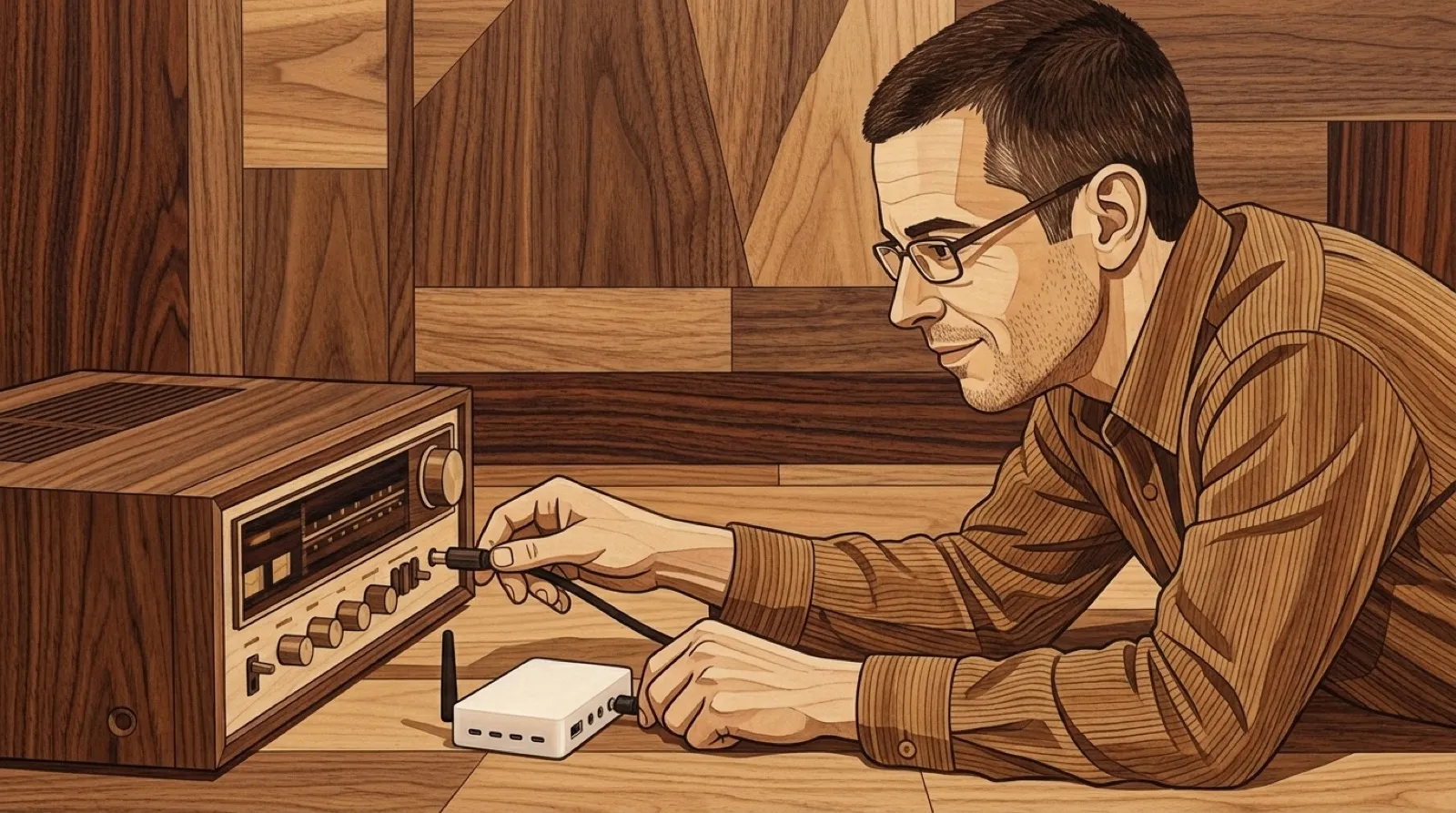
Home Assistant fans have long solved odd problems by flashing little ESP32 boards, one per job. The Aux-2 takes the jobs and puts them in one box.
Nabu Casa, the commercial side of the Open Home Foundation, launched the Home Assistant Connect Aux-2 this week. The Verge’s Nathan Edwards tested it for a couple of days. It costs $69, runs on ESPHome, and has 2.4GHz Wi-Fi, Bluetooth, Ethernet (with power over Ethernet), USB-A, USB-C, a digital and analog audio jack, a Grove port for sensors, buttons and LEDs, and two RS-232 ports. Edwards calls it a “smart home multi-tool.”
It does four jobs: bridge Bluetooth devices into Home Assistant, host a Nabu Casa Z-Wave or Zigbee antenna over USB if your hub sits in a bad spot, control gear like TVs, receivers and solar inverters over serial, and play music to an old amplifier or powered speakers from its audio jack.
Edwards tried two of them. A garage fridge with kids around means a door gets left open, and his old Zigbee temperature sensors kept dropping off. He added Govee Bluetooth hygrometers through the Aux-2’s Bluetooth proxy, and “mercifully, they maintained their Bluetooth connection through three walls and a fridge.” Then he finally used in-wall speakers he’d owned for five years, by buying an amp and setting up Music Assistant; the whole audio setup took less than half an hour.
Setup, he says, was “much easier than I expected”: flash the firmware from a browser over USB-C, add Wi-Fi credentials, plug it in, and finish in Home Assistant. He hasn’t yet tested the serial port, the feature he calls the most intriguing, and the Sendspin whole-home audio standard, still in development, didn’t work for him yet.
The honest part of the review is the price math. “The Aux-2 doesn’t do anything you couldn’t do already with an ESP32 board and various accessories,” Edwards writes.
| Connect Aux-2 | Apollo Cast-1 | Bare ESP32 boards | |
|---|---|---|---|
| Price | $69 | $35 | $16 for a three-pack |
| Bluetooth proxy | Yes | Yes | You build it |
| Music casting | Yes | Yes | You build it |
| RS-232 serial ports | Two | Not covered in the review | You build it |
(Figures from The Verge’s review. It says the Cast-1 supports “the same music-casting and Bluetooth proxy features” he used, and that he paid $16 for the ESP32 three-pack three years ago.)
Edwards doesn’t treat that as a flaw. “That’s the whole point,” he writes. Nabu Casa and Apollo both fund the Open Home Foundation, and “there’s nothing stopping you from making your own devices.”
The test of a hub like this is whether it turns a pile of “someday” projects into one that’s finished. Edwards bought a $16 ESP32 three-pack three years ago and did nothing with it. After the Aux-2, he says, “maybe I will.”
Even the review ends with an unused bag of ESP32 boards.