
A Macintosh designer left extra board traces for a solder-in RAM upgrade
A fight over sealed appliances left a practical consequence for customers, although the participants disagree about one rejected connector.
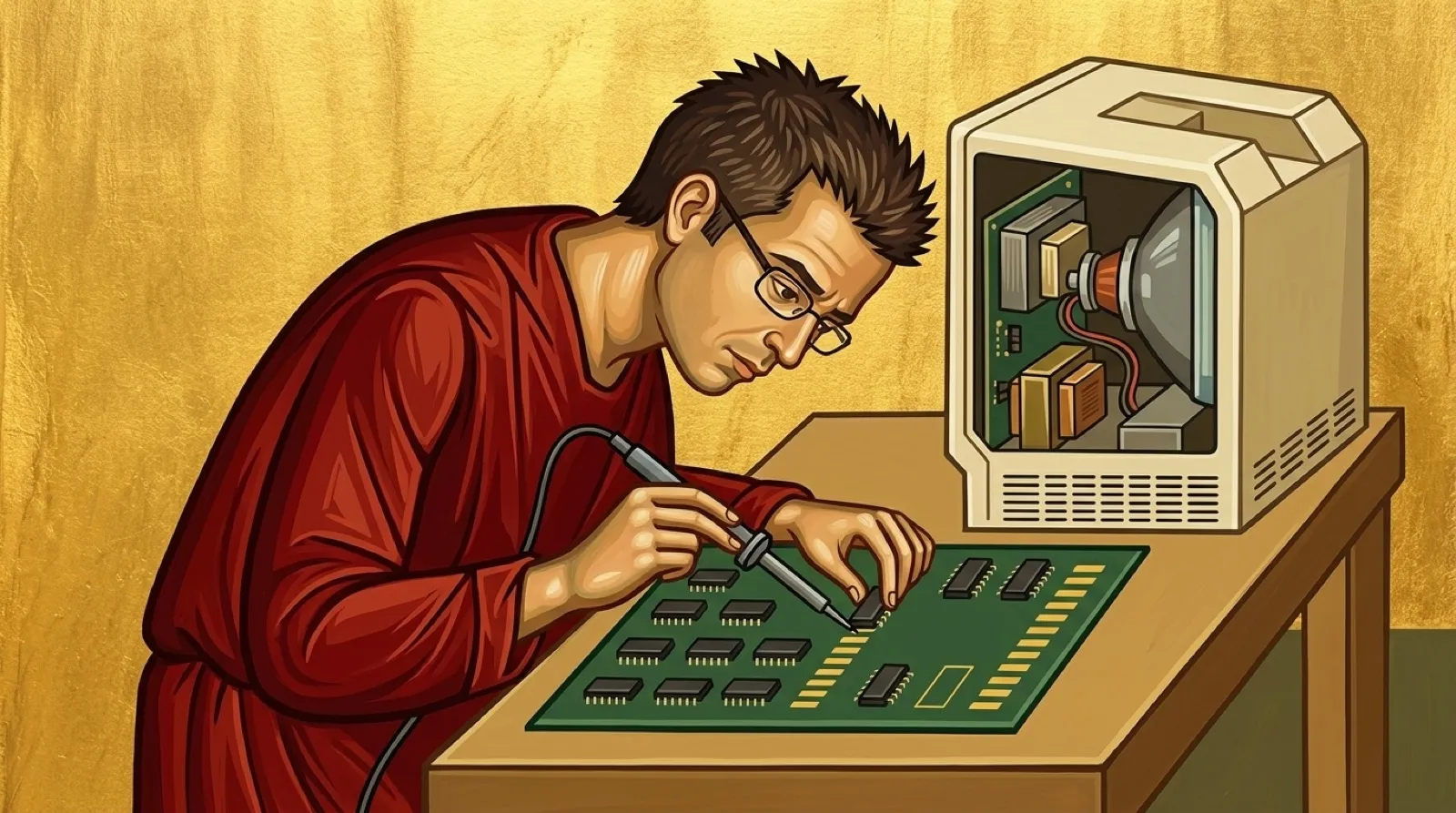
Burrell Smith left room for bigger memory on a Macintosh that had no expansion slots. The room was a few extra traces on the circuit board, according to Andy Hertzfeld’s account. Getting there still required somebody to remove and replace the chips.
Hertzfeld’s “Diagnostic Port” describes the board’s August 1982 redesign. Sixteen 64-Kbit chips provided 128 KB. Replacing them with sixteen 256-Kbit parts could provide 512 KB, provided the board carried the additional address connections. The chips held four times as much; the wiring let the machine reach it.
That is a different proposition from an empty socket waiting for a memory stick. The design preserved an upgrade route for someone with the skill and equipment to work on a populated board. Owners would still need parts and labor. A collector reading this today should hear “historical modification,” with all the attention to board revision that implies.
Hertzfeld says Steve Jobs objected to customers opening the machine and would have preferred them to buy a larger Mac. Smith kept the minimal change anyway; Hertzfeld says the connections cost “pennies.” That explanation of Jobs’s motive belongs to Hertzfeld’s recollection; the page provides his account rather than a contemporaneous statement from Jobs.
The earlier port episode shows how hard even the vocabulary became. In Hertzfeld’s telling, Smith and Brian Howard proposed a processor-bus slot, then recast it as a diagnostic port after the slot was rejected. That proposal was eventually caught and removed. The later RAM traces were a separate attempt, with a much smaller physical footprint.
The page also preserves disagreement. Jef Raskin challenged the account in its comments and said the bus diagnostic port was something he wanted. His objection prevents a neat good-engineer-versus-bad-manager retelling from swallowing the historical uncertainty. The participants were arguing about what happened as well as what should have shipped.
That makes the source more useful to read all the way through. Hertzfeld supplies the memory-upgrade account; Raskin contests the earlier expansion-port history. Neither position should silently erase the other. Nostalgia gets awfully tidy once everyone has been assigned a role and the contradictory paragraph disappears.
A few traces could preserve a choice without making it convenient. That remains a useful question for any sealed device: which inexpensive accommodations were included while the board was being designed, and which future repairs now depend on them? Hertzfeld’s page leaves another question open too: how much of the diagnostic-port argument would look different with Raskin’s original proposal beside it?