
Retroneshomebrewfpgaopen-source
NESPC Turns an Original NES Into a Desktop PC With a Start Menu, a File Manager and Minesweeper
YouTuber Throaty Mumbo built a retro desktop environment that boots on a stock NES through an Everdrive N8 Pro cartridge, uses the controller as a mouse and plays discs through his own NESCD add-on.
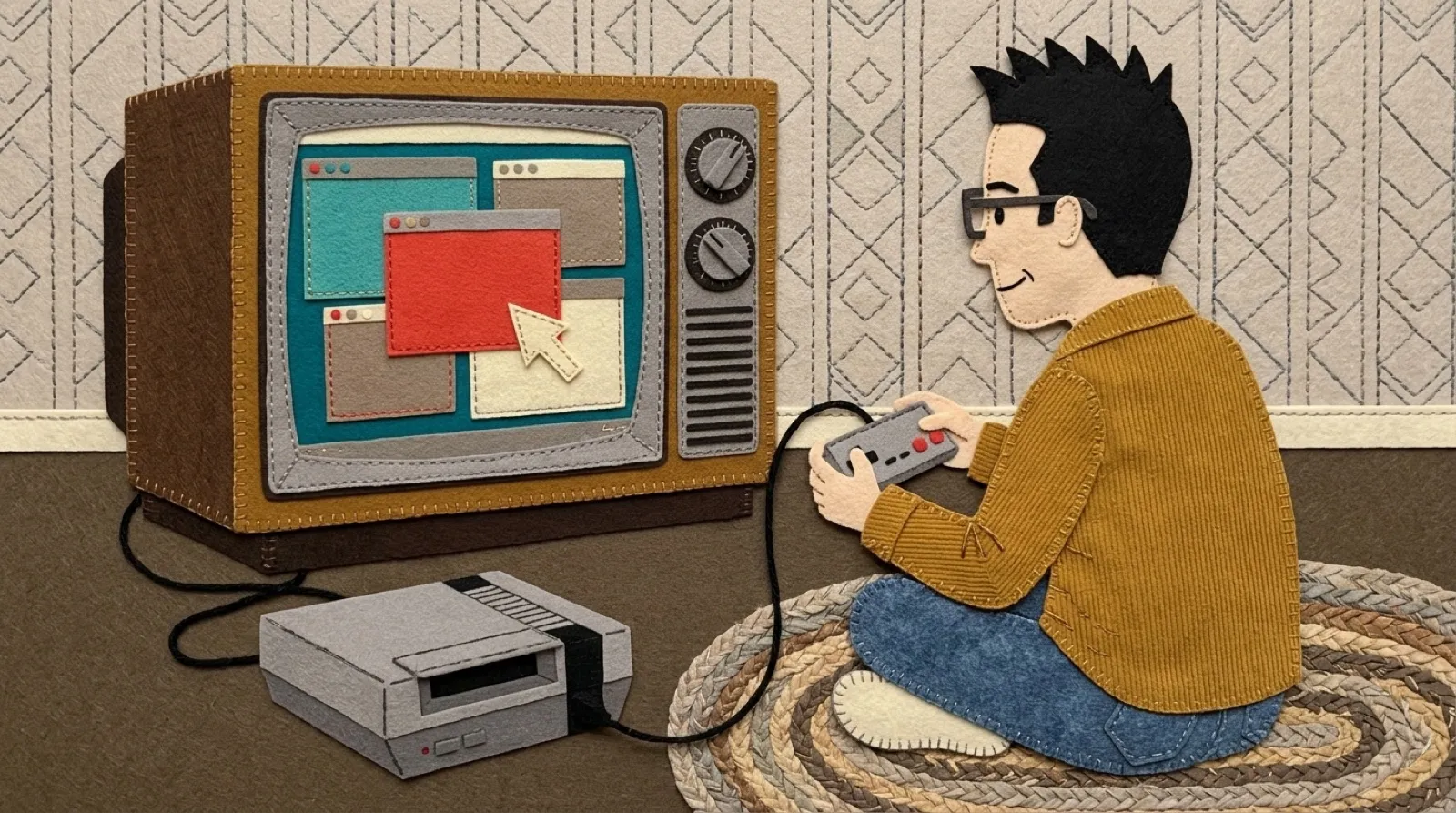
The project’s README is honest about what does the heavy lifting. You need “an Everdrive N8 Pro (the FPGA is heavily utilized to make this thing work well).” NESPC “more or less acts as a replacement for the default Everdrive N8 Pro menu ROM,” so it’s what you see when the console powers on.
Keyboard and mouse are optional extras with a hacker’s touch: “a modded NES controller cable hooked up to an RP2350-based MCU.” Without them, “the NES controller acts as a mouse.” The README sums up the minimum plainly: “Realistically, the Everdrive is the only thing you need to play around with this.”
It looks like Windows on purpose and says so. The FAQ entry “Is this Windows?” answers “No, it just looks similar,” and adds that “this doesn’t run anything Windows-related and isn’t compatible in any way.” Programs for it use their own .dx format.
Dexerto’s Michael Gwilliam went through the build video and lists what it does: “a Start menu, file manager, trash bin, and even Minesweeper,” plus “flying toaster screensavers,” Game Boy games and a MIDI keyboard. “Using his previously developed NESCD accessory, Mumbo managed to get the console playing CDs and DVDs.” Gwilliam also writes that it can browse sites “including Wikipedia and YouTube” and that it can run Doom.
The code is on GitHub under GPL-3.0. Its credits name the GPLv3 nes86 project for “the 8x8 font” and “the keyboard framework,” so part of the plumbing comes from another NES homebrew project.
Projects like this tend to grow apps once the shell exists: a desktop with a file manager and an executable format is an invitation for other NES homebrew developers to write programs for it. The FPGA cartridge is the limiting factor, since it isn’t cheap and NESPC leans on it. Watch for ports that try the same trick on other flash carts, and for the first third-party .dx program.