
Voyager 1 Hit One Light-Day From Earth, Then Stopped Sending Science and Engineering Data
Engineers are checking whether a brief October interruption, possibly a safe-mode drop after a thruster failover, is tied to the blackout, and each question they ask takes over two days to get answered.
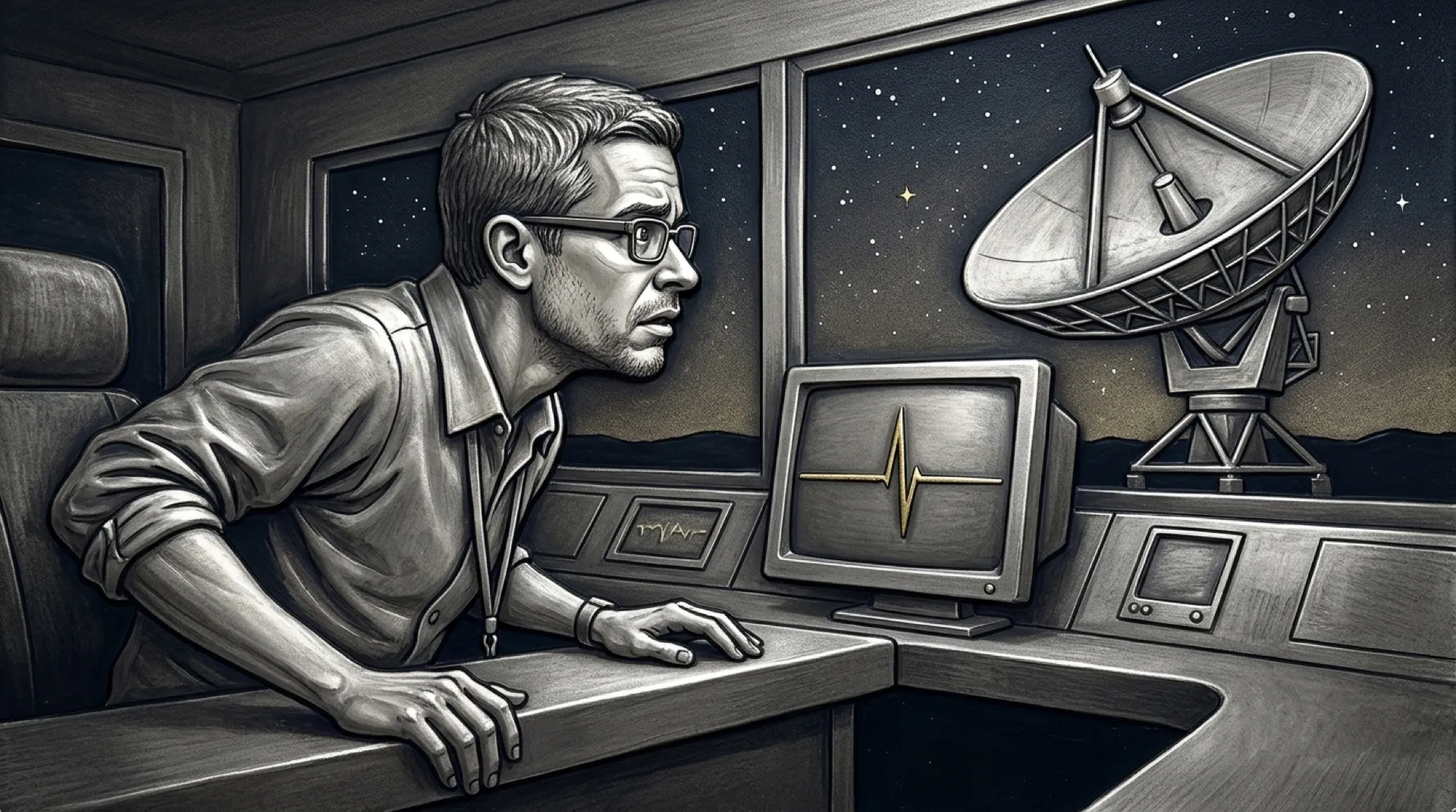
On November 14, the Voyager 1 mission team noticed that the spacecraft had stopped returning science and engineering data. A Deep Space Network antenna in Canberra, Australia, still picked up its carrier signal, so the line was open and nobody was speaking.
That carrier is the one thing telling controllers the probe can still keep its antenna pointed at Earth and run its transmitting equipment. What has gone missing is the payload of the call. The Register reports that something could be amiss with the system that collects and collates data from the spacecraft.
The timing is hard to top. Richard Speed wrote in The Register that Voyager 1 “marked its milestone of one light-day from Earth in time-honored fashion: by giving controllers the silent treatment.” It hit one light-day from home and promptly took a day off (possibly several).
The milestone landed on November 18. NASA expected to confirm on November 19 that Voyager 1 was still operating at that distance, working from the carrier signal and trajectory calculations. So the proof of the milestone is a hum plus some math, with no telemetry anywhere in it.
This isn’t the first time the probe has gone quiet on data. Something similar happened in 2023. After a few months of troubleshooting, engineers coaxed a response out of the spacecraft, and by June 2024 NASA announced it was back in action. The cause was a faulty computer chip, and the team wrote a software update to work around the defective hardware.
There was also a brief interruption in communications in October. The Register says it could have been the spacecraft dropping into safe mode after a thruster failover, and engineers are investigating whether the October blip and the November blackout are connected.
Nobody has said yet whether they are.
The Voyagers carry an impressive amount of fault protection, which The Register credits for their extraordinary longevity. It will be half a century in 2027 since the spacecraft were launched, so glitches are understandable and likely. A machine that old and that far out is allowed the odd nap.
The real pain is the ping time. At more than 24 hours each way, a single command-and-response cycle runs past 48 hours, which makes your slowest VPN look snappy and the worst support queue look like live chat. Every day the probe flies farther, so the wait for each answer only lengthens.
If the 2024 playbook applies, expect another software workaround sent over the same slow link, then a long wait to see whether it took. That outcome would look much like the last repair: a patch around a flaky part instead of a replacement, because nobody is replacing anything out there.
The next update is the one to read closely. Watch whether NASA names the data-handling system as the suspect, and whether safe mode or the thruster failover shows up as the thread tying October to November. If both turn out to be one fault, the team gets one fix to chase instead of two.
The carrier is still humming.