
Retrocomputing-historysun-microsystemsciscostanford68000
Sun's First Workstation, SGI's First Workstation and Cisco's First Router All Started From One Stanford 68000 Board
At the Vintage Computing Festival Berlin, Michael Engel traced how Andy Bechtolsheim's 1982 Stanford University Network board, licensed out by a university that didn't use it, became the base for first products from Sun, SGI and Cisco.
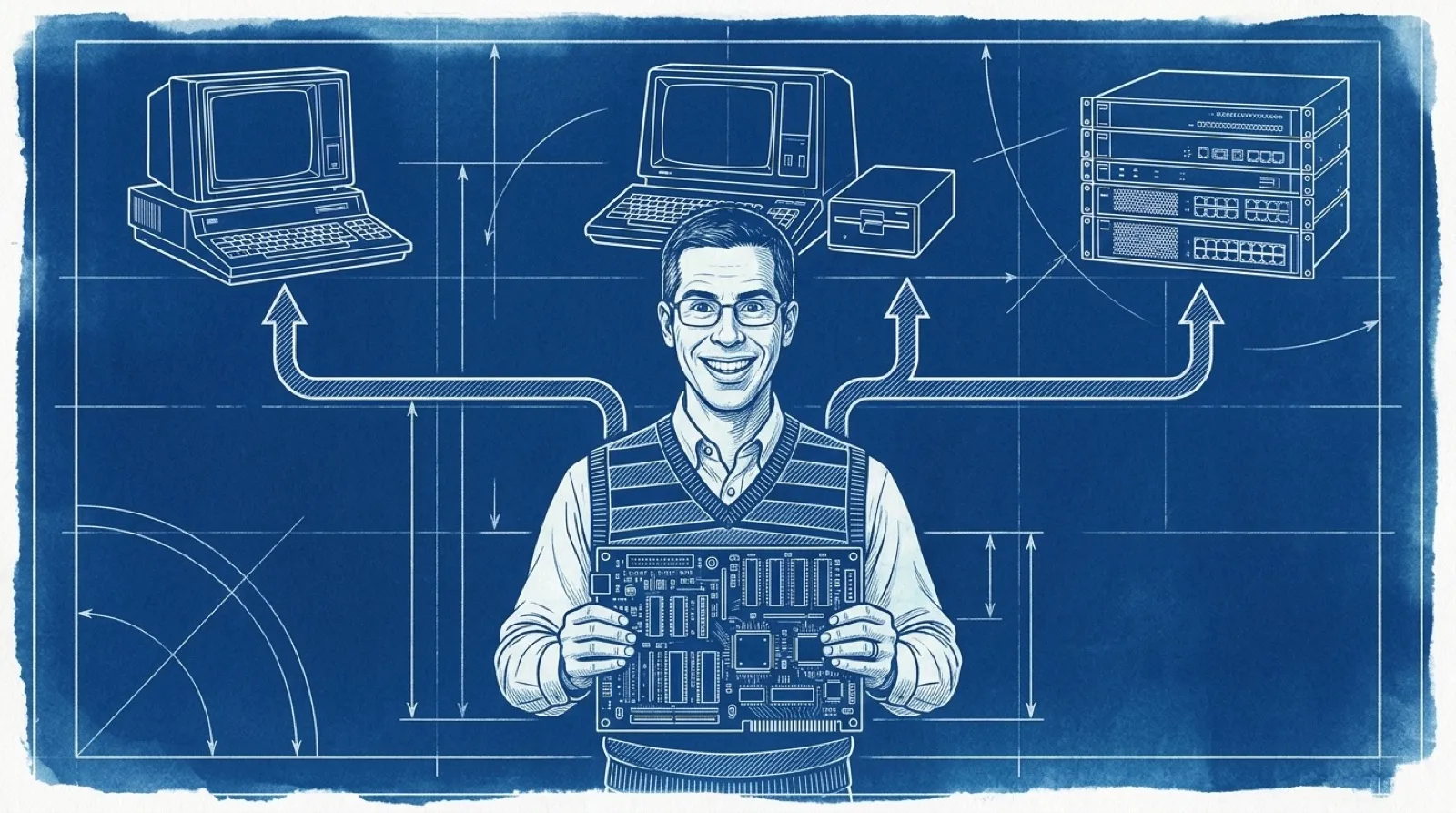
Engel’s talk, “Sunrise – How a Single University Project Kickstarted New Technologies,” ran October 18 and is 54 minutes long. His subject is a board built around the Motorola 68000, a 32-bit-ish chip that could run Unix if someone built the right support around it. The talk’s abstract calls the project “the birthplace of Sun Microsystems.”
The hard part was making Unix work on a chip that had no memory management of its own. Bechtolsheim’s answer is in his patent for a “high-speed memory and memory management system,” filed in 1983 with a 1982 priority date and assigned to Sun. It describes a segment map, “a random-access memory which serves to convert virtual logic addresses to translated addresses,” and a page map that is also plain RAM, with fast static RAM named as the example. Instead of a special chip, ordinary memory did the translating. Engel’s talk also covers the other fiddly bit, keeping the board’s DRAM refreshed without custom parts.
Cisco is where the story gets contested. Thomas Rindfleisch, a former director at Stanford’s medical computing group, wrote his account of the router’s origins in 1999. The router ran on “experimental circuit boards, developed by Andy Bechtolsheim in the Computer Science Department, that would later become the basis for SUN Microsystems.” Stanford staff programmer Bill Yeager wrote “a unique, stand-alone operating system and service programs for the router.”
Rindfleisch says the software was “licensed by Bosack and Lerner on behalf of Cisco Systems in 1986” through Stanford’s licensing office, and that Yeager “is named in the agreement document as the principle developer/inventor.” He adds that Yeager “never benefited from that venture.” His account is one side of the story. Other tellings put the license in 1987, and how much of the Stanford code Cisco actually relied on is still disputed.
Yeager’s 2025 oral history at the Computer History Museum puts the router’s legacy plainly. The museum’s summary says “this router became the architectural model for many early commercial internet routers, including those produced by Cisco.”
The talk itself is the place to see the hardware up close. Nobody has fully settled how much of that 1980s Stanford code shipped inside Cisco’s first boxes, and the license paperwork Rindfleisch describes has never been published.