
Suzanne Vega's unaccompanied voice gave MP3's developers a difficult test track
Fraunhofer's anniversary history traces a format shaped by listening experiments, with a name settled through an internal email poll.
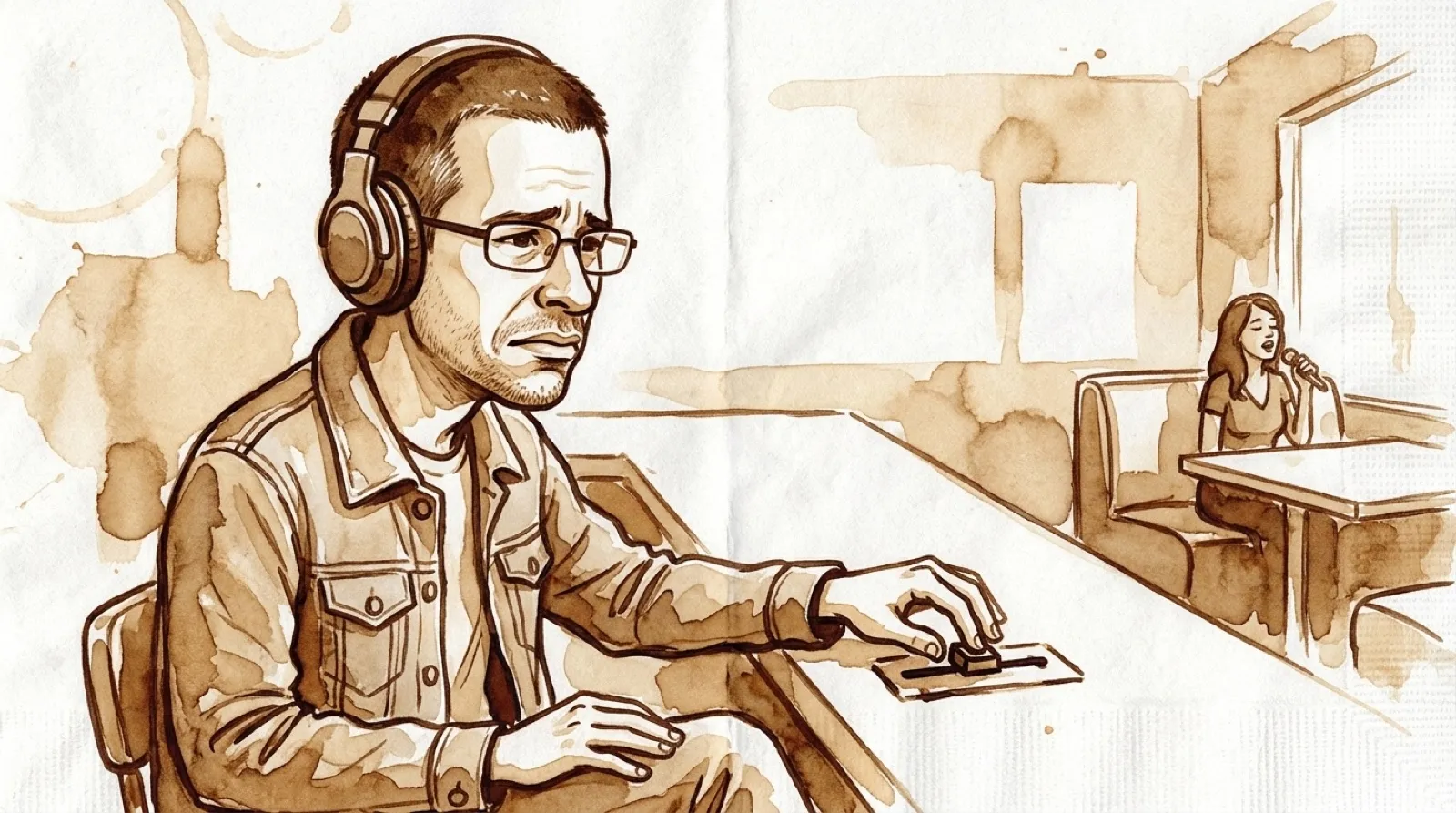
One person singing without a band gave MP3’s developers trouble. All that engineering, and the difficult customer was a recording that didn’t need a drummer.
Fraunhofer IIS’s 2025 retrospective identifies Jürgen Herre’s 2006 recollection of the team’s struggle with Suzanne Vega’s a cappella version of “Tom’s Diner.” The institute’s account is the source for this history. It supports the difficult-test-track story without turning one song into a magic recipe for every MP3.
The same retrospective explains the format’s central economy. Parts of sound that people cannot hear can be represented with less precision, reducing the amount of data needed. The engineering problem is deciding where those savings remain inaudible. The listener gets the final vote, which is inconvenient for any spreadsheet that wants to settle the matter on its own.
A voice without much else around it makes an appealing way to think about that problem. There is less competing material for a listener to focus on when something sounds wrong. That is an explanation of why the anecdote is useful, rather than a claim that every isolated vocal always defeats every encoder.
The format’s familiar name arrived through a very ordinary office mechanism. Fraunhofer dates the internal email poll choosing “mp3” to July 14, 1995. A file extension that became cultural shorthand passed through somebody’s inbox first. Reply all had a good day.
For a useful comparison, the recording should stay the same while the setting changes. Otherwise a different performance or volume level can become the thing being judged. Familiarity helps too, because a listener who knows where a breath or syllable belongs has something concrete to listen for beyond whether the demo seems pleasant.
That makes a difficult sample valuable without making it representative of all sound. An encoder can behave well on one recording and reveal another weakness somewhere else. Testing more kinds of material increases the chances of finding that weakness before a listener does, preferably somewhere other than the company’s beautifully prepared product demonstration.
Future codecs can keep becoming more efficient while the listening problem remains stubbornly human. A lower bitrate is a measurement; acceptable sound still depends on what happens to the material people care about. Progress needs both, even when one fits far more neatly into an advertisement.
The historical record leaves plenty of room for other tracks and other difficult sounds. That makes the Vega detail stronger, because it stays small enough to be true.
The singer didn’t need a backing band.