
The first Macintosh nearly missed its software deadline. The spacebar got formatting moving.
A launch engineer’s account preserves the uncertainty between a release candidate reaching the factory and Jobs accepting a known defect.
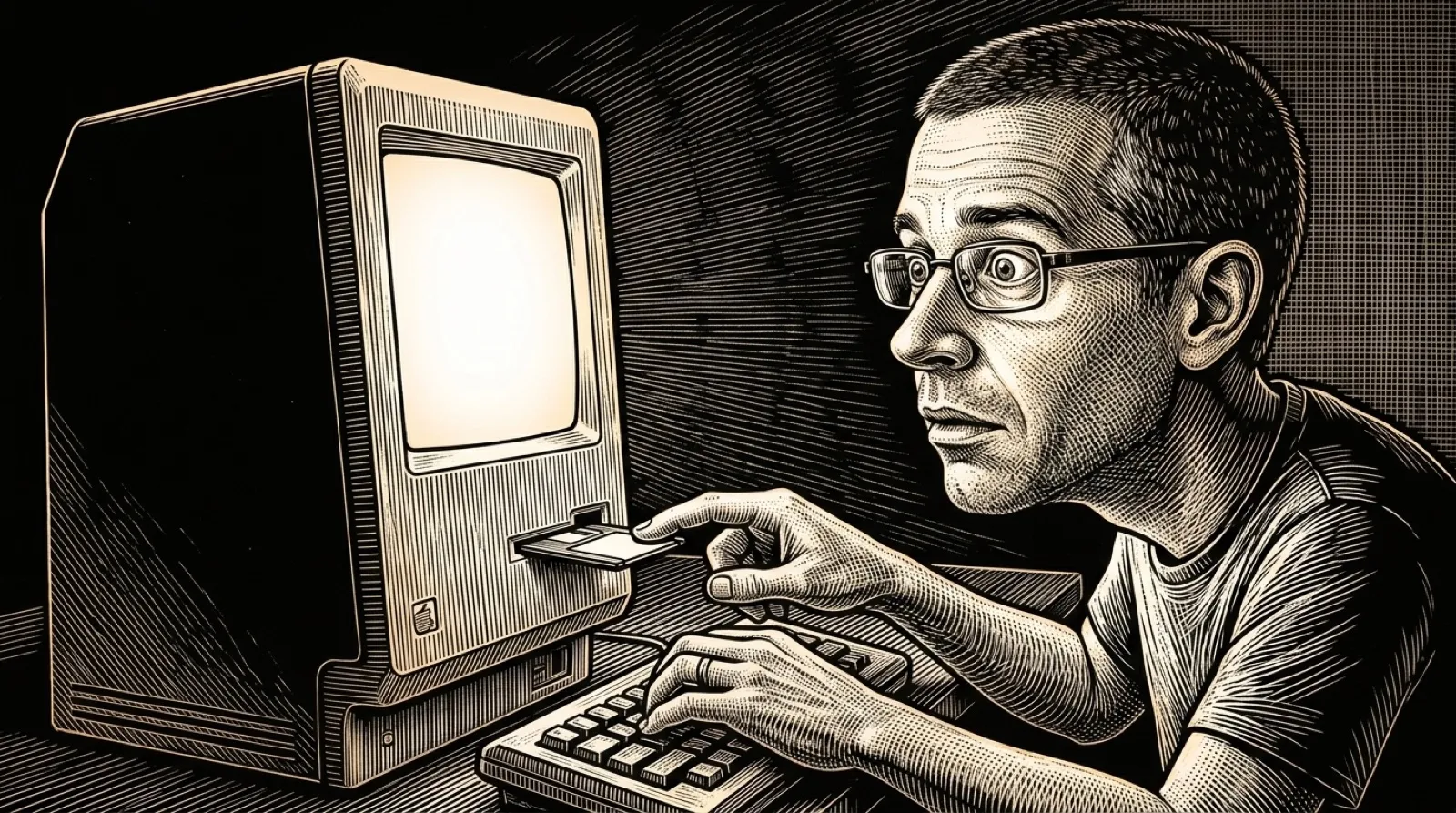
The disk wouldn’t start formatting, and the factory was about to open. Andy Hertzfeld reached for the spacebar. MacWrite got moving. A launch deadline had acquired a keyboard shortcut (some assembly required).
Hertzfeld’s Real Artists Ship recollection places the discovery just before the 6 a.m. software handoff for the original Macintosh. The final candidate looked usable until someone inserted a blank disk while running MacWrite. Instead of beginning the expected formatting operation, the system appeared to hang while the factory deadline kept approaching.
Hertzfeld thought the system was “probably hung up waiting for an event.” He tapped space, and formatting commenced. Probably matters: this is his diagnosis at the time, followed by an observed workaround. The account doesn’t include the defective routine or a later debugging result that establishes exactly where it waited.
Software manager Jerome Coonen considered the problem serious enough to stop release. He took the software to the factory anyway, with its final status still unsettled. Jobs arrived later and decided the formatting bug was acceptable. Duplication and acceptance had briefly occupied different places on the morning’s schedule. So much for a clean checkbox labeled Done.
A known workaround changes the decision without erasing the defect. The engineer who knows to press space has an answer. A person sitting at a new machine, watching an apparently unresponsive disk operation, has a different experience. The distance between those two people is where a support call begins.
That is also why the sequence matters when revisiting the launch. Finding a candidate, sending it to duplication and deciding its bugs are acceptable are separate actions. Compress them into a triumphant last-minute fix and the interesting tradeoff disappears. Nobody in the account repairs the formatting bug before the factory receives that disk.
A release review today can make those distinctions visible without reenacting an exhausted Macintosh team’s morning. The defect entry can name the trigger, observed result and recovery action. A separate decision can say whether that combination is acceptable for the release. Someone reading it later should be able to tell whether the behavior changed or the team chose to ship it.
The tempting prediction is that a modern distribution system makes this dilemma disappear. Fast updates would shorten the wait for a repair, but the initial customer still receives the initial behavior. A team evaluating such a stall needs to know whether recovery is obvious and whether the interrupted task can lose work. This historical account provides no basis for declaring every similar pause harmless.
Preserving that uncertainty makes the anecdote useful. It gives the next reviewer a concrete question to answer with their own software, rather than a famous executive’s confidence to borrow. Hertzfeld’s page ends the release decision; it doesn’t establish a date when this particular defect was repaired.
Space was available after all.