
The IETF's Own Etymology RFC Says "foo" Probably Came Before FUBAR, Reversing the Military-Acronym Story
The 2001 memo traces the word through a 1930s fireman comic, a Daffy Duck sign, WWII radar slang and a 1959 MIT railroad club dictionary.
Every programmer has typed foo and bar thousands of times. The folk explanation is that foobar is a cleaned-up version of FUBAR, a WWII Army acronym for a situation beyond repair. The IETF’s own memo on the subject, RFC 3092, says the story runs the other way: “it now seems more likely that FUBAR was itself a derivative of ‘foo’… ‘foobar’ may actually have been the original form.”
The memo is dated April 1, 2001, and the RFC Editor lists it under “humor.” Its three authors are D. Eastlake 3rd, C. Manros and E. Raymond, and its stated reason for existing is a real gap. It counts about 212 RFCs, starting with RFC 269, that use foo, bar or foobar as metasyntactic variables “without any proper explanation or definition.” That is about 7% of all RFCs issued up to then. The authors worry that newcomers, especially readers whose first language isn’t English, have been left guessing.
The memo also gives the full standard sequence of placeholders: foo, bar, baz, qux, quux, corge, grault, garply, waldo, fred, plugh, xyzzy, thud. Most people stop at baz.
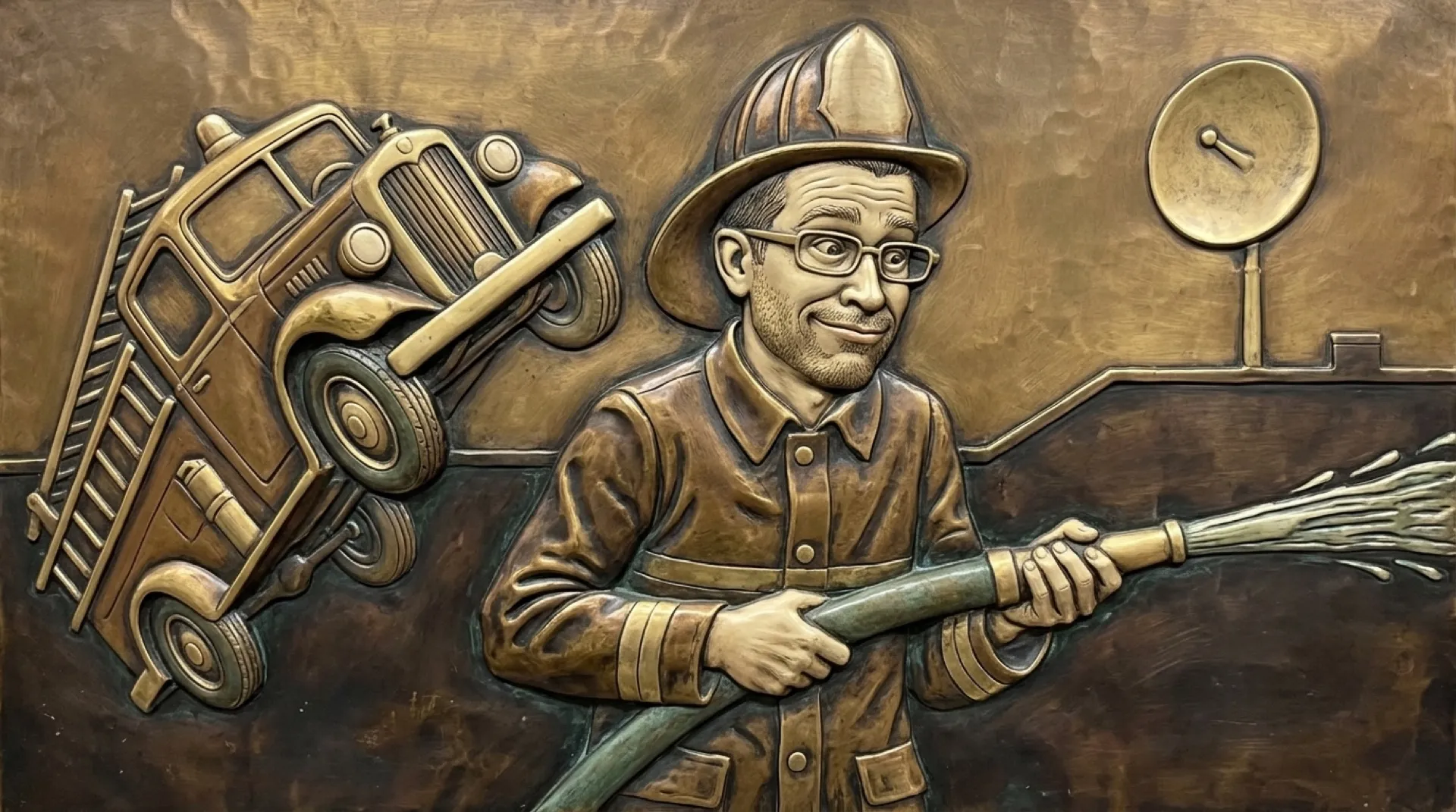
The prewar trail starts in a comic strip. Bill Holman’s surreal fireman strip Smokey Stover ran in American comics, including Everybody’s, between about 1930 and 1952. Holman put “FOO” on license plates and buried it in background gags such as “He who foos last foos best.” His hero’s firetruck, the Foomobile, rode on two wheels. According to the Encyclopedia of American Comics, as the RFC cites it, “Foo fever” swept the country and produced over 500 Foo Clubs. Holman claimed he found the word on the bottom of a Chinese figurine. The RFC calls that plausible and suggests the Chinese word fu, sometimes spelled “foo,” which can mean “happiness.”
The word also reached Hollywood. In the 1938 Warner Brothers cartoon The Daffy Doc, directed by Robert Clampett, a very early Daffy Duck holds up a sign reading “SILENCE IS FOO!” The RFC says the fad’s origins were forgotten fast, but the word stayed alive in the military. In 1944-45, radar operators used “foo fighters” for mysterious or spurious traces, the kind later called UFOs. The RFC reports that informants connected the term to the Smokey Stover strip.
British troops also scrawled “FOO was here” the way Americans scrawled Kilroy. Several slang dictionaries claim FOO came from Forward Observation Officer. The RFC treats that as, like FUBAR, probably a backronym, an acronym invented after the fact to explain a word that already existed. (Backronyms are the oldest dad joke in the military.)
The hacker lineage runs through a railroad club. The 1959 Dictionary of the TMRC Language, compiled by MIT’s Tech Model Railroad Club, defines Foo as “The sacred syllable (FOO MANI PADME HUM); to be spoken only when under obligation to commune with the Deity.” It adds: “Our first obligation is to keep the Foo Counters turning.” The RFC reads that as a joke borrowed from Holman’s nonsense word, which was then only two decades old.
The RFC also covers the dead ends. An earlier Jargon File guess pointed to FOO, Lampoons and Parody, a 1958 comic from Charles and Robert Crumb. The RFC says very few copies circulated, the brothers later burned most of them, and students of Crumb’s work have concluded the title was a reference to Smokey Stover anyway. The RFC also mentions a short-lived Canadian parody magazine called Foo from 1951-52.
The computing side is thinner. The RFC says foobar was probably spread through Digital Equipment Corporation manuals in the 1960s and early 1970s, with confirmed sightings there going back to 1972. It offers a second explanation for the spread: “foo bar” reads in electronics shop talk as an inverted foo signal. It adds that hackers don’t generally use the term to mean FUBAR.
The first RFC to use foo was RFC 269, which was about file transfer. The memo notes that RFC 1639 later defined FOOBAR as “FTP Operation Over Big Address Records,” which it calls particularly appropriate. The appendix tabulates RFC occurrences and mentions that RFC 2606, the best current practice for example domain names, may reduce the practice of using foo in sample domains.
The RFC calls the prewar origin “plausible,” not proven. It is a record of how the evidence points, written by people who clearly enjoyed it. The word’s papertrail still ends where it began, with a firefighter’s cartoon truck.
The forecast part is mine. Placeholder names last because they mean nothing, so they never collide with a real product or customer. That is the same logic behind reserving example domains, and it suggests foo will outlast whichever stack we’re using now. The RFC itself says its own guess about foobar being the original form is a likelihood, not a settled fact.
A 1938 cartoon duck held up a sign reading “SILENCE IS FOO!” Nobody listened.