
He Melted 3,041 Nespresso Capsules Into a Moka Pot. It Leaked, So It Became a Flower Pot.
Shake the Future's route to capsule-free coffee ran through hours of furnace burn-off and a 3D-printed mold pattern, then ended at a seam problem that scrap aluminum couldn't solve.
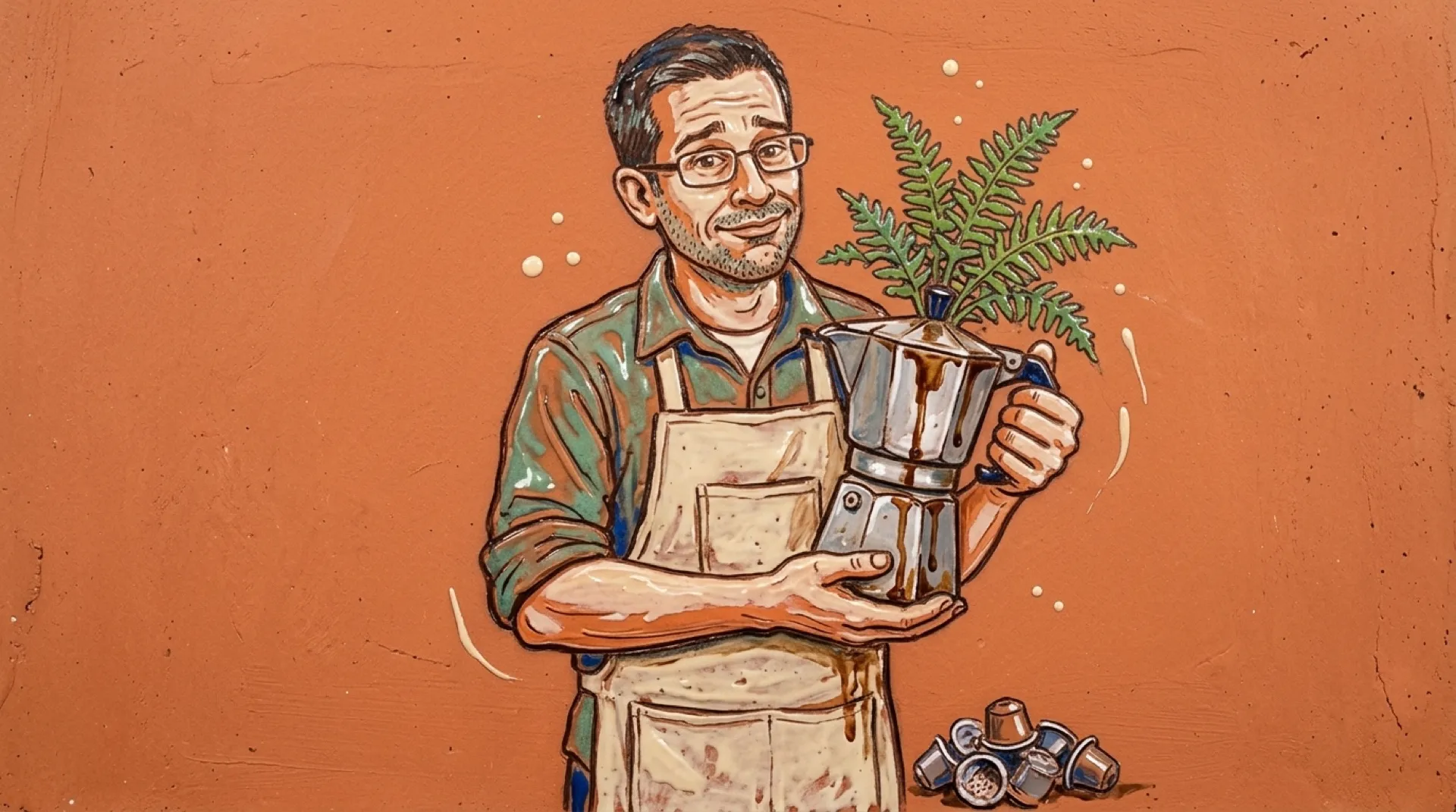
Shake the Future set out to turn a heap of used Nespresso capsules into the one thing that makes capsules unnecessary: a stovetop coffee pot. The video title puts the count at 3,041 capsules, every one a single-use aluminum shell.
The melting happened a few hundred capsules at a time in a small furnace, so 3,041 of them means round after round of batches. Each run took hours, because the plastic and other contaminants have to burn off before the metal is worth pouring. What came out of the furnace was ingots, which is the polite word for lumpy bars of recycled coffee packaging.
The pot itself came from lost-PLA casting. Print the shape in PLA, bury the print in mold material, burn the plastic out so a hollow remains, then pour molten metal into the space the print used to occupy. The print dies so the pot can live, which is a decent trade for a few grams of filament. The target was a two-part stovetop pot, the kind that heats water in the bottom half and pushes it up through the grounds.
Play the video on YouTubeWith an off-the-shelf filter and seal fitted, it brewed. A moka pot only works if the lower chamber holds, though, and this one did not. The cast aluminum turned out porous, and water and coffee leaked from the bottom and sides. Call it a coffee maker with a built-in drip setting (no extra charge, no off switch).
So the pot became a flower pot. The maker melted a mountain of capsules, printed a mold pattern, and ran a furnace for hours to end up with a vessel that holds soil instead of espresso. It waters a different kind of grounds now. Whether a tighter pour could hold the pressure is still open.
Lost-PLA casting is the part of this build that spreads. A hobbyist with a printer already has the pattern-making skill, and a small furnace turns a drawer of scrap aluminum into raw material. That pairing likely pulls more scrap-to-object builds into garages, and the first batch of each will look a lot like this pot: right shape, wrong density.
The leak points at the next problem to solve. Porous metal fails wherever the job involves pressure or liquid, so the useful follow-ups are pours that fill the cavity more densely, or designs that never ask the metal to seal anything. Expect the sturdiest recycled builds to be brackets, knobs and planters, the parts that only need to stay solid.
Capsule melting will keep its pull, too. A stack of 3,041 shells is a dramatic number, and a furnace run is a visible way to show where it goes. It is also hours of burn-off per batch, which hints at why this works better as a one-off video than as a household habit.
As a flower pot, the leaks are called drainage.