
A wall-sized tube computer needs ten minutes to warm up before the tweaking starts
Mike’s home-built machine exposes a problem modern chips conceal: electrical signals refuse to stay as tidy as the diagram.
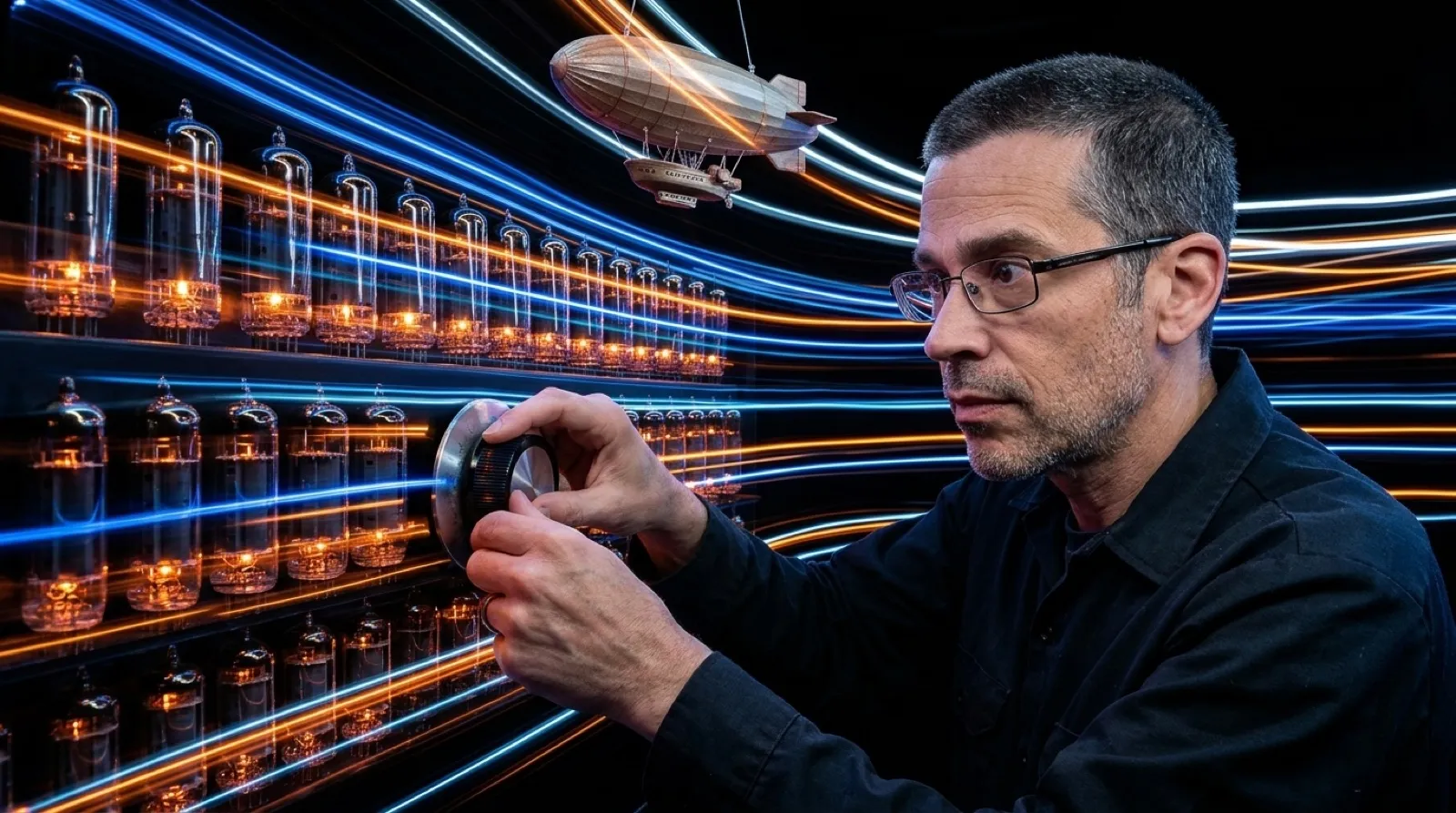
Mike switches on his home-built computer and waits for the room to acquire the smell of warming vacuum tubes. About ten minutes later, the electrical behavior settles enough for another round of tweaking. This is a computer with a warm-up act, and the act is hundreds of hot components on the wall.
His own project account describes an eight-bit machine assembled around recycled tubes. The glow is doing actual work. Each gate has to turn an electrical input into a dependable output, and a tube’s behavior changes as it warms. The schematic enjoys the luxury of staying at one temperature.
Mike tried several architectures before settling on NOR gates throughout. That choice simplified the collection of building blocks, while leaving him to construct arithmetic and counting circuits from that same kind of gate. A small vocabulary can still demand an enormous amount of wiring. The computer needed a wall; the specification fit on a page.
The maker calls this his third tube computer. His first ran in May 2021 across the dining table, chairs and surrounding floor. The newer machine has a more deliberate arrangement: arithmetic lower down, control in the middle, with registers and input/output above. Side sections grew when the clock and memory needed more room. Computers used to expand into spare slots. This one expanded sideways.
The proposed game is a family project inside the family project. Mike wrote software for his grandchildren to steer an imagined commercial voyage by the British R80 airship, leaving Brighton for Paris. Controls cover ballast, gas release and engine power. The destination is charming; the boarding process remains electrical engineering.
The console cannot yet handle the range of voltages the real computer produces. Mike expected clean zero- and five-volt signals, then encountered the less cooperative physical version (naturally). His account says the console needs a complete redesign. The status system currently has only one input and one output, leaving the voyage waiting for its connection.
“So no flight sim yet!” Mike writes. That correction belongs beside every description of the proposed simulator. A written program and a usable control panel can occupy very different stages of the same build. The intended airship controls still need their electrical connection to the machine.
A more forgiving console could make the airship controls usable without pretending the tubes have become modern logic chips. Mike also identifies missing buffers between controls and the functions they affect as a source of troublesome adjustment. Those are concrete remaining jobs, with symptoms the builder can point to, rather than a promise that the next version will somehow be simpler.
For now, operating the machine includes a small adjustment tool and a large stepladder. Mike’s checklist includes “check the fire extinguisher is full.”