
An ESP32 Wi-Fi receiver becomes a pocket spectrum display that flags interference
The firmware learns the room’s radio baseline and can send its observations to Home Assistant over USB.
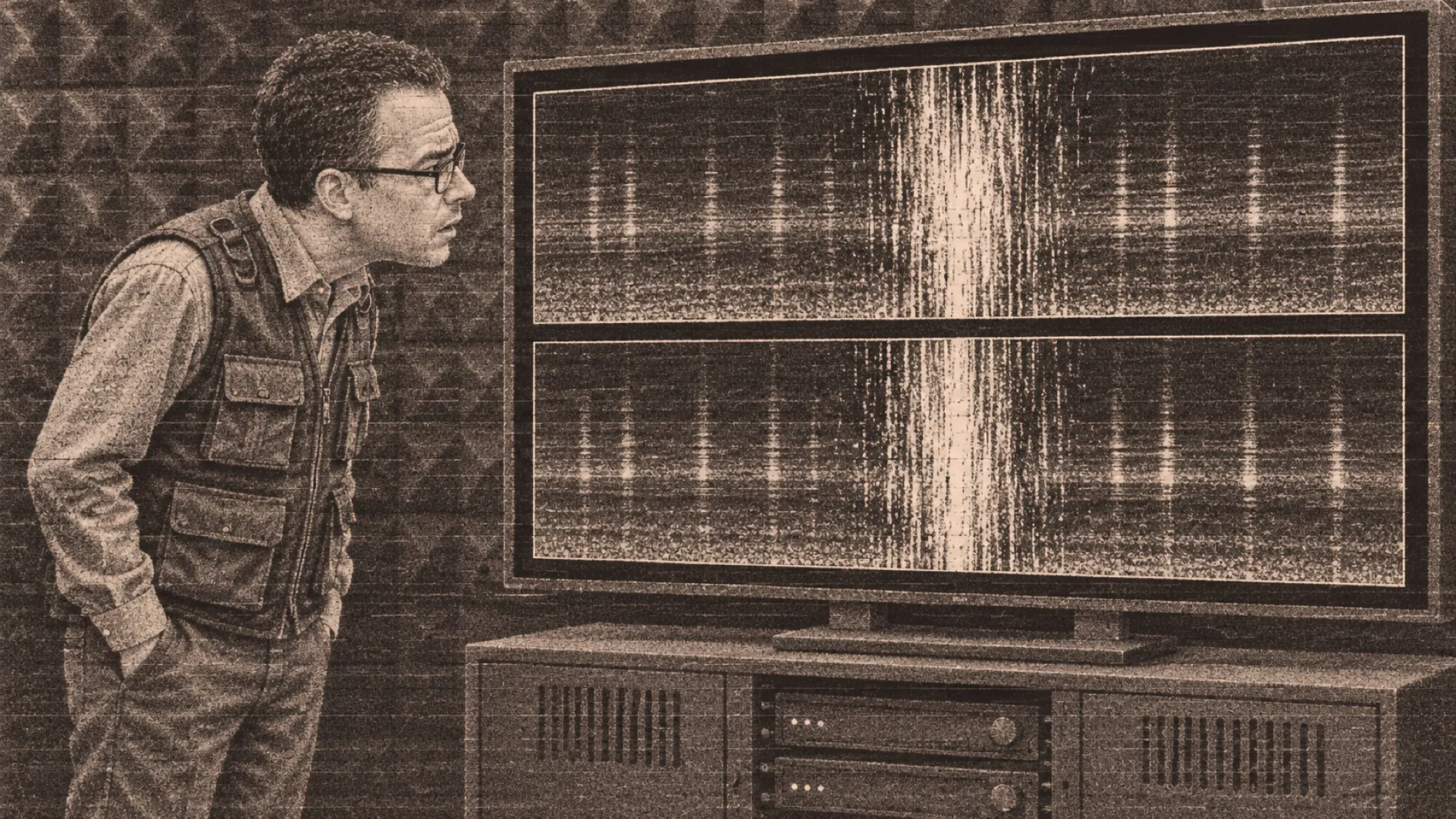
A microwave oven can make a Wi-Fi problem look suspicious. This little detector keeps that possibility on the screen instead of immediately accusing the neighbors.
The open-source firmware targets the Waveshare ESP32-C5-Touch-LCD-3.5, using its radio as a snapshot software-defined receiver. A built-in touchscreen shows a spectrum and a scrolling waterfall. The Wi-Fi chip has taken a temporary job investigating the very neighborhood it normally talks in.
The maker’s README describes sweeping both Wi-Fi bands in 48 MHz slices. Samples arrive in short snapshots rather than as an uninterrupted recording. The result can show changing energy across frequencies, but short bursts may slip between captures. This is a useful limitation to know before reading a dramatic red patch as the whole event.
The detector first spends sixty seconds learning a baseline. It compares subsequent readings with that local reference, including the mean and minimum energy across snapshots. Persistent energy can behave differently from bursty traffic, which gives its rules something to compare beyond a single loud measurement.
Four categories cover wideband, narrowband, swept and pulsed-wideband patterns. The state can move through normal, suspect and alarm. Those names describe the firmware’s rules, rather than a finding that somebody has committed a crime. Its README says plainly, “it cannot prove intent.”
The microwave example demonstrates why that restraint matters. Pulsed energy can resemble busy Wi-Fi or a microwave, so the display can remain at suspect rather than jumping to an alarm. In other cases a continuously running source can still trip an alarm. A red border is a reason to investigate, rather than an introduction to your alleged villain.
Home Assistant integration uses a USB connection to its host and requires an MQTT broker and integration. The bridge exposes per-band status, events, readings and controls. The same thresholds available on the touchscreen can be changed through the documented interface, rather than hiding the device behind another cloud account (one less login).
A TF card can preserve state-change logs and a waterfall image. The documented image capture occurs about two minutes after an alarm, placing the event in the middle of the saved history. That delay buys context on both sides rather than saving only the moment the screen turned red.
The maker also documents receiver gaps, relative levels and cases where a saturated Wi-Fi link can’t be distinguished from interference. Those limits belong beside any reading taken from the display. Otherwise a tool for investigating dropped connections becomes a touchscreen that appears to read motives.
The microwave gets a fair hearing.