
Retroibmibm-5100computer-history
IBM's 1975 “portable” computer weighed 55 pounds and ran some mainframe software
Two Computer History Museum records for the IBM 5100 disagree by five pounds, and neither calls it anything stronger than “marginally portable.”
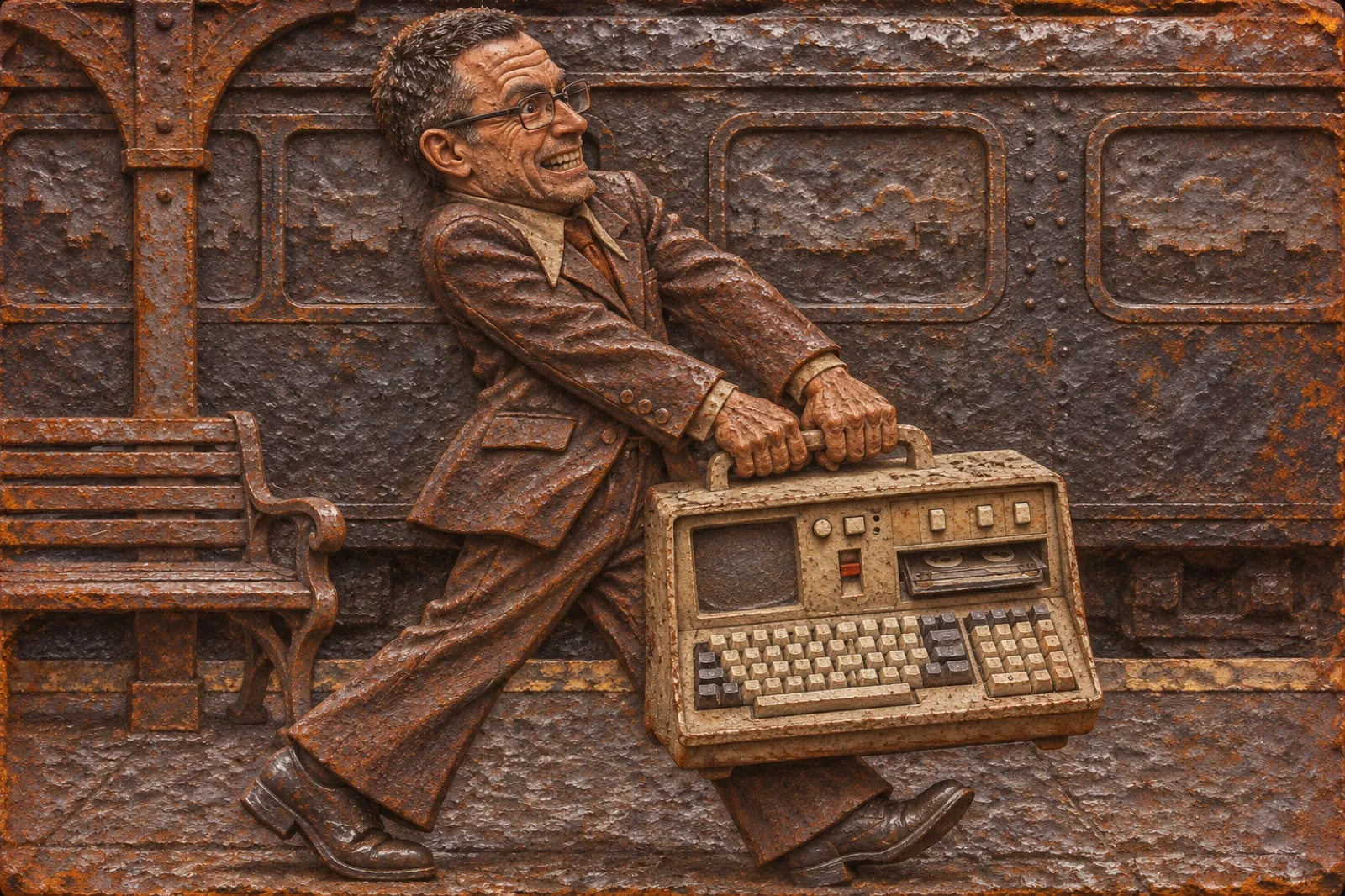
Most “portable” computers come with a handle. The IBM 5100 should have come with a gym membership. The Computer History Museum dates it to 1975 and puts it plainly: “Weighing 55 pounds, it was marginally portable.” Everything here comes from the museum’s records, since it’s the one outlet that kept the paperwork on this machine.
The museum’s own wording says what it was for. “It ran some IBM mainframe software, including the elegant APL programming language.” Note the word “some.” The page doesn’t say which mainframe programs ran, and it doesn’t claim all of them did, so neither does this story. What it does say is that IBM got part of its big-computer world into something one person could, in theory, pick up.
Then there’s the date math. “This sophisticated personal computer was released six years before the more famous ‘IBM PC,’” the museum says. Do the subtraction and IBM was selling a personal computer well before the one everybody remembers. The 5100 just didn’t look like a promise of the desktop to come. It looked like a piece of luggage.
The museum’s catalog record for the machine fills in what lived inside the case. “In 1975, it was announced as IBM’s first ‘Portable Personal Computer,’” it says. Main memory “was expandable from 16KB to 64kB.” The CRT monitor’s resolution is “16 lines of 64 characters,” and there was “a 1/4 inch tape drive with capacity of 200KB.” A BASIC and/or APL interpreter “were combined in one unit,” the catalog says, so the language was part of the box rather than something you loaded later.
Here’s the catch. The catalog lists the weight as “50 (lb),” while the museum’s Revolution exhibit says 55 pounds. Same museum, five pounds apart. This story uses the exhibit’s 55 because it sits beside the “marginally portable” line, but the museum’s own records don’t match to the pound, so treat either number as approximate.
What does the 5100 predict? Every generation of “portable” starts out as the previous generation’s desk machine in a case, and the case gets lighter every few years until it disappears. The 5100’s 16 lines of 64 characters and 200KB tape drive were the whole workstation, and the same job now fits in a phone. What sticks is the idea behind the machine, mainframe software in a single person’s hands, which keeps coming back as computing moves closer to the person using it. Expect the next version of that idea to look as odd in a few decades as the 5100 does now.
Marginally is the right word.