
Retroasciibackslashalgolibmbob-bemerhistory
ASCII Has a Backslash Because a 1961 Committee Wanted to Type AND and OR as /\ and \/
Bob Bemer, who designed IBM's Stretch character set, says a July 6, 1961 meeting of IBM, SHARE and GUIDE chose the reverse slant so ALGOL's AND and OR could be typed as two characters each; DOS found it a new job 20 years later.
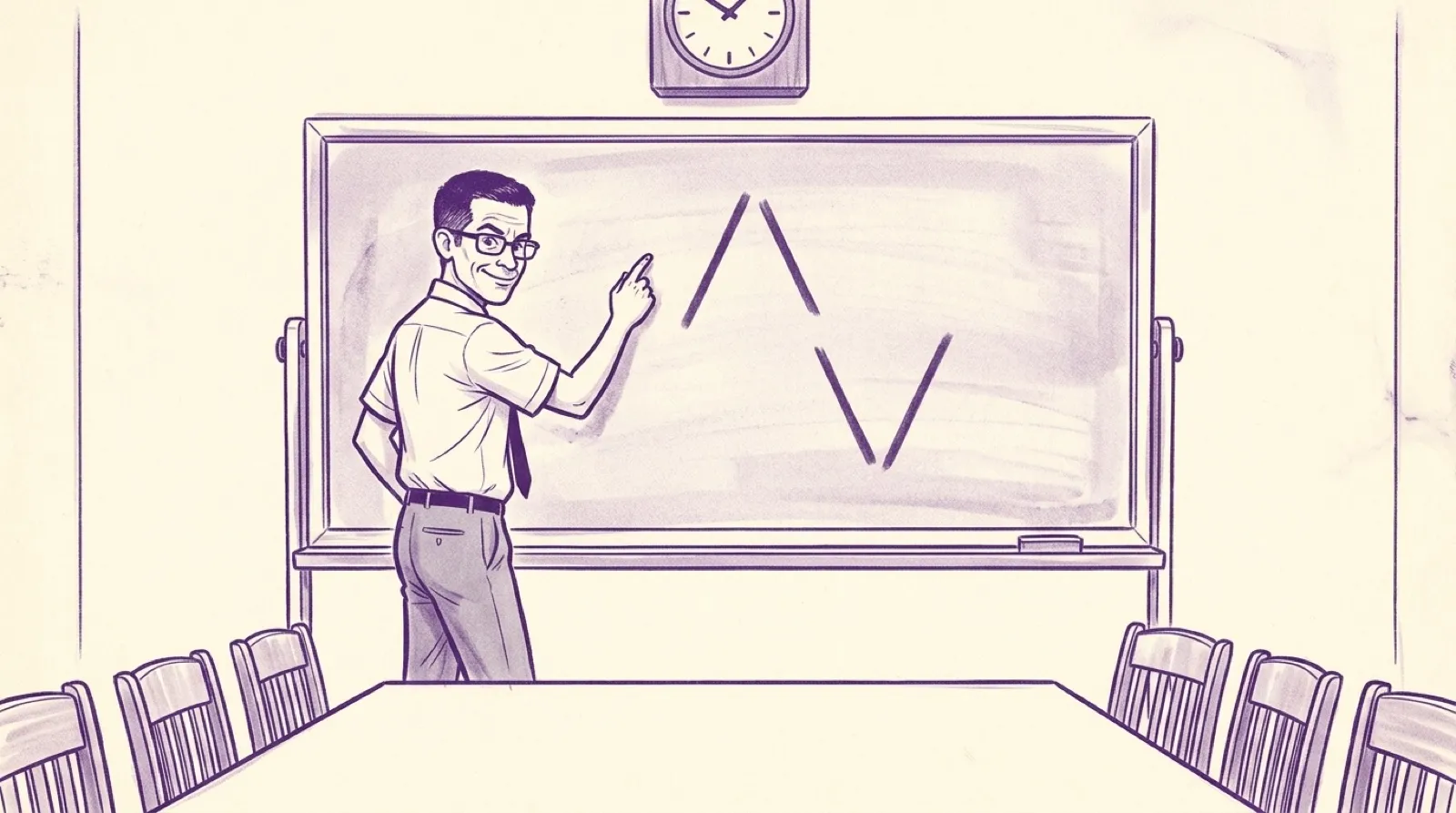
Bemer was an ALGOL fan with a character set to design. Werner Buchholz invited him to do the main design of the 120-character set for IBM’s Stretch, the 7030. Bemer wanted a backslash in it so that, paired before and after the regular slash, it “could serve for the AND and OR operators of the theoretical Algol character set.”
He got it in. Stretch’s set carried “both curly braces, both square brackets, and the reverse slash – all of which eventually made their way into 7-bit ASCII,” he wrote.
Then came the committee. Bemer called a joint meeting of IBM and two big user groups, SHARE and GUIDE, to turn IBM’s 6-bit code into a standard. They had frequency studies, “particularly from ALGOL programs.” The meeting of July 6, 1961 agreed on a basic 60-to-64-character set “which included the two square brackets and the reverse slant, which was chosen in conjunction with “/” to yield 2-character representations for the AND and OR of early ALGOL.”
It wasn’t an easy sell. “SHARE and GUIDE representatives at the meeting were a little stubborn about accepting my proposed backslash,” Bemer wrote, so he asked them to name a character more important to have. “After much discussion they could not agree on a better candidate.”
He proposed the set to the ANSI X3.2 committee on September 18, 1961. At X3.2’s November 8-10 meeting, the first formal proposal, the draft that “much modified, was to become ASCII,” put the backslash at position 5/12, “and there it has remained ever since.”
The “first” claims here are Bemer’s. He calls Stretch “the first computer to use the backslash character” and says it’s “absolute proof of genesis,” on the strength of his own 1960 survey of character codes. He’s also careful that the symbol itself was older: he cites a paper by Eric Fischer that found a backslash on the keyboard of the Teletype Wheatstone Perforator, around 1937 to 1945, which data processing people didn’t know about. And Bemer counts the backslash as “my character,” one of 11 he says he contributed to ASCII.
Bemer’s two-character AND and OR are long gone, by his own account. What’s still open is how many more jobs the backslash can take on. It already separates folders, escapes quotes and marks regex classes, and every new language that adopts it has to decide which of those meanings wins.