
MacPaint’s creator built working text recognition, then removed it before release
Andy Hertzfeld remembers a product decision that made an impressive demonstration lose to the drawing app’s intended purpose.
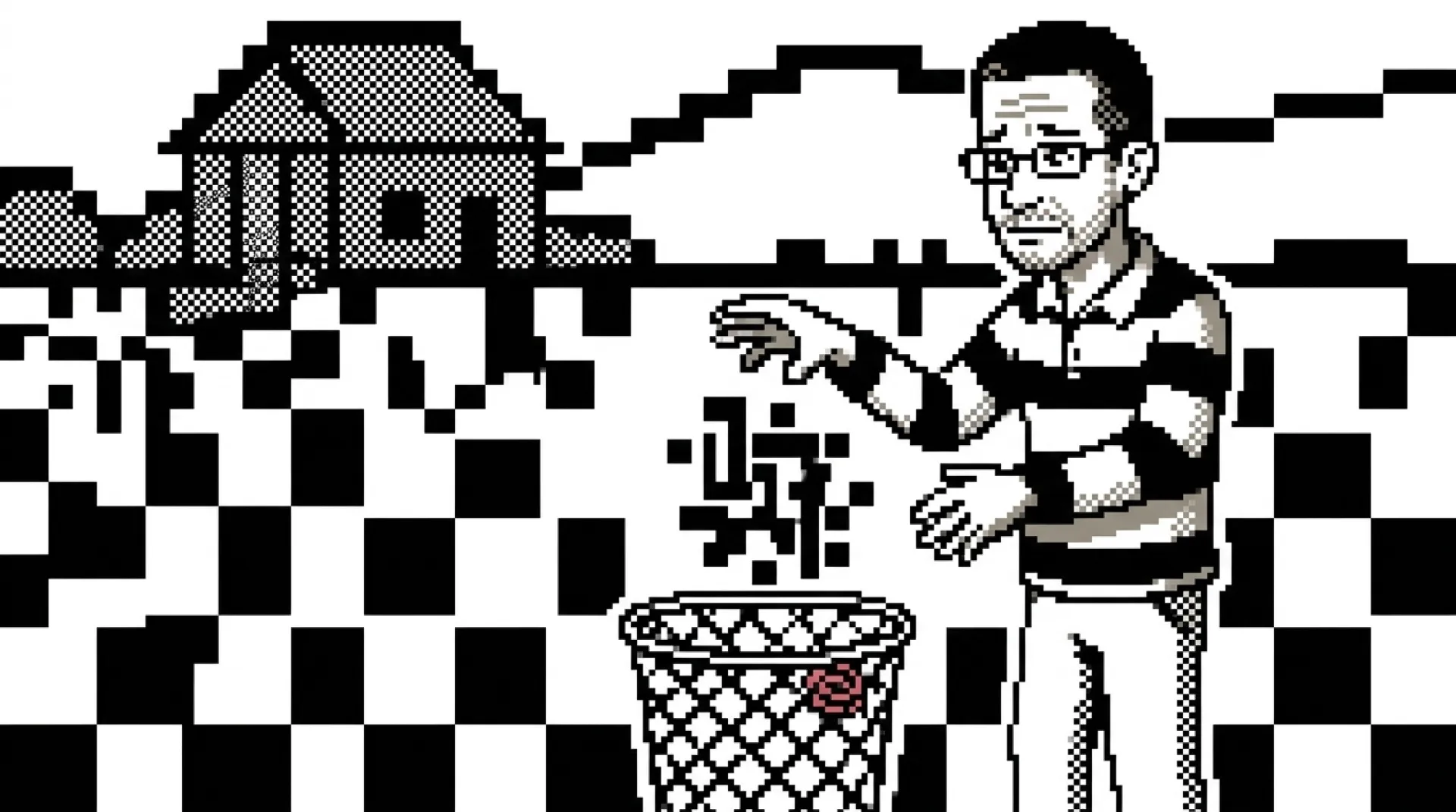
Bill Atkinson got MacPaint to do a particularly satisfying magic trick: select text that had become pixels, and turn it back into editable characters. Then he threw the trick away. A feature finally worked, and its reward was cancellation.
Andy Hertzfeld’s recollection of MacPaint’s development dates the experiment to June 1983. Atkinson identified each character’s bounding box, calculated a checksum and checked it against known fonts. A matching checksum triggered a detailed comparison. The program was recognizing its own familiar letter shapes, with no claim to understand every piece of text somebody might feed it.
That distinction makes the limitation understandable. One altered pixel could spoil recognition. The character was wearing a tiny fake mustache, as far as the comparison was concerned. Useful for recovering pristine text inside the painting; much less reassuring if you imagined a general document reader.
Hertzfeld says the team liked the result. Atkinson nevertheless worried that people would use it enough to judge MacPaint as an inadequate word processor. The capability could change the job customers expected the program to do. The paintbrush had a typing assignment, with all the expectations about revising words that went along with it.
A drawing tool can turn a letter into part of a picture without preserving the rules of an editable paragraph. Once text recovery enters the picture, it invites expectations about revising sentences and moving words. Those expectations can be perfectly reasonable even when the recovery mechanism cannot satisfy them consistently.
The revealing part is how much effort Atkinson was prepared to discard. A convincing demonstration makes subtraction harder: everyone can see something impressive, while the confusion it may create is still hypothetical. The sunk work has an audience. The avoided support problem doesn’t get to applaud.
That makes the account useful far beyond retro trivia. A product review can ask what a new feature makes customers expect next, and whether the app can honestly follow through. The right answer depends on the product; a word processor would presumably make a very different decision about editable words.
The development story comes from Hertzfeld’s recollection, including his initial disagreement with the removal. It leaves us with a choice somebody actually made, rather than a slogan about keeping software simple. The difficult decision arrived after the impressive work had already been done.
Future drawing apps may happily combine painting and rich text. Their challenge would be to make that combination dependable, including what happens after a letter is smudged or resized. Atkinson’s discarded experiment is a particularly small, sharp example of the gap between recognizing a result and supporting everything users expect to do with it.
The letters stayed painted.