
The UK Shuts Off Its Copper Phone Lines in January 2027, the Wires That Carried Dial-Up Gaming From MUD1 to Dreamcast
A Retro Hour Podcast host's Time Extension feature collects the bills, hotlines and bets behind online play, down to a Raspberry Pi that still picks up when a Dreamcast calls.
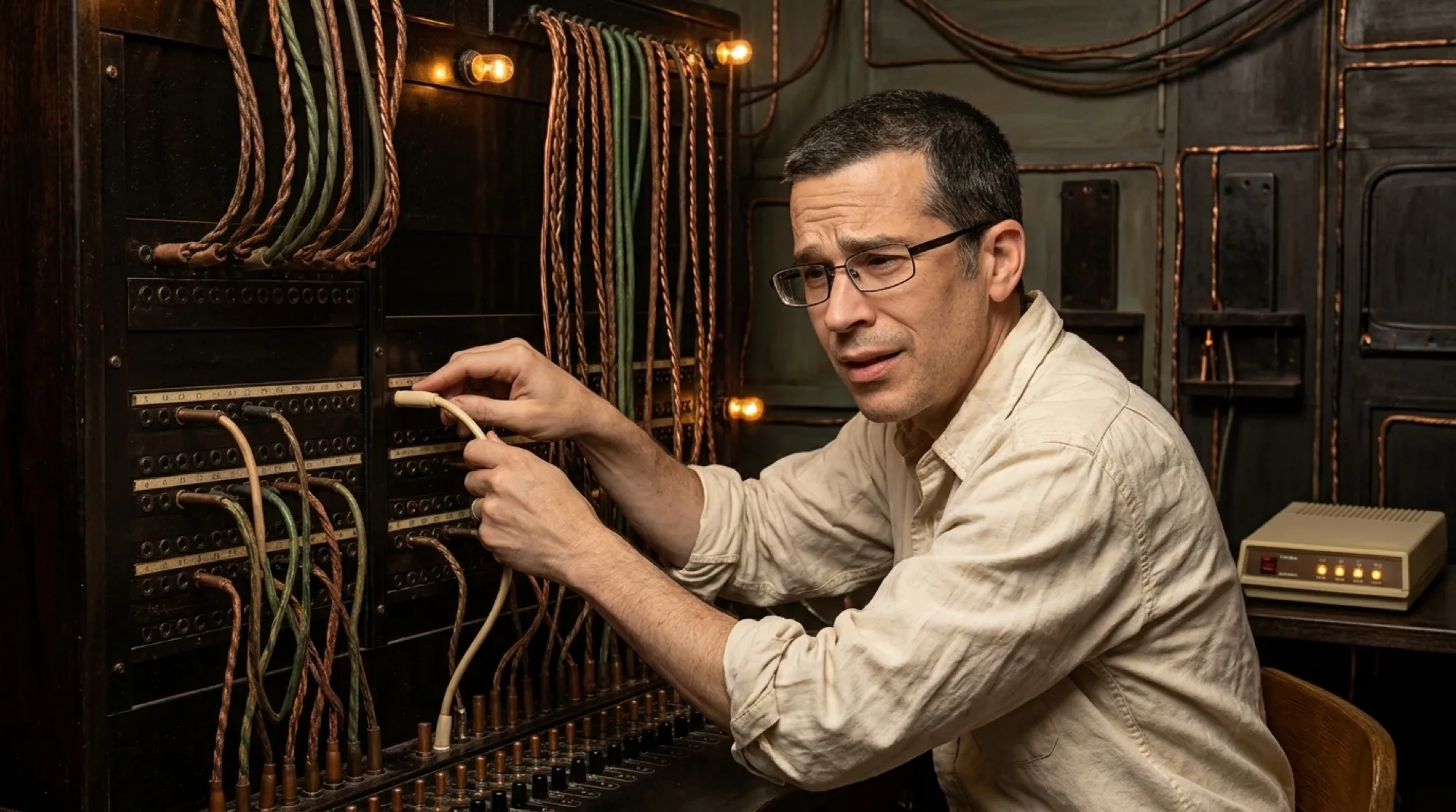
A player in Wales ran up a phone bill of more than £1,000 in three months in 1984, according to a report the feature cites. He played every night for four weeks to become a witch, then kept playing.
The game was MUD1, written in 1978 by Roy Trubshaw and Richard Bartle at the University of Essex, and the appeal was never subtle. Bartle told the feature’s author on The Retro Hour Podcast: “Our aim was to make a world that was better than the real one, ’cause the real one sucked.” The real one at least billed you by the month. The better one billed by the minute.
The bulletin board systems arrived the same year. A SysOp ran one from a computer at home, and early boards took callers one at a time. Because calls were charged by the minute, most people stuck to local boards unless they had rich parents or stolen phone cards. FidoNet had boards dial each other overnight, when calls were cheapest, to pass messages around the world. Kids who had never talked to anyone outside their bedroom or university suddenly had pen pals on three continents.
When players got stuck, the phone was also the help desk. Nintendo and Sega ran hotlines staffed by counsellors, and Nintendo’s kept consoles on their desks so they could play along. Tim Gadler, a former Sega hotline counsellor in Australia, said that was the whole point: “When the kid’s telling you, ‘Look, I’m stuck on Sonic and there’s this red block,’ well, you have to play the game to know what they’re talking about. You don’t just keep on reading things off a screen.” Capcom, EA and Sierra then opened premium-rate lines of their own, which gave parents another reason to go through the ceiling at the end of the month.
The consoles dialed out too. GameLine on the Atari 2600 downloaded games over the phone line in 1983, and the company behind it later became AOL. Japan’s Famicom Network System offered live stock trading in 1988, which is a bold use of a Famicom. Sega MegaNet followed in 1990, and XBAND let Mega Drive and SNES owners battle over phone lines. On PC, DWANGO let DOOM players dial into a shared server, and lobbies, clans and rankings came with it. The price was a connection that providers dropped every two hours, and the odd parent who lifted the receiver mid-match and kicked you off with a screech of data.
Sega then bet the Dreamcast on the modem. Japanese providers charged dial-up by the minute, so chairman Isao Okawa personally paid for free internet access bundled with Japanese Dreamcasts. Phantasy Star Online showed that online console play could work, and its World Select system let players in Japan, America and Europe talk across five languages. Sonic Team boss Yuji Naka joked that people would one day look back at the name and laugh: “Look at the title, it says online!”
The Dreamcast crowd is still dialing. A tiny Raspberry Pi called the DreamPi plays telephone exchange: it listens for the console’s dial tones and answers the call itself. The copper goes dark in January 2027, and the Pi has no plans to hang up.
Expect the DreamPi’s trick to spread. Every country that retires its copper leaves a pile of modems with no exchange to call, and a single-board computer pretending to be the exchange is the obvious patch. Hobbyists will probably do it first, for consoles and BBS software, before any museum thinks to ask.
The hint line is the part that won’t come back. Counsellors with consoles on their desks turned a stuck kid into a customer-feedback channel, and what replaced them was a search box. Studios that want that signal now have to dig it out of forums and refund requests.
PSTN shutdowns also tend to arrive as a date, a letter and a hardware swap, and the people who feel them first are the ones with a phone line plugged into something nobody remembers. Gamers are just the loudest of those people. Somebody’s mum will still pick up the phone mid-match.