
Half-Life 2 at 22: buying the game still left Valve’s authentication server in the way
An anniversary revisit starts with the service dependency, then follows Valve’s later work to preserve older mods.
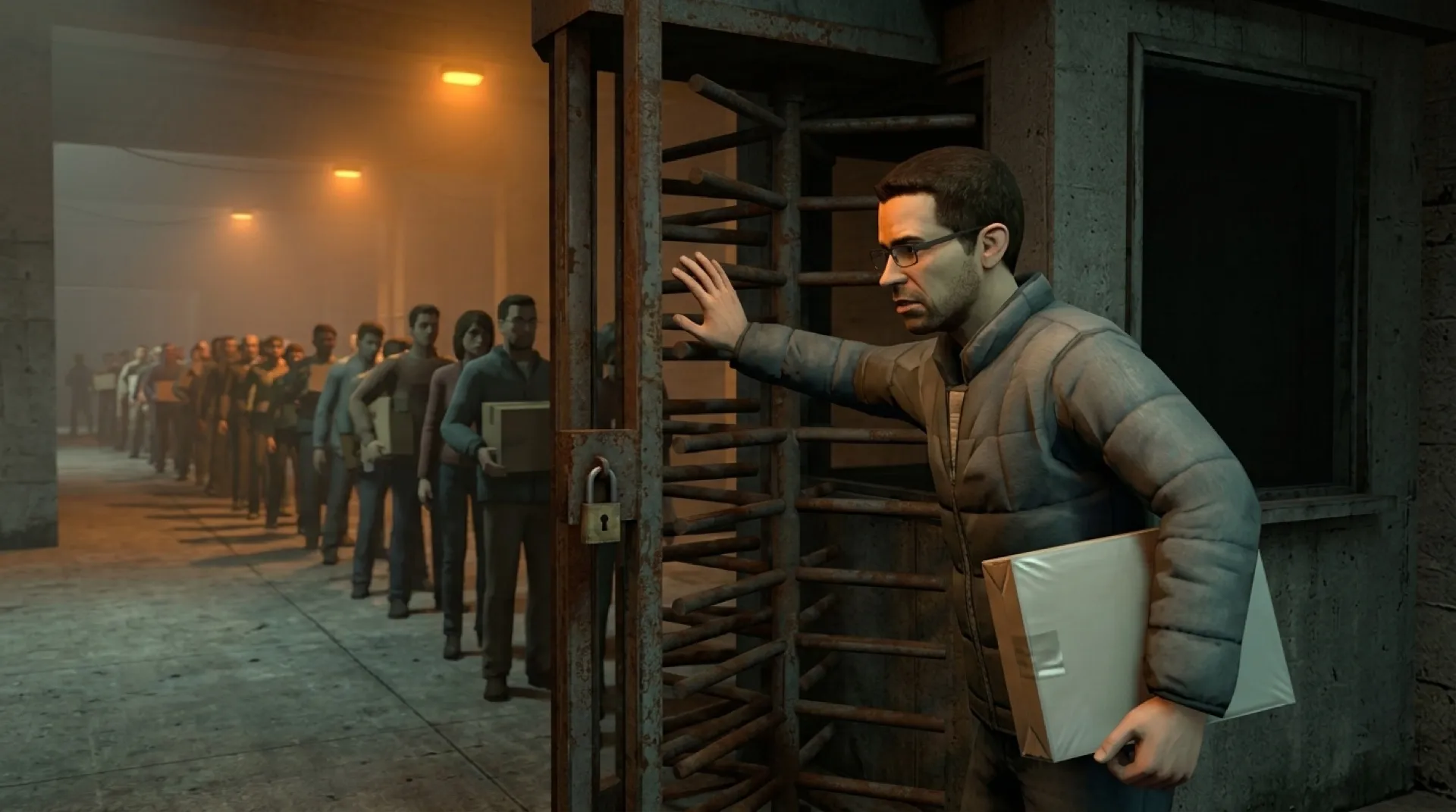
Three days before Half-Life 2’s November 16, 2004 release, Valve was already apologizing to people who had bought it. The purchase had happened. The playing hadn’t. A November 13 Steam news post explained that the authentication servers had yet to be activated.
That is a fairly specific way for a shopping trip to disappoint. The customer could complete their part of the transaction while a separate service still controlled whether the game would start. Imagine buying a door and learning that the key desk opens on Tuesday. The door is yours to carry home, but that doesn’t settle the matter of getting through it.
Valve attributed the timing to its publisher: Vivendi considered the game unreleased and had threatened a contract violation if Valve activated those servers. That is Valve’s account of the dispute, preserved in its own announcement. It shows the publisher relationship reaching into the customer’s ability to play, rather than merely deciding whose logo appeared on the box.
Then release day arrived, and the dependency had another failure mode. At 4 p.m. on November 16, Valve acknowledged reports of authentication delays and said it was investigating. Opening the service and successfully handling access were different problems. A release date couldn’t make them the same.
Twenty-two years later, the useful anniversary question is what ongoing responsibility comes with putting a service in that position. The old notices don’t tell us that everybody hated the requirement, and they don’t establish a first-ever claim. They document something narrower and harder to shrug off: customers waiting while the service owner worked on their route into a game they had already purchased.
The same long relationship can also deliver later work. Valve’s 20th anniversary update page, published for the 2024 milestone, describes bundling Episode One and Episode Two into the base game’s menus, adding developer commentary and integrating Workshop content. Those are concrete additions to a game whose original release date is now old enough to start an argument about how old the reader feels.
Preserving older modifications creates a less flashy task. The anniversary page identifies a steam_legacy beta containing the version before that update, for mods that need it. Updating the default game and keeping an older version available serve different players. A person replaying the campaign may want the new package; someone troubleshooting a mod may need the exact environment it expected.
For a return visit, the version choice is worth recording beside the mod name and instructions. That gives the next player a reproducible starting point, instead of another guess at what “Half-Life 2 installed” meant on somebody else’s computer.