
El Poblador puts a Catan-style board game in the terminal over SSH
The Go project offers hosted lobbies and self-hosting, with a stated limit on how long online saves survive.
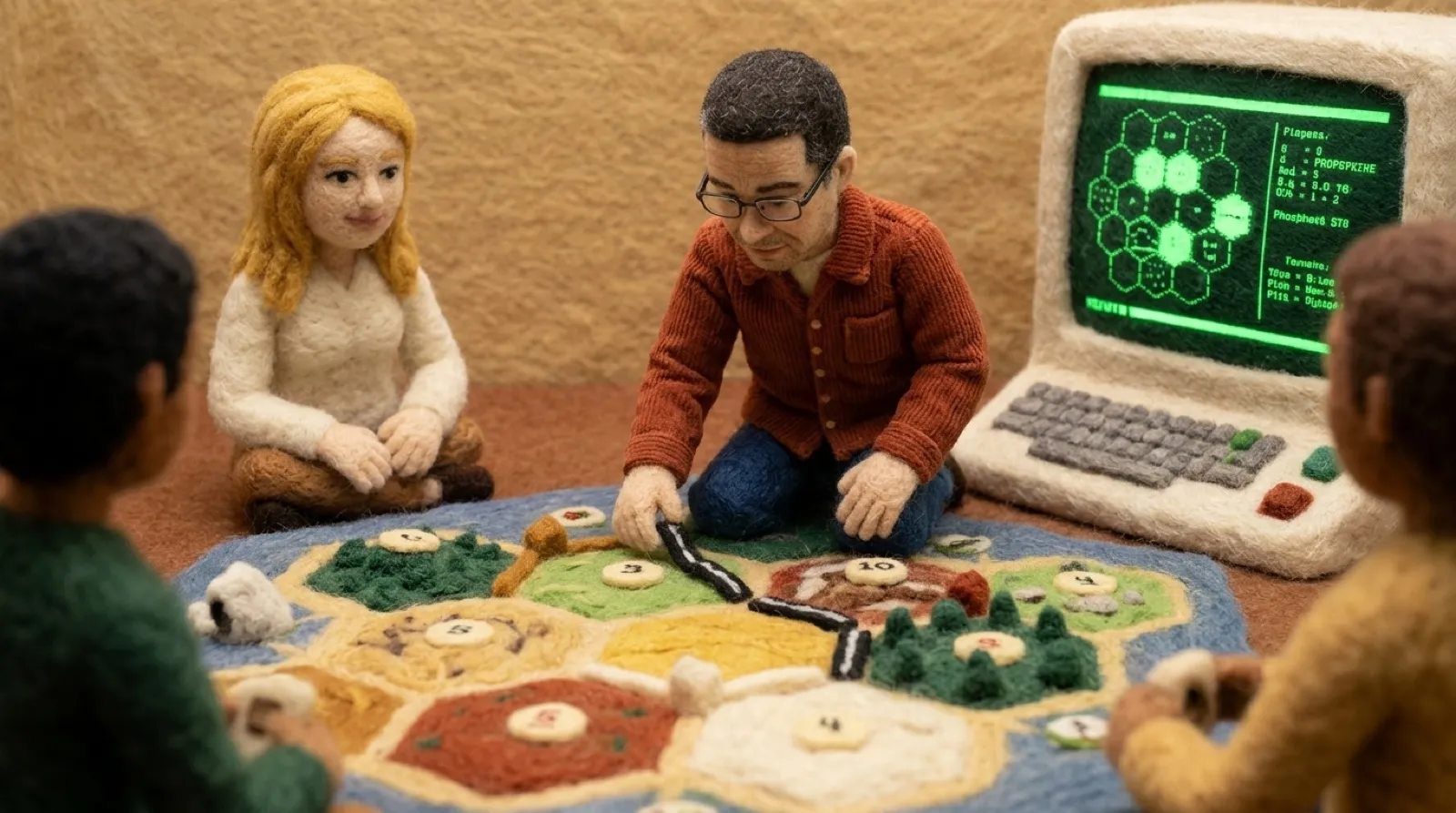
SSH can take you somewhere other than a machine needing repairs. El Poblador uses it to reach a terminal version of Settlers of Catan, with open lobbies and a board rendered where commands usually go. The resource negotiation is familiar; the remote session has acquired wheat.
The project README provides the hosted connection command: ssh catan.vichoreyes.cl -p 2222. Connecting displays online lobbies. There is also a local program, available as a release or through Go tooling, for starting a two-to-four-player game and loading a saved one.
The distinction matters for setup. Playing on the hosted service uses the SSH client already present on many systems. Running a local copy or your own server adds a download or build step. One route joins someone else’s lobby service; the other makes the operator responsible for the game process and its availability.
The controls use arrow keys for movement and Enter for confirmation. A separate key toggles emoji because some terminal emulators align those characters differently. A board game has found another reason for a font dispute. If the rows don’t line up, the project has already anticipated that particular kind of table trouble.
Online games can be saved and resumed with a player name and save code. The README documents a resume command and warns that “saved games are deleted after 30 days.” It also says backward compatibility for old saves isn’t promised yet. An online save is a convenience with a deadline, rather than a permanent archive of unfinished negotiations.
Self-hosting starts the program in server mode and lets other players connect over SSH. The repository links deployment documentation for the hosted version, and the code uses the EUPL v1.2 license. Those details make the project something an interested group can inspect and operate rather than a video of a game nobody else can reach.
The terminal presentation also sets expectations. This is a software interpretation of a familiar board game, not evidence that every official expansion, rule variant or matchmaking feature is available. The README’s documented player count, commands and save behavior are the concrete starting points.
A small group can evaluate the experience without immediately building a service around it. The first practical checks are whether the board renders properly in their terminals and whether everyone can navigate the lobby. A failed emoji alignment is easier to solve before anybody develops a very strong opinion about a road.
Networked games distributed through simple terminal connections could keep finding an audience among people who already live in SSH sessions. This one has a particularly clear limit for the leisurely player: the hosted save’s clock keeps running even when the group can’t agree on the next meeting.
The sheep have a port number.