
Doom runs on an IBM mainframe while your browser receives only colored terminal text
A terminal vendor’s demonstration lets a browser send game input to a remote host and receive colored text.
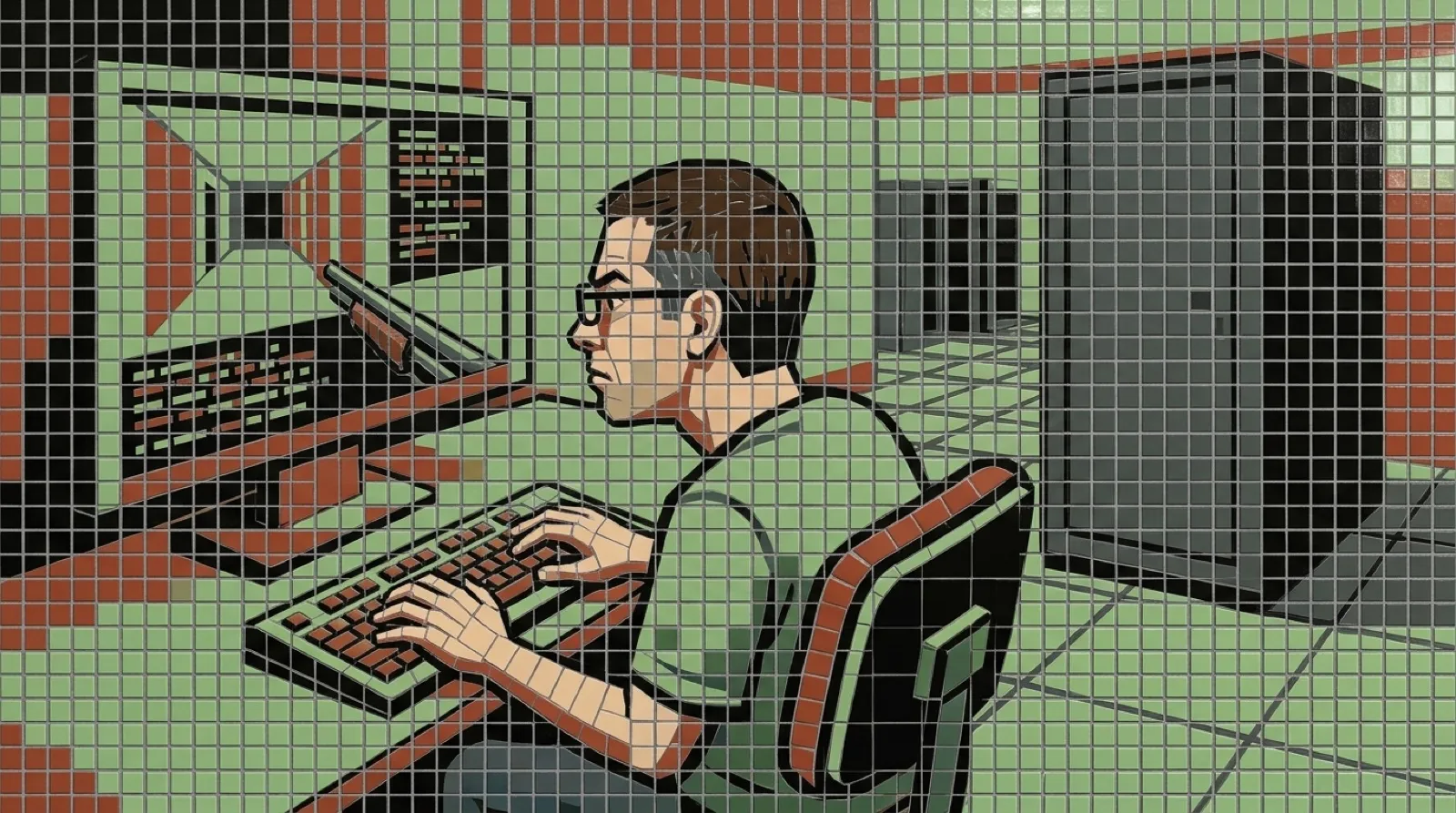
Doom has found a mainframe, but the useful part of this version is the route between the game and your screen. WND Software sends the picture through a terminal connection as colored text. Somewhere in that arrangement, an ordinary character cell has accepted a position in the graphics department.
The demo page says the game runs on an IBM Z mainframe host. WND Terminal connects using VT/xterm over SSH and displays the result in the browser. Opening a web page does not mean the game itself has been recompiled into browser code; the browser is the window onto the remote session.
That separation is the joke and the demonstration. Input travels toward the host, and updates travel back through a channel associated with command prompts and administrative tools. The display still has to represent movement and depth. Colored characters become a deliberately limited vocabulary for a world that normally expects pixels.
The linked DOOM-ASCII source port documents choices for ASCII characters, blocks and braille patterns. These change how the image is represented inside the terminal’s grid. They also make the display’s constraints visible: the useful unit is a character position, even when that position helps approximate something more detailed.
The port’s documentation warns that terminal throughput limits the useful resolution and frame rate. A smaller rendered image can be the better way to play, because asking the terminal to move more information does not guarantee a smoother result. The bottleneck can be the path to the screen rather than the machine running the game.
There is also no sound in that source port. For a separate local installation, it requires game data in a WAD file and points readers without the commercial game toward the shareware version. Source code for an engine does not automatically include permission to distribute all the original game’s assets. Those remain separate pieces of the package.
WND’s hosted demo offers a short turn without a sign-in or installation, according to its page. That makes it a convenient way to inspect the effect without configuring a host. It is still a vendor demonstration, its latency will also depend on the reader’s browser and network.
For a mainframe terminal product, a moving game is an unusually easy explanation of the connection. A screen full of orders might show that the text arrived correctly. Doom makes delayed input and incomplete drawing much harder to ignore. The little colored symbols now have the additional responsibility of keeping the player alive.
The prompt has monsters now.