
Softwareopen-sourcepodcastsgolang
A Free Go Music Player Writes Podcast Captions on Your Own Computer While the Episode Plays
MyGo Music is a native player with no WebView, and its podcasts, accounts and catalogs arrive through plugins written as a single script file. The speech model is a separate download, and the README never says how big it is.
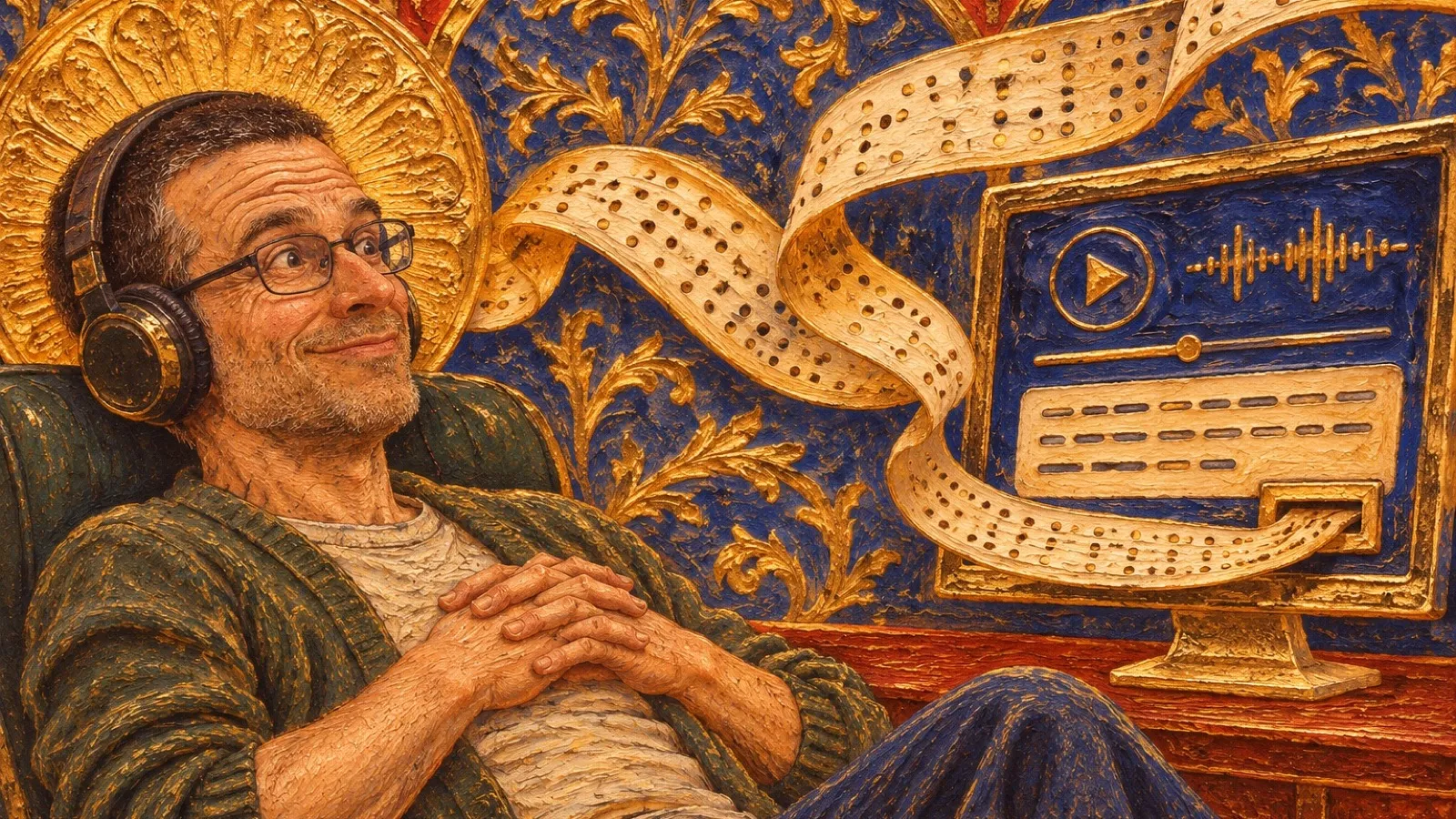
Press play on a podcast in MyGo Music and the app starts writing the episode down as it goes. The project’s site says so in one line: “Episodes are written down on your computer as they play, with sherpa-onnx and Qwen3-ASR.” The next sentence is the selling point: “Nothing leaves it.”
The two names in that sentence are separate projects. sherpa-onnx is a speech toolkit from the k2-fsa organization, Apache-licensed, that describes itself as using “next-gen Kaldi with onnxruntime without Internet connection.” Qwen3-ASR is the speech recognition model. sherpa-onnx’s own release notes list a “Qwen3 ASR 0.6B (multilingual)” example, which is the only size they name. MyGo’s README doesn’t say which size the player fetches.
That fetch is the fine print. Per the README, the app downloads the speech components only when the listener asks for them, so a person who never turns captions on never pays for them. Nobody says what the download costs in disk space, either, and the README gives no limits or performance numbers. This is a local-processing claim, and there’s no hands-on test behind it here, since the project publishes source and build steps and no benchmarks.
The player around it is small. The download page lists version 0.1.22, released November 7, with a 10.4 MB disk image for Apple silicon Macs and a 9.4 MB installer for 64-bit Windows. It says the Mac app is “signed and notarized by Apple.” The README calls it “A native desktop music player written in Go with MyGo, no WebView,” and that last part is a jab at the apps that ship a whole browser to show you a playlist. It plays MP3, FLAC, Ogg Vorbis, WAV and ALAC or AAC in .m4a files, with tags, covers and synced .lrc lyrics, and it has a notch player on macOS, a tray icon and media keys.
Out of the box it plays your own files, and everything else comes from plugins. A plugin is a folder with a plugin.json and one JavaScript or TypeScript file, with no build step, and per the README plugins can add accounts, catalogs, podcasts, stations and comments. That’s where the podcasts come from: the captions feature has to be pointed at something the plugins bring in.
Plugins also come with permissions, and the README is blunt about them. A plugin’s network setting lists the hosts it can reach: “Without it, fetch reaches nothing.” A plugin that wants to run a program has to be allowed in Settings first, and the README’s reason is that “a program can do anything they can.” Install links ask before they install, and an update that wants more permissions asks again.
The author goes by egoist, and the pages name nobody else; the license is AGPL-3.0. The project is young. Releases v0.1.11 through v0.1.22 landed on November 6 and 7, per the releases page, and none of the notes we read mention captions or the speech model. How big that model is, and how fast it keeps up with a talkative host on an old laptop, is something only a person who clicks the button will find out.
What stands out is who is shipping it. A small open-source music player offers a speech model as an optional download, and the toolkit under it, sherpa-onnx, is built to run without a network. If that holds up on ordinary laptops, expect other small players and readers to add the same button, and expect the first complaints to be about disk space and battery rather than accuracy, since the two things the README leaves out are the model’s size and its speed.
“Nothing leaves it.”