
Gamingnintendohandheldscomparisons
Nintendo 2DS vs. 3DS: The Flat One Weighs 25 Grams More and Has Mono Speakers
Original-model specifications reveal a used-buying tradeoff that screen size alone won't show, and the later XL names complicate shopping.
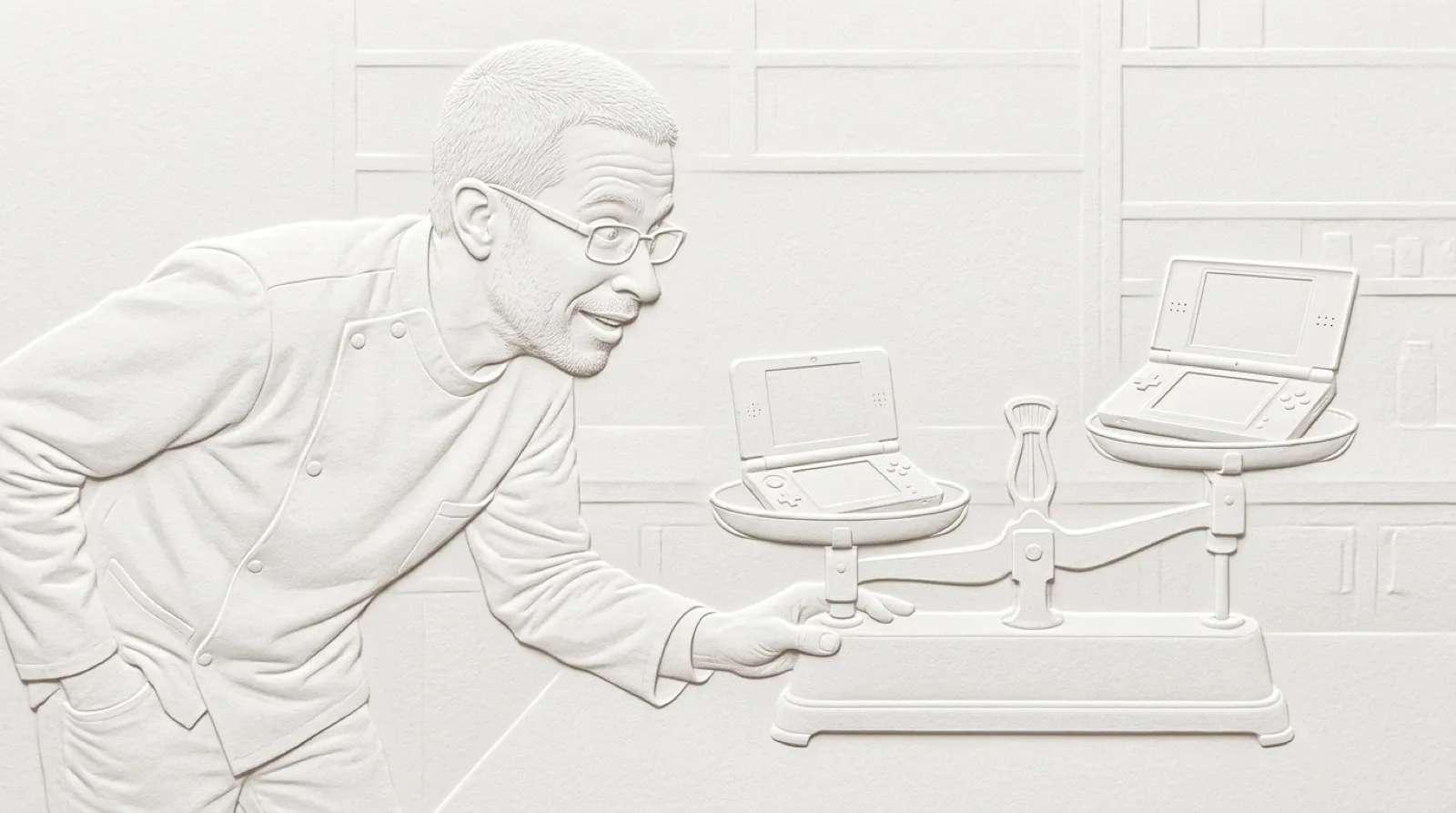
The Nintendo 2DS loses the hinge, loses stereoscopic 3D and somehow gains 25 grams over the original Nintendo 3DS. Downsizing has apparently taken a day off. The figures come from Nintendo’s own comparison sheet, which is more useful to a used buyer than deciding which machine looks smaller in a seller’s photograph.
The original 2DS is the rigid slab. The original 3DS folds shut. That distinction changes what has to fit in a pocket or a carrying case, and it survives long after the launch marketing has faded. A closed clamshell gives you a different object to carry than a permanently open rectangle. The weight number alone cannot settle which one feels better in a particular pair of hands.
Sound adds another decision that photographs do a poor job of explaining. Nintendo describes the 2DS speaker as “Monaural,” with stereo available through headphones. The 3DS has stereo speakers. Someone who already plays with headphones can read that as a smaller compromise; someone who relies on the built-in sound has a reason to look beyond the shared game branding.
| Difference | Original 2DS | Original 3DS | Original 3DS XL | New 2DS XL |
|---|---|---|---|---|
| Approximate weight | 260 g | 235 g | 336 g | 260 g |
| Upper screen diagonal | 3.53 inches | 3.53 inches | 4.88 inches | 4.88 inches |
| Folding design | No | Yes | Yes | Yes |
| Stereoscopic 3D | No | Yes | Yes | No |
The first three columns come from Nintendo’s 2014 family chart. The later model’s screen and weight are on Nintendo’s New 2DS XL page. These are historical relatives for a used comparison, rather than a lineup of newly manufactured machines; Nintendo says family production has ended.
The later New 2DS XL makes the names particularly treacherous. It puts a larger upper screen into another roughly 260-gram machine. That does not retroactively change what the original slab did; it shows why the full model name belongs beside every specification. Nintendo found several ways to rearrange the same handful of letters (a naming achievement, certainly).
Used listings add a practical layer the old chart cannot answer. A manufacturing specification tells you the original design. It cannot tell you whether a particular unit has a worn hinge, a damaged headphone socket or a battery that has spent years in storage. Those are reasons to ask for photographs and a working demonstration of the actual console, rather than treating the model comparison as a condition report.
The choice gets more straightforward once the right two machines are on the table. A player who values folding and built-in stereo has concrete reasons to prefer the original 3DS. A player who prefers the rigid shape and uses headphones can weigh those priorities differently. Neither needs a story about one model being universally better to make the tradeoff useful.
The open issue in any actual purchase is the particular machine’s condition, which Nintendo’s sheet naturally leaves to the person holding it. The missing hinge is at least easy to inspect.
That part cannot be worn out.