
Softwareimmichself-hostingphotosopen-sourceprivacy
Steward, a Free Immich Add-On, Guesses Where Your Photos Without GPS Were Taken and Lets You Pick
Immich Steward is a new open-source add-on for the self-hosted Immich photo server that suggests locations for photos with no GPS data, from nearby shots in time, the GeoCLIP model and look-alike photos in your own library.
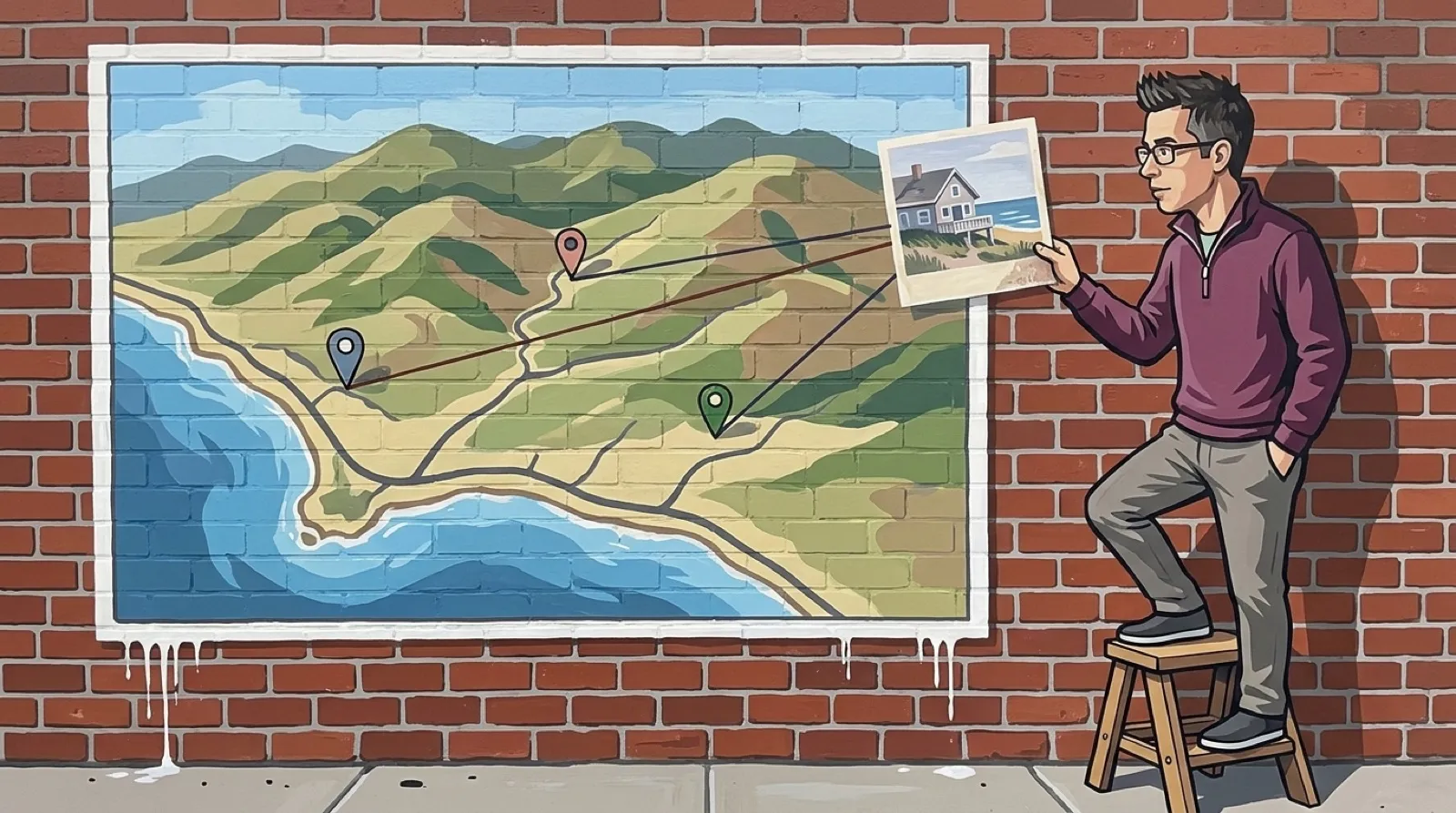
Steward’s pitch fits in one line of its README: “Put your photos without GPS back on the map — several independent clues, one map, your pick.”
It’s built for the photos that never had a location to lose, or lost it on the way. “Typical use case: a family photo archive with scanned prints, old digital cameras without GPS, or messenger downloads that lost their metadata,” the README says.
The clues come from separate modules. “For each photo without a location, several modules — photos taken close in time, the GeoCLIP neural network and similar photos of the same place in your own library — suggest where it was taken, all on one map,” the project explains. “You pick one with a click or a key, or set the place of many photos at once. Nothing is written to Immich until you do, and every change can be undone.”
GeoCLIP is the “official PyTorch implementation of our NeurIPS 2023 paper,” trained on “the MP-16 dataset, composed of 4.7M Images taken across the globe.” Steward says it “can also look at a part of the photo only: a building behind a crowd, a sign, a mountain on the horizon.”
The look-alike module uses a model called MegaLoc to match a photo against places already pinned in your own library. Its developer’s own measurement: “on a real family library, about half of its suggestions are right within 1 km, and more than eight out of ten of its confident ones.”
It runs with Docker Compose beside Immich, the “High performance self-hosted photo and video management solution,” version 3.x, on port 8780. The worker needs “2 to 4 GB of RAM with both models loaded.” Steward is AGPL-3.0 licensed, its repository was created on October 17, 2026, and version 0.6.0 came out on October 26.
The privacy notes start with “Photos never leave your server.” Some requests do go out: map tiles come from OpenFreeMap, address search goes to photon.komoot.io and the models download from Hugging Face. When you confirm a place, Steward writes only the location and a steward/estimated tag.
The README is blunt about its age: “Expect bugs and changes between versions, and keep a backup of your Immich library before writing locations to it.” Street-level panoramas and “LLM reasoning (Img2Loc-style)” are on its planned list. How it handles a photo where every clue disagrees, the README doesn’t show.
For anyone keeping a family archive on a home server, the useful part is the tag. A year from now, the difference between “the camera said so” and “we picked it from three guesses” is the kind of detail nobody remembers, and Steward writes it down.
Expect this pattern to spread. Once a photo app can rank a few likely places, the same pick-from-a-map step works for dates on scanned prints and names on faces.
What the project hasn’t said is how well GeoCLIP’s world-scale guesses do on a single family’s photos, next to MegaLoc’s measured numbers.