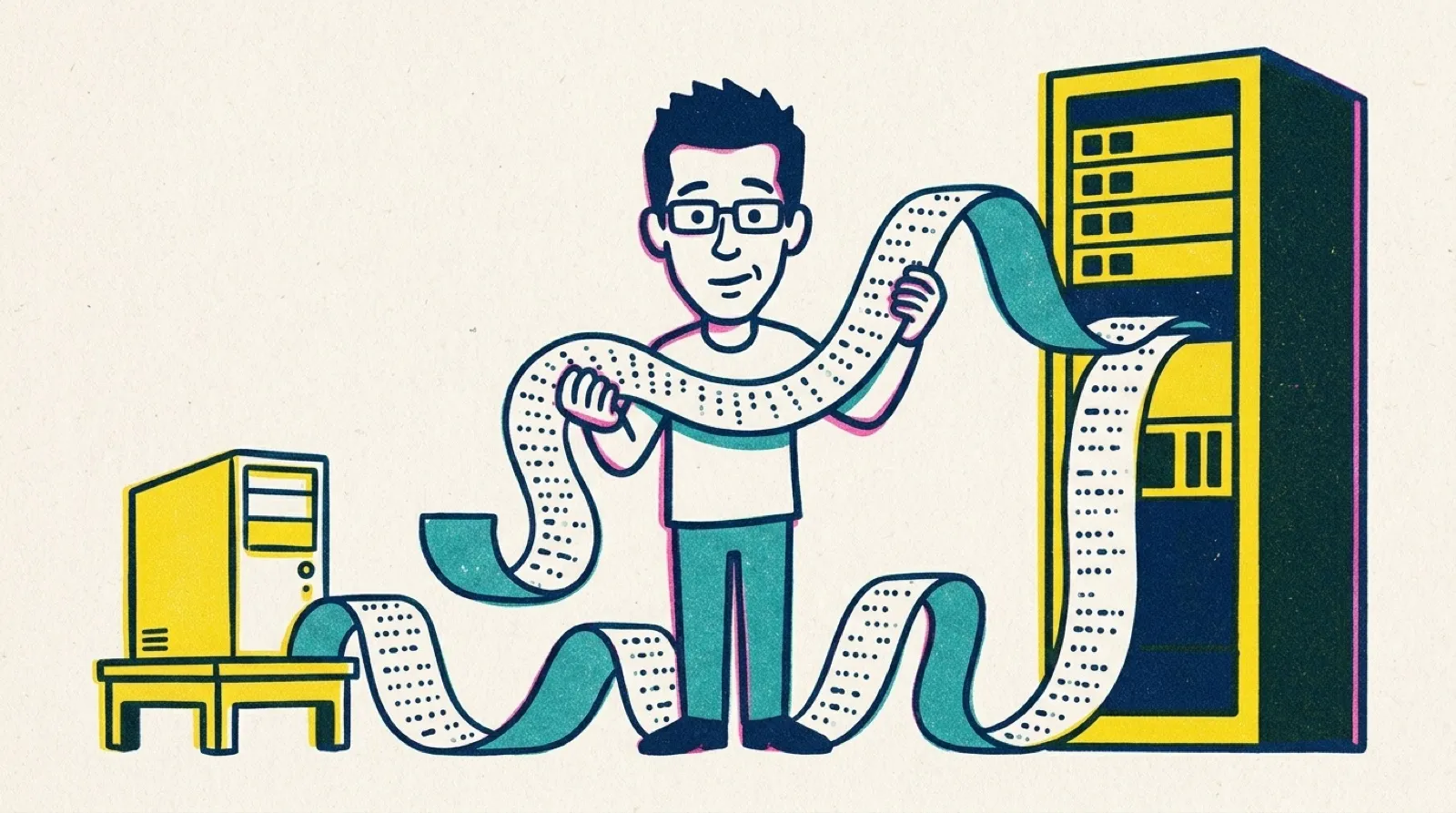
The pi record went from 5 trillion digits on a desktop to 314 trillion on one StorageReview server, and it still takes about three months
In 2010 Shigeru Kondo's desktop computed 5 trillion digits of pi in 90 days. In 2025 StorageReview's single Dell server computed 314 trillion in about 110, on forty Micron SSDs. Here's what changed and what didn't.
In August 2010, the record ran on a desktop. Alexander J. Yee and Shigeru Kondo announced 5 trillion digits after 90 days on Kondo’s machine: two Intel Xeon X5680 chips with 12 cores between them, 96 GB of RAM, and a stack of 2 TB SATA hard drives. It ran Windows Server 2008 R2. “The computer was dedicated for this task,” their write-up says.
That desktop needed roughly 22 TB of disk to do the math. Eight days in, a hardware glitch produced a wrong result, and Yee’s software caught it with its own error checking. The fix cost about a day.
The current record holder, per Yee’s own y-cruncher records table, is 314 trillion digits by Kevin O’Brien, Divyansh Jain and Brian Beeler of StorageReview. They ran it on one 2U Dell PowerEdge R7725 with two 192-core AMD EPYC 9965 chips, 1.5 TB of DDR5 and forty 61.44 TB Micron 6550 Ion SSDs.
The run started July 31, 2025, and Yee’s table dates the finish to November 19. “From start to finish, the run never had to be resumed,” O’Brien wrote in StorageReview’s write-up. Guinness World Records certified it in June 2026, crediting StorageReview and Micron, after “nearly 110 days of constant computation on a single server.”
The 63-fold jump in digits came with 32 times the cores and 16 times the memory. The disk grew most. The job’s peak footprint was 1.43 PiB, and it wrote 112 PiB to those SSDs over the run. Nobody has published what the next record will run on.
If the pattern holds, the next record comes from whoever ships the next denser drive, since storage makers now sit on the credits. Yee’s software has run every record in his table since 2010, so the same program keeps grading each new generation of hardware. Watch which drive maker’s name lands on the next Guinness certificate, and whether anyone tries to beat 110 days instead of 314 trillion.