
Securityfingerprintingobfuscationaireverse-engineeringanti-bot
Anti-Bot Fingerprinting Script Names Its Functions After Ricin and Dirty Bombs So AI Models Refuse to Decode It
A researcher at nullpt.rs found a browser fingerprinting script on servicepipe.tech whose obfuscated code is stuffed with weapon and self-harm themed function names, and one AI model declined to deobfuscate it.
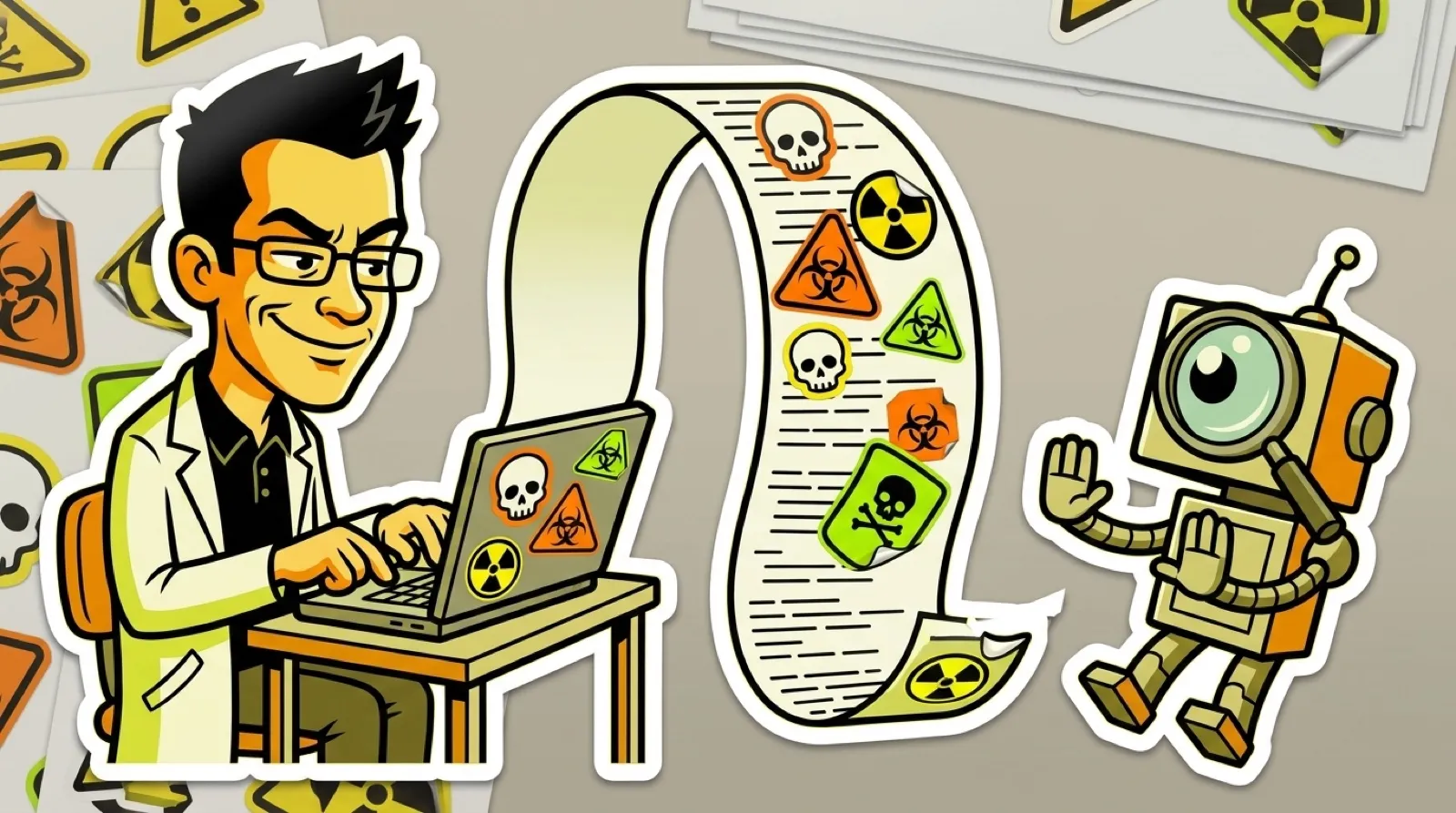
veritas opens the October 28 write-up on nullpt.rs plainly: “I’ve always had a fascination with reverse-engineering browser fingerprinting scripts.” This one, loaded from servicepipe.tech, read like a chemistry exam set by a supervillain. Alongside the ricin function sat calculateANFOBlastOverpressureRadius, calculateFentanylPrecursorSynthesisYield, computeCRISPRGeneDrivePropagationRate and calculateDeadlyLethalSuicideAspirinDosage.
None of it computes anything of the sort. veritas calls it “your standard anti-bot script.” It reads the browser’s user agent, CPU core count, device memory, touch points, languages, platform and WebDriver flag, plus WebGL vendor and renderer strings and GPU limits. It also counts the keys on the window object, which the post describes as a “headless/global pollution tell” for spotting automated browsers.
“The signals collected are pretty disappointing considering the level of thought that went into the obfuscation,” veritas writes.
The thought went into the names. When veritas asked a model to deobfuscate the script, “Maybe unsurprisingly, Astra was not willing to comply with the request.” The post’s caption says the refusal cited safety risks around biological research. Another model in the test, GLM-5.3, did the job.
The script carries a second layer of bait. A long run of invisible Unicode characters decodes to a fake “system override” prompt listing harmful topics. “This was clearly a string meant to trip every possible safeguard out there,” veritas writes.
There’s also a block that only runs inside Node with a specific environment flag set. It goes after common config and credential files, then runs shell commands that download and launch a remote binary and set up persistence. veritas reads that block as “likely also anti-LLM obfuscation,” pointing to its empty readFile callbacks, but the post stops short of proving what it’s for.
Who wrote it is also loose. veritas links servicepipe.tech to servicepipe.ru, a company that says it develops “high-precision traffic control systems,” while noting the two are only “similarly named,” and credits Sshell for help identifying who could be behind the site. Nobody from either domain has said the script is theirs.
Expect more of this. Any defense that costs the attacker one function rename and costs the defender a model’s cooperation is cheap enough to spread, and model makers will likely respond by teaching their filters the difference between a function name and an instruction. Until they do, the people paying for it are security researchers. veritas closes by saying, “I will continue crawling the web in hopes of finding more interesting fingerprinting/obfuscation techniques like this!” The open question is how many other scripts already carry their own scarecrows.