
A Contra fan port checks 40,000 frames against the NES original
The project inherits a disassembly inspired by an unexplained speedrun death, and its older coverage notes expose the boundary between translated and verified.
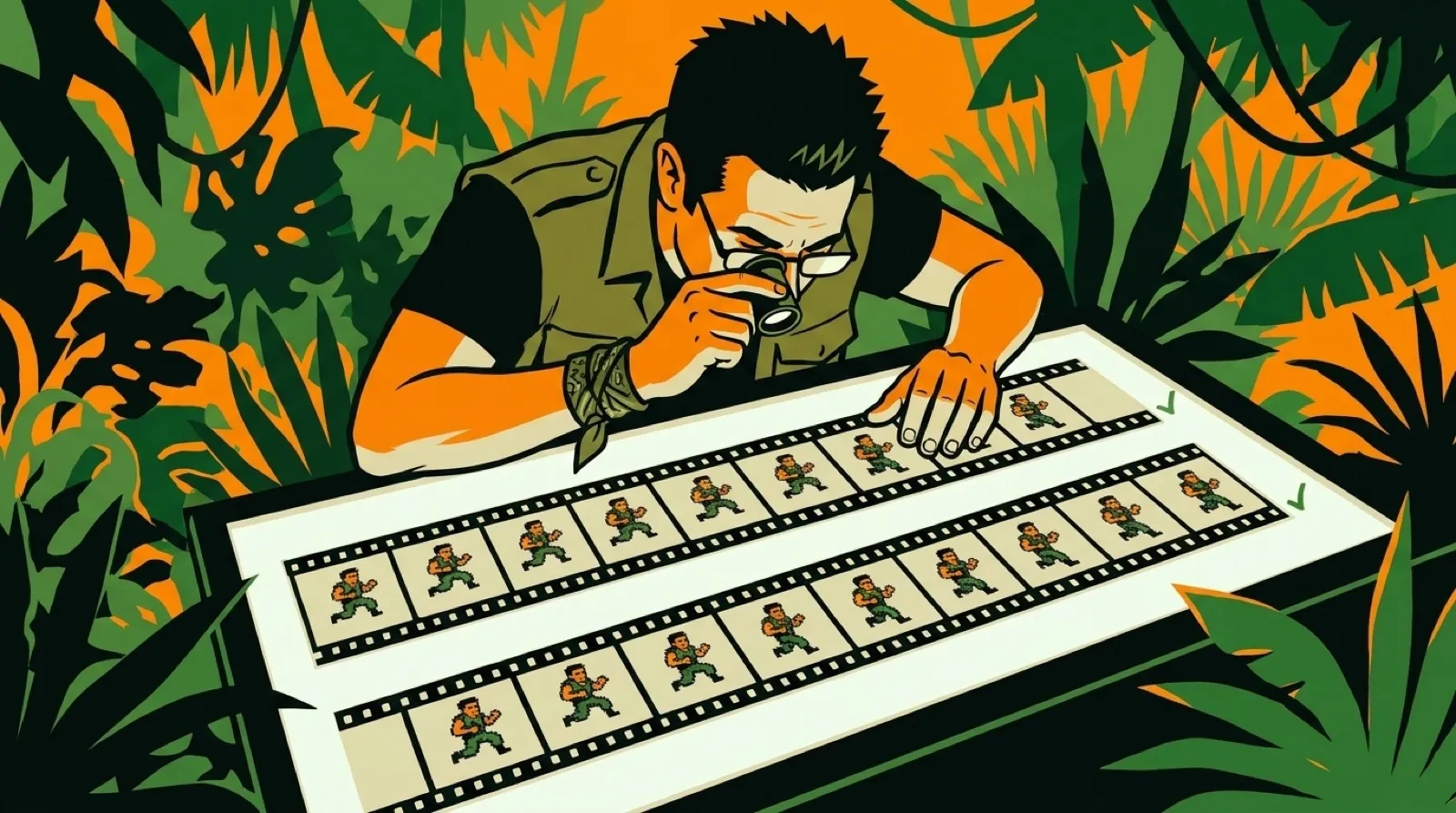
Contra’s jungle can look right while a shot, jump or enemy timer behaves differently. This fan port compares what happens behind the pixels as well as the pixels themselves. That is a much fussier reunion with a childhood game than recognizing the trees and declaring victory.
The project README says a Mesen 2 recording is replayed through its C core. Each frame compares RAM, graphics tables, palette, sprite data, graphics registers, sound state and the final image. The creator reports matching stages 1 through 4, including sound. Checking the intermediate state matters because two frames can look alike while leaving different values in memory for the next jump.
The port translates 6502 assembly into C and then WebAssembly. Its sound engine translates the original bank 1 code line by line and feeds a model of the NES audio hardware. The original assembly remains available too, with a build route that the README says reconstructs the ROM byte for byte. Those are separate comparisons: matching an assembled cartridge and matching a translated game’s behavior answer different questions.
The earlier disassembly by vermiceli, incorporating work by Trax, began with a speedrunning mystery. A Summoning Salt video showed runner dk28 die in level 1, then start the next life in level 2. Vermiceli investigated the assembly to understand the skip. The disassembly’s history still says the cause could be a software bug or a hardware glitch.
Vermiceli repaired instructions the disassembler had mistaken for data, incorporated Trax’s comments and replaced hard-coded jump destinations with labels. The C port inherited an annotated explanation that could be modified without breaking references whenever code moved.
The cartridge holds eight 16-KiB banks, totaling 128 KiB, according to the disassembly. Only two are available at once; bank 7 stays present while another switches. The translation has to preserve the consequences of that housekeeping along with the shooting.
The browser player accepts your own Contra US ROM. The README says it stays local and that the repository contains no ROM data. Keyboard controls use arrows, A to fire and S or Space to jump; online two-player play uses WebRTC lockstep.
The project’s older coverage document makes the remaining uncertainty tangible. Dated June 11, 2026, it calls levels 5 through 8 and the ending “ported-but-unverified,” without a reference recording. It also describes audio as unported, whereas the current README describes translated sound. A coverage document can become outdated even while its warning about unrecorded levels remains useful.
More ports could make their accuracy claims this specific, especially when a familiar game’s feel depends on details players cannot name. Publishing a trace gives the next investigator somewhere to start when a bullet or jump disagrees. The original investigation, meanwhile, still leaves dk28’s mysterious trip to level 2 unexplained.