
A $10 Dongle Is Being Built to Give the Super Nintendo Wi-Fi, Cloud Saves, RetroAchievements and Satellaview
Still in development, and only for owners of two specific flash carts, but the feature list reads like a 1990s wish list: a town of houses, internet radio and a Game Boy cable that runs over the internet.
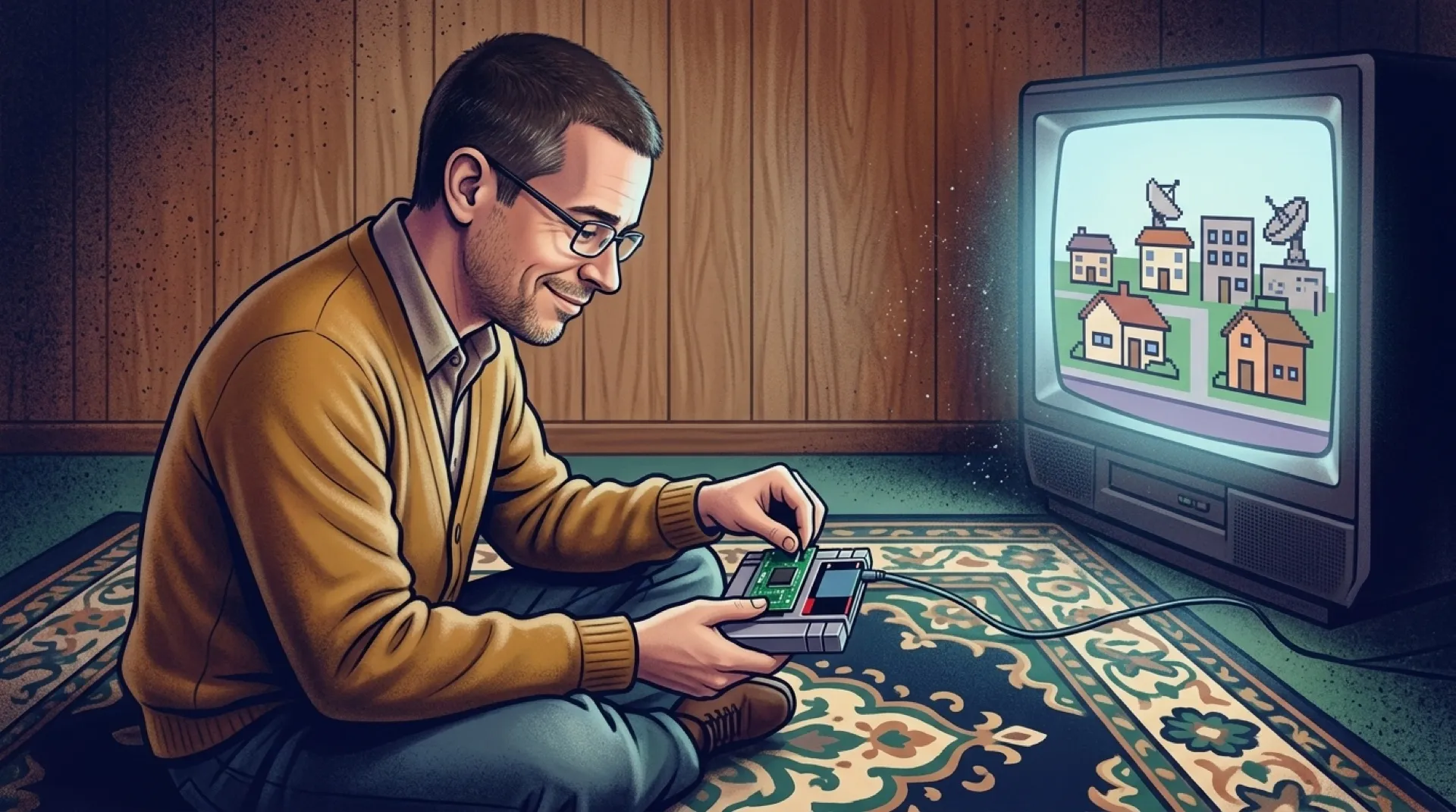
The Super Nintendo never shipped with Wi-Fi. A cheap dongle is about to cover for that, at least for people who already own a flash cart. The firmware is called sd2snes+ Link (an offshoot of the wider sd2snes+ project), and it installs on an ESP32-S3 board that plugs into the USB port of an sd2snes or FXPAK PRO, according to Time Extension, which credits Pixel Cherry Ninja for the tip. Once the board is on your network, you can play against another sd2snes+ owner over the internet, keep your save data in the cloud, turn on RetroAchievements and simulate the Satellaview add-on. “No PC is required for any of these features,” Time Extension writes. “Just a WiFi connection.”
The hardware is deliberately boring. The firmware targets an ESP32-S3 board, with the N16R8 variant recommended: 16 MB of flash and 8 MB of octal PSRAM in the DevKitC-1 form factor. Time Extension says these boards usually retail for around $10 on sites like Amazon. Both of its USB-C connectors get used. One powers the dongle, and the other plugs into the USB port on your FXPAK PRO or sd2snes. That is the entire bill of materials, apart from a cartridge you already own.
The cloud backup is the least flashy feature and the one most people will use. On the project’s official site, the description reads: “Every save the game writes goes up to the sd2snes+ cloud on its own, together with savestates, cheats, patches and config.yml.” Only what changed is sent, and the cloud keeps up to three previous versions of each file. You can restore, view versions and delete from the Web Manager, or delete straight from the console’s Saves screen. One line there should calm the nervous: “ROMs are never uploaded.”
RetroAchievements runs on the console itself. You sign in to your RetroAchievements account from the TV, with the password masked, and the Link reads the game every frame, records achievements on your profile and lights the board’s LED for each one. It ships turned off. You enable it in the menu and can switch it off game by game, so nobody’s speedrun gets a surprise trophy.
Then the fun starts. The Satellaview’s BS-X town receives programs again, now over Wi-Fi: the Link downloads the broadcast and hands it to the cartridge as if it came from the satellite, and it sets the cartridge’s clock over the network so the schedule matches the time of day. The satellite dish gets replaced by something that costs less than a pizza. The broadcast comes from GamesDB, and the Link is also compatible with Satellaview+ and receives its public broadcast.
The Link can also stream internet radio into the console’s menu. It receives the stream, decodes the audio and sends the sound to the cartridge, which plays it through the TV, while the screen shows the station, the song and the buffer. The stations come from a list kept on GamesDB, and the Link connects to each one directly.
The project’s site also describes a “Town,” where each console gets a house “in a town that grows with what was actually played.” You can visit friends’ houses and see their game shelves, leave messages, themes or saves in the mailbox, and see who is online and what they are playing. “The town works without a network,” the site says. “The Link brings the neighbors.”
The multiplayer pitch is the one that sets the SNES crowd’s imaginations on fire. The site describes a Game Boy link cable over the internet, where two consoles with sd2snes+ exchange data as if connected by the cable. For SNES matches it promises online multiplayer “in the spirit of XBand,” the 90s modem. “The Link exchanges the controller inputs between the two consoles, frame by frame.” Each player stays on their own console in their own home.
All of that rides on firmware that isn’t finished. Time Extension says the Link firmware is still in development, and the site offers a registration form to be notified when it’s ready. Until then the dongle is a $10 board in a drawer and the Satellaview town stays dark.
The design choices say a lot about where this project is headed. The hardware is a stock board anyone can buy, which means the barrier to trying it is a $10 order and a firmware download once one exists. That tends to pull in tinkerers fast. If the firmware lands as described, expect a small crowd to start building on the Link, because a cheap, widely available board is easier to extend than a custom one.
The services are the part to watch. The Satellaview broadcast and the internet radio station list both come from GamesDB, and the Link is also compatible with Satellaview+ and its public broadcast. The features that feel like a living world depend on those hosts staying up, so the dongle’s best moments rely on someone else’s server. The Town, notably, is built to work without a network, which suggests the designers know the neighbors may not always be home.
Online play has a population problem too. A match needs a second sd2snes+ owner, and for now that audience is a small club. If the firmware ships and people pick it up, the town could fill with houses. If it doesn’t, you have a very elaborate single-player radio.
Finally, a Link that gets online.