
A firewall pioneer remembers a $75,000 product and the permission problem it couldn't buy away
Marcus Ranum's early DEC paper starts with a policy choice that matters before anyone chooses the hardware.
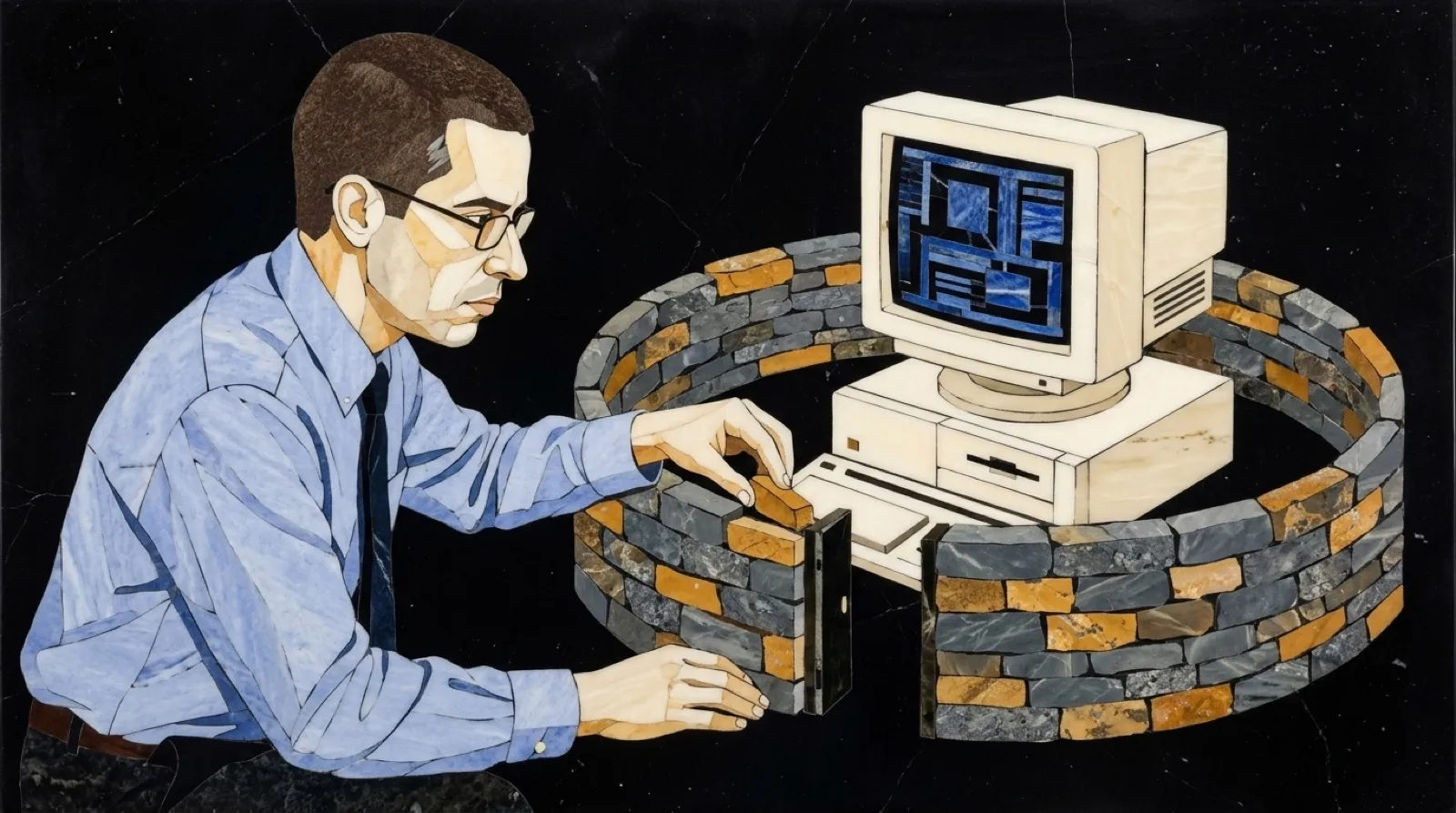
Marcus Ranum remembers selling a firewall for $75,000. By his 2007 retrospective, he was contrasting that with a decent firewall for $10 on eBay. The second price belongs to the old joke, so please don’t forward it to procurement as this morning’s quote.
In “The Ultimate Firewall,” Ranum describes the project that became DEC SEAL as a synthesis of other builders’ ideas and the first commercial internet firewall product. That is his historical claim. Calling it the first firewall of any kind would erase the earlier work he explicitly acknowledges.
His DEC paper, “Thinking about Firewalls,” starts with a choice that sounds almost too ordinary to deserve expensive equipment. Are services prohibited unless someone expressly permits them, or permitted unless someone expressly prohibits them?
The paper describes how those choices create different work. One requires an assessment before a service is enabled. The other leaves the administrator anticipating ways permitted activity could weaken protection. Purchasing a machine does not decide which of those jobs the organization intends to do.
Ranum also gives the architecture a vocabulary: screening routers, bastion hosts and gateways. His definition of a bastion host centers on a system treated as a “critical strong point” in network security. An imposing box without a clear role would remain an imposing box, with a purchase order to prove it.
The interesting contrast is between buying a boundary and specifying what that boundary means. A door can have an excellent lock while everyone argues about who should receive a key. More expensive metal will not settle the argument. The lock matters, and so does the decision that tells it when to open.
That also explains why a price comparison across decades needs restraint. The two figures in Ranum’s joke do not establish equivalent throughput, support, maintenance or features. They show how he framed a changing product market. Turning the joke into a claim that the same protection became exactly 7,500 times cheaper would ask it to carry weight it never measured.
A new product category can become cheaper and more elaborate while leaving an old organizational question unresolved. Each feature still needs a purpose that somebody can describe. Otherwise the administrator inherits an impressive collection of settings and the delightful responsibility of guessing what everyone meant.
Ranum’s old paper ends up making the purchase look like the easier part. The live question is who owns the permissions after the equipment arrives, especially when a requested exception becomes somebody else’s exposure.
The invoice doesn’t answer that.